


Under the Integrated Farming System (IFS) project activities, a multilayer horticulture production system was developed by integrating cucurbit crops with leafy vegetables to demonstrate the effective utilization of available land resources through a diversified and intensive cropping approach. The system was designed to promote the cultivation of compatible horticultural crops at different canopy levels, thereby enabling better utilization of vertical space, sunlight, soil moisture, and nutrients. The integration of cucurbit crops with leafy vegetables provided an opportunity to maximize production from a limited area while maintaining crop diversity and improving the overall efficiency of the farming system.
The intervention aimed to demonstrate the practical application of multilayer cropping techniques for enhancing horticultural productivity, optimizing land use, and diversifying farm output. By combining crops with different growth habits and canopy characteristics, the system sought to facilitate the efficient use of available growing space and support the production of multiple horticultural commodities within the same field unit. This approach also highlighted the potential for improving resource-use efficiency and reducing dependence on single-crop production systems.
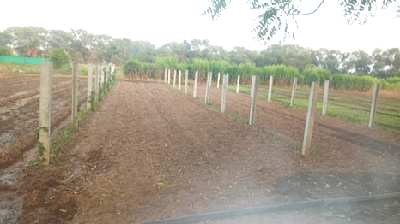
Furthermore, the developed system served as a demonstration model for farmers, researchers, and other stakeholders to understand the feasibility and advantages of adopting diversified horticultural production practices under an Integrated Farming System framework. The cultivation of cucurbit crops alongside leafy vegetables offered scope for obtaining a wider range of fresh produce, meeting household nutritional requirements, and generating additional marketable surplus. The availability of different vegetables could also provide farmers with greater flexibility in harvesting, marketing, and income generation.
Overall, the development of the multilayer horticulture production system represented an important intervention under the IFS project for promoting intensive, diversified, and space-efficient horticultural production. The initiative was intended to demonstrate the potential of integrating complementary crops to enhance farm productivity, improve the utilization of available resources, diversify agricultural output, and create opportunities for improved farm income and livelihood security. The system may also serve as a replicable model for small and marginal farmers seeking to increase production from limited landholdings through the adoption of integrated and sustainable horticultural practices.
(Source: ICAR-Indian Grassland and Fodder Research Institute, Jhansi)



Like on Facebook
Subscribe on Youtube
Follow on X X
Like on instagram