


9 March 2026, New Delhi
ICAR–Indian Agricultural Research Institute, New Delhi successfully organized an ICAR-sponsored Winter School on “Microbe-mediated Strategies for Alleviation of Abiotic Stress: Bioresources to Technology Development” from 17 February to 9 March 2026 at the Division of Microbiology. The three-week training programme brought together scientists, faculty members, and researchers from different parts of the country.
Dr Ch. Srinivasa Rao, Director, ICAR–IARI, in his remarks, emphasized that climate change poses significant challenges to agricultural productivity and sustainability. He highlighted that microbe-mediated technologies hold immense potential in enhancing crop resilience, improving soil health, and reducing dependence on chemical inputs. He further noted that translating cutting-edge microbial research into farmer-friendly technologies is critical for achieving sustainable and climate-smart agriculture in India.
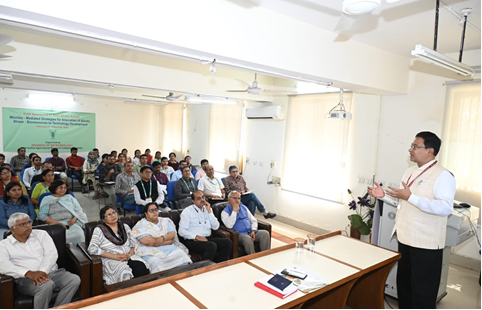
The Winter School focused on emerging approaches to address abiotic stresses in agriculture through microbial interventions, particularly in the context of climate change and sustainable agricultural production. The programme highlighted the crucial role of microorganisms in mitigating climate change impacts on agriculture and enhancing crop resilience under stress conditions.
During the course, participants were exposed to various thematic areas including microbial mechanisms involved in stress adaptation and resilience in crops, the application of omics-based tools for studying plant–microbe interactions, and the integration of these approaches within the One Health framework, linking agricultural sustainability with environmental and human health.
The programme also provided hands-on training and practical exposure to strategic isolation and characterization of beneficial microorganisms, identification of key functional traits associated with stress tolerance, and modern tools used to study plant–microbe interactions. In addition, discussions were held on regulatory frameworks and pathways for translating laboratory innovations into field-level technologies.
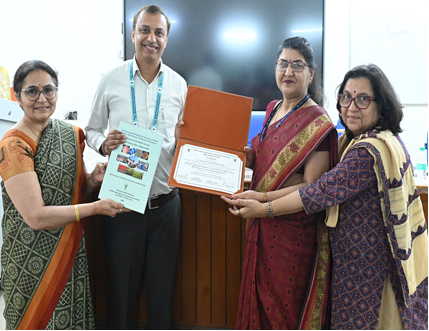
Special emphasis was placed on the development and application of microbial-based inputs such as bioinoculants, biostimulants, and other organic formulations as viable solutions for promoting climate-resilient and sustainable farming systems. The training aimed to strengthen the participants’ capacity to utilize microbial resources for enhancing agricultural sustainability under changing climatic conditions.
The Winter School served as an important platform for capacity building, scientific interaction, and collaboration, equipping participants with advanced knowledge and skills to harness microbial resources as climate-ready solutions for sustainable agriculture.
(Source: ICAR–Indian Agricultural Research Institute, New Delhi)



Like on Facebook
Subscribe on Youtube
Follow on X X
Like on instagram