


18–19 March 2026, Mau, Uttar Pradesh
ICAR–National Bureau of Agriculturally Important Microorganisms, in collaboration with Association for Conservation of Microbes and Application, successfully organized a two-day National Workshop-cum Research–Industry Interface on ‘Microbial Innovations for Sustainable Agriculture (MISA–2026)’ during 18–19 March 2026. The event served as a significant platform for advancing the development, dissemination, and commercialization of microbial-based agricultural technologies.
The programme witnessed participation of around 350 delegates from across the country, including industry representatives, 14 Farmer Producer Companies (FPCs), scientists, researchers, startup entrepreneurs, and policymakers. Leading companies such as UPL, Dhanuka Agritech Ltd., Syngenta, Coromandel International and others actively participated, making the event highly interactive and outcome-oriented.
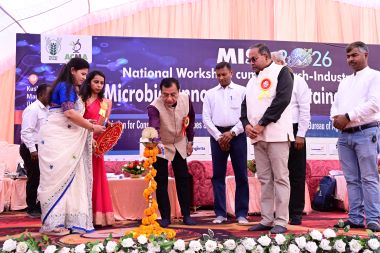
The Chief Guest, Dr B. Singh, Vice-Chancellor, Narendra Dev University of Agriculture & Technology (NDUAT), Ayodhya, emphasized that microbial technologies offer sustainable solutions to challenges such as climate change, declining soil health, and overdependence on chemical inputs.
Presiding over the session, Dr Alok Kumar Srivastava, Director, ICAR–NBAIM and President, ACMA, highlighted that the workshop aimed to strengthen research–industry linkages and facilitate rapid transfer of technologies to farmers.
Guest of Honour, Dr A. Anandan, stressed the importance of standardization, quality control, and certification to enhance the credibility and adoption of microbial products.
During the inaugural session, Memoranda of Understanding (MoUs) were exchanged between ICAR–NBAIM and several FPCs to promote knowledge sharing, training, and technology dissemination.
The programme featured six technical sessions covering key areas such as microbial diversity, microbiome research, biofertilizers, biocontrol agents, biostimulants, microbial consortia, SynCom-based technologies, and climate-smart agriculture, along with discussions on regulatory frameworks and quality assurance.
A dedicated industry interaction session enabled comprehensive dialogue across the value chain from research and product development to commercialization and delivery. Several companies expressed interest in collaboration, with Letters of Intent (LoIs) submitted by firms including Coromandel, AMMA, and Plantex.
The participation of FPCs was a notable highlight, with discussions underscoring the need for training, quality inputs, and technical support for large-scale adoption of microbial technologies. An exhibition showcasing innovative microbial products further strengthened research–industry synergy.
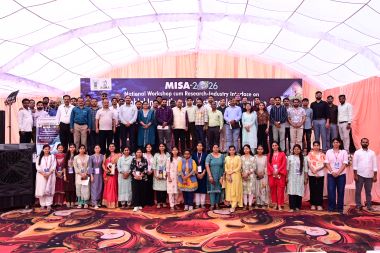
The Chief Guest for the valedictory session Dr Sanjay Singh, Director General, Uttar Pradesh Council of Agricultural Research (UPCAR), who emphasized the role of microbial innovations in promoting sustainable, eco-friendly, and profitable agriculture.
The workshop concluded with key recommendations, including strengthening quality control and regulatory frameworks, prioritizing advanced microbiome research, enhancing research–industry–farmer linkages, simplifying technology transfer processes, and promoting startups and capacity-building initiatives.
Overall, MISA–2026 emerged as a highly impactful and outcome-driven event, reinforcing the role of microbial innovations in advancing sustainable, climate-resilient, and farmer-centric agriculture.
(Source: ICAR–National Bureau of Agriculturally Important Microorganisms, Mau, Uttar Pradesh)



Like on Facebook
Subscribe on Youtube
Follow on X X
Like on instagram