


India has emerged as one of the world’s leading agricultural producers, with annual production reaching nearly 357 million tonnes of food grains, 27 million tonnes of pulses, 16 million tonnes of millets, and 315 million tonnes of fruits and vegetables. While agriculture contributes around 18% to the national GDP, the food processing sector alone accounts for nearly 7–8% of the agricultural GDP and supports over 2.3 million enterprises, generating employment for more than 7 million people. Despite this remarkable progress, post-harvest losses ranging between 6–18% continue to pose a major challenge, underlining the urgent need for efficient post-harvest management and value-addition technologies.
Responding to this national priority, the Agro Processing Division of ICAR-Central Institute of Agricultural Engineering, Bhopal has emerged as a pioneering centre for innovation, research, entrepreneurship, and capacity building in agro-processing. The division is dedicated to the development of technologies related to primary, secondary, and tertiary processing of cereals, pulses, oilseeds, millets, fruits, vegetables, medicinal plants, and other agricultural commodities with the objective of minimizing post-harvest losses, enhancing value addition, and improving farmers’ income.
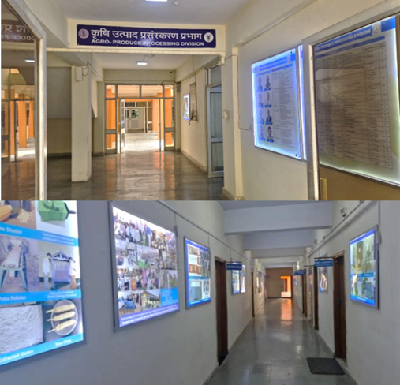
Over the years, the division has built a strong legacy of scientific excellence and impactful innovation. Since its inception, nearly 50 scientists along with 100 technical, administrative, and supporting staff and around 50 RA/SRF/YP personnel have contributed to approximately 200 research projects, including 170 institute projects and 30 externally funded projects worth nearly ₹30 crore. These efforts have resulted in the development of around 100 agro-processing technologies designed to address field-level challenges through dedicated, innovative, and demand-driven research.
Several technologies developed by the division have transformed post-harvest management and food processing systems in the country. These include Grain Cleaner-cum-Grader, Dal Mill, Flour Separator, Groundnut Decorticator, Fruit Graders, Onion Descaler, Onion Storage System, EAHE-based Storage System, On-farm Hybrid Evaporative Cooling System, Micro-Perforated Modified Atmosphere Packaging System, Biofilm for Food Packaging, Biodegradable Films for Liquid Packaging, Bio-based Intelligent Indicator, Smart Packaging, Ripening Chamber, Minimal Processing of Cut Vegetables, Technology Package for Chemical-free Grape Raisin Production, Technology Package for Minimal Processing and Powder Production from Tender Jackfruit, Grain Handling-cum-Surface Disinfestation System, Gluten Extractor, Automatic Soya Milk Plant, Soya Milk Powder, Dietary Fibre Extraction Technologies from Soybean and Chickpea Hull, Soya Chaap, Soya Cheese Spread, and efficient millet processing machinery including dehuskers, millet mills, polishers, roasters, popping and flaking machines.
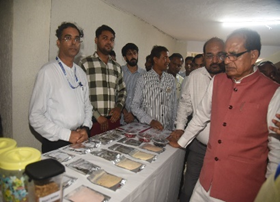
The division has also developed a novel millet food basket comprising millet biscuits, instant dalia, nutri-dense spreads, health mixes, roasted millet products, millet-oat butter, millet bread, and gulab jamun pre-mix, significantly promoting millet value addition and nutritional security.
A major strength of the division lies in its successful commercialization efforts. Around 45 technologies have been licensed and commercialized to more than 75 manufacturers and industries across the country, generating nearly ₹150 lakh in revenue. Impact assessment studies conducted during 2012–2023 revealed that 19 ICAR-CIAE technologies generated an estimated national benefit of ₹14,070.91 crore annually. Among these, three major agro-processing technologies Cleaner-cum-Grader, Mini Dal Mill, and Millet Mill contributed significantly towards economic gains and reduction in post-harvest losses.
The division’s research ecosystem is supported by state-of-the-art laboratories and infrastructure facilities dedicated to testing, quality evaluation, and technology development. Major facilities include the Engineering Property Laboratory worth ₹200 lakh, Storage Engineering Laboratory worth ₹30 lakh, NABL-accredited Food Testing Laboratory worth ₹50 lakh, Food Quality Laboratory worth ₹50 lakh, Fruit and Vegetable Processing Laboratory worth ₹25 lakh, and Food Grain Processing Laboratory worth ₹25 lakh. These laboratories are equipped with advanced scientific instruments for quality analysis, product testing, and process evaluation.
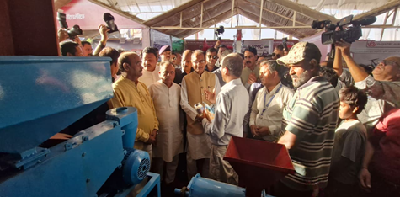
In addition, the division has established several important infrastructure facilities including the Centre of Excellence on Millet Processing (₹10 lakh), Post-Harvest Equipment/Machinery Testing Centre (₹10 lakh), On-farm Agro-Processing Technology Park (₹12 lakh), Agro-Processing Centre (₹20 lakh), and Modern Dal Mill (₹40 lakh). These facilities have played a critical role in technology validation, dissemination, testing, consultancy, and revenue generation.
The division has also developed pilot-scale processing facilities such as Onion Storage Structures (₹1 lakh), Onion Paste Making Unit (₹7 lakh), Minimal Processing Unit for Fruits and Vegetables (₹5 lakh), Ripening Chamber (₹2 lakh), Bakery Unit (₹10 lakh), Oil Expeller (₹5 lakh), and Soya-Millet Milk Paneer Processing Unit (₹5 lakh). These facilities are actively supporting agri-business incubation, entrepreneurship development, training, and demonstrations. So far, around 10 entrepreneurs have successfully established food processing enterprises after receiving training and technical support from the division.
To strengthen dissemination and outreach, the division has also established a modern digital display system and interactive meeting facility worth ₹10 lakh for showcasing agro-processing technologies and conducting capacity-building programmes.
Another major achievement of the division is the Post-Harvest Equipment and Machinery (PHEM) Testing Centre, authorized by the Department of Agriculture & Farmers Welfare, Government of India. Since its inception in 2019, the centre has successfully tested 157 post-harvest machines and generated nearly ₹240 lakh in revenue. Following infrastructure strengthening in 2024, the centre now has the capacity to test 40–50 machines annually with an estimated revenue potential of around ₹80 lakh per year.
The Agro-Processing Centre has generated approximately ₹100 lakh in revenue since inception, while technology licensing and commercialization activities contributed around ₹150 lakh. An additional ₹50 lakh revenue has been generated through consultancy, incubation, contract research, and professional services. Altogether, the division has contributed nearly ₹500 lakh in revenue generation through its technologies, services, and infrastructure facilities.
Capacity building and skill development remain among the strongest pillars of the division’s outreach activities. To promote value addition and entrepreneurship, the division has organized around 306 training and outreach programmes, including 156 programmes under Scheduled Caste Sub Plan (SCSP), benefiting nearly 20,000 stakeholders. These include farmers (9,020), women (8,242), rural youth (509), students, researchers, academicians and scientists (973), entrepreneurs (165), and 100 AARDO international trainees.
Major programmes conducted by the division include Entrepreneurship Development Programmes (EDP) in agro-processing, soybean processing trainings, winter and summer schools, AARDO trainings, CAFT trainings, Nutri-Melas, and Direct Benefit Transfer (DBT) programmes.
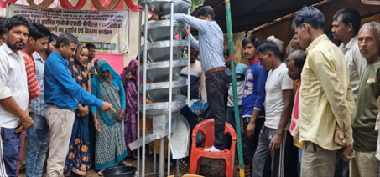
The division’s targeted interventions for rural women have created significant socio-economic impact. Through skill development programmes and distribution of women-friendly technologies such as soya and food processing equipment, grain cleaners, and sewing machines, the division has substantially reduced drudgery and promoted livelihood opportunities for nearly 4,500 women beneficiaries. The adoption rate of agro-processing equipment such as spiral graders, manual air-screen cleaners, sack holders, and maize shellers was observed to be 100%, helping farmers secure nearly 20% higher market returns.
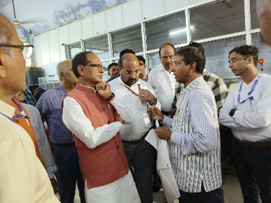
To strengthen industry-academia linkages, the division has organized around 10 industrial meets in collaboration with food processing industries, NGOs, and Farmer Producer Organizations (FPOs), with participation from nearly 500 industry and stakeholder representatives. As a result of the division’s training, demonstrations, and technical support, nearly 200 entrepreneurs and stakeholders have established agro-processing and soy-processing enterprises.
The Agro Processing Division has also emerged as an important centre for higher education and human resource development. Through its outreach postgraduate programme, the division has awarded M.Tech./M.Sc. degrees to around 100 students and Ph.D. degrees to nearly 50 students. Around 70% of these graduates are now serving as scientists, faculty members, researchers, and officials in various organizations, while nearly 5% have established their own enterprises and start-ups.
The scientific excellence of the division has received widespread recognition at national and international levels. Scientists of the division have been honoured with prestigious awards including the Rafi Ahmad Kidwai Award, NAAS Fellowship and Associateship, Jawaharlal Nehru Award, NASI Award, N.N. Mohan Memorial Award, Governor’s Research Award, ISAE Fellowship, Young Scientist Awards, Institution of Engineers Award, and several distinguished recognitions from ISAE and AFSTI. Some scientists have also been listed among the top 2% scientists of the world.
Leveraging their scientific and administrative excellence, many scientists from the division have advanced to leadership positions including Vice Chancellors, Deputy Director General (Engineering), Assistant Director General (Process Engineering), ASRB Members, Directors, Project Coordinators, Deans, and Emeritus Scientists.
Guided by the vision of Union Minister of Agriculture & Farmers Welfare Shri Shivraj Singh Chouhan and Secretary, DARE & Director General, ICAR, Dr M.L. Jat, the division is now focusing on future-ready, demand-driven, and policy-oriented research. Key thrust areas include minimizing post-harvest losses, enhancing food processing levels, promoting AI-enabled agro-processing technologies, improving packaging, storage and cold-chain transportation systems, strengthening waste-to-wealth approaches, and fostering entrepreneurship-led value chains.
Through its integrated approach combining innovation, technology development, commercialization, entrepreneurship promotion, and capacity building, the Agro Processing Division of ICAR-CIAE, Bhopal continues to play a transformative role in strengthening India’s agro-processing ecosystem and contributing towards sustainable agriculture, nutritional security, rural employment, and national economic growth.
(Source: ICAR-Central Institute of Agricultural Engineering, Bhopal)



Like on Facebook
Subscribe on Youtube
Follow on X X
Like on instagram