


Large cardamom is a major cash crop of Anjaw district and forms the backbone of livelihood security for a large number of farming households. For decades, the crop has provided a stable source of income in the hill ecosystem of the district. However, in recent years, the productivity of large cardamom has been steadily declining due to multiple factors such as aging plantations, increased incidence of pests and diseases and growing climatic variability which has not only resulted in reduced farm income but has also led to the accumulation of large quantities of large cardamom residues. Traditionally, these residues were left unused in the field, burnt after harvest or occasionally used as mulching material.
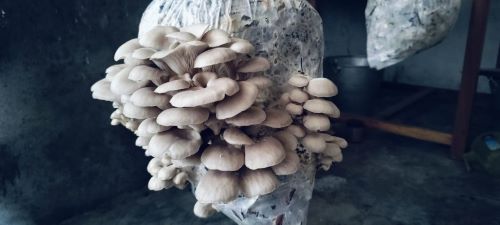
Recognizing both the challenges and the untapped opportunity into a productive resource, KVK Anjaw successfully established and validated a novel technology on oyster mushroom cultivation using large cardamom residue as substrate, marking the first successful attempt of its kind. This intervention represents a significant scientific and practical breakthrough as the use of large cardamom residue for oyster mushroom cultivation has not been reported earlier. The technology involved the utilization of dried large cardamom stalks and residues as an alternative substrate for cultivating oyster mushroom (Lentinus sajor-caju formerly known as Pleurotus sajor-caju and Pleurotus ostreatus) through a low-cost bag cultivation method both in summer and winter season respectively.
Under systematic experimentation and close technical supervision by KVK scientists, the trial produced encouraging results. The large cardamom substrate supported healthy mycelial growth, timely fruiting and yields comparable to those obtained from conventional substrates such as paddy straw. The cropping cycle was short, allowing quick returns and the production process was simple and farmers’ friendly.
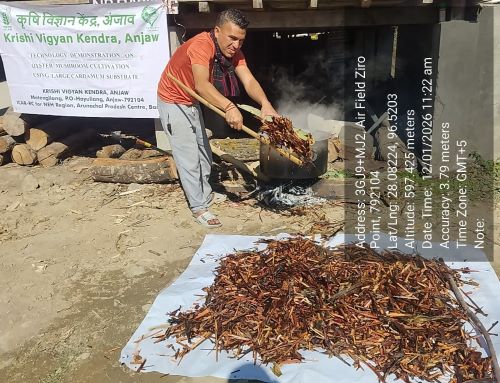
Following the successful trial, the technology was demonstrated in farmers’ fields, where it generated keen interest among the farming community. As part of technology dissemination, training cum demonstration programmes were organized at different villages of the district, with special focus on rural youth and farm women. Participants were provided hands-on training on substrate preparation, spawning, crop management, harvesting and basic hygiene practices to adopt the technology at the household level. The technology has enabled effective value addition to large cardamom waste, reduced residue burning and promoted environmentally sustainable farming practices. At the same time, it has opened up a new avenue for income generation, livelihood diversification and nutritional security, particularly for women and youth.
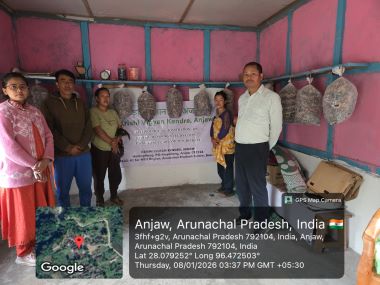
Overall, the successful establishment of oyster mushroom cultivation using large cardamom residue by KVK Anjaw stands as a pioneering model of waste to wealth innovation in hill agriculture. The technology holds strong potential for scaling up and contributing to sustainable and resilient farming systems in Anjaw district and other hilly locations of the regions.



Like on Facebook
Subscribe on Youtube
Follow on X X
Like on instagram