


17-18 March 2026, Bengaluru
ICAR-Indian Institute of Horticultural Research, Bengaluru organized a series of awareness-cum-training programmes on pollinator conservation on 17 - 18 March 2026 under the National Bee Board Project, in collaboration with Krishi Vigyan Kendra, Herehalli.
The programme organised on 17th March 2026 at the ICAR-IIHR campus, Bengaluru, with participation from farmers from Tamil Nadu, students of GPS Institute of Agricultural Management (GPSIOAM) in Bangalore, and Women farmers of the Shiva Ganga Beekeeping FPO from Tumkur.
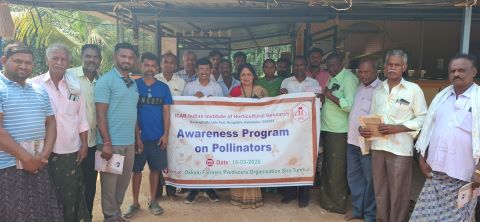
On 18th March 2026, two outreach programmes were organized at Honnenahalli Village, Sira Taluk, Tumkur District, and at TVS School, Tumkur. The farmer-oriented programme at Honnenahalli witnessed participation from members of Vakkalu FPO engaged in beekeeping, while the school programme focused on creating awareness among students on the importance of pollinators.
The critical role of pollinators in enhancing agricultural productivity and maintaining ecological balance was highlighted, with emphasis on the importance of flower crops in sustaining pollinator populations. Practical approaches, such as the cultivation of flowering annual strips, were discussed as effective strategies for pollinator conservation.
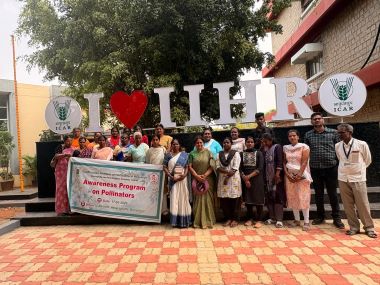
The significance of beekeeping was also underscored, particularly its contribution to improving farmers’ income and enhancing crop yields. As part of the programmes, six varieties of flowering annual seeds and booklets on the floral calendar were distributed to participants to promote pollinator-friendly practices.
Overall, around 174 participants, including farmers, FPO members, students, and teachers, benefited from these programmes.
(Source: ICAR-Indian Institute of Horticultural Research, Bengaluru)



Like on Facebook
Subscribe on Youtube
Follow on X X
Like on instagram