


14 May 2026, Jabalpur
The XXXIII Annual Review Meeting of AICRP Weed Management was held at Indira Gandhi Krishi Vishwavidyalaya Raipur during May 12-14, 2026 to review the progress of AICRP-WM centres for the year 2025-26 and to plan new technical programme for the next two years.
The Chief Guest, Dr A.K. Nayak, Deputy Director General (Natural Resource Management) highlighted the importance of weed management in sustainable food system. He emphasized the various issues and challenges in weed management and stressed upon the need to work on ecological weed management, robust data management including data collection, curation, storage and delivery. He further added to identify the critical gaps in weed management and plan the new programmes accordingly. Efforts should be made to address the key issues of weed management in Narural/organic farming systems, conservation agriculture, direct-seeded rice, precision weed management, development of SOPs for herbicide application using drones, and studying impact of herbicides in soil, water, food-chain and environment.
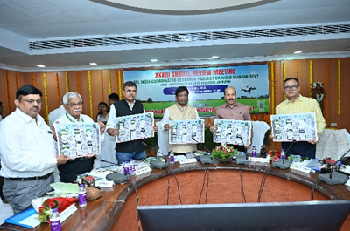
Dr Girish Chandel, Vice-Chancellor, IGKV, Raipur urged to develop farmers-centric eco-friendly weed management technologies. Judicious use of herbicides is essential to minimize the impact of herbicides on human health & environment, he added.
Dr Rakesh Kumar, Assistant Director General (Agronomy, Agroforestry and Climate change) and the Guest of Honour congratulated the AICRP-WM centres for their contributions and emphasized the need for systematic compilation, curation, and preservation of research data generated over the past five decades in accordance with ICAR’s Data Policy.
Dr P.K. Rai, Director, ICAR-National Institute of Biotic Stress Management, Raipur and Guest of Honour highlighted the importance of weed management as a major biotic stress in crop production. He emphasised on developing sustainable weed management technologies in oilseed crops.
Dr V.K. Tripathi, Director, Research, IGKV, Raipur in his welcome address, highlighted the challenges of low crop productivity, limited crop diversification, and low farm income in Chhattisgarh. He mentioned that nearly two-thirds of the cultivated area in the state is under rice and weeds remain a major biotic constraint, causing annual losses exceeding ₹10,000 crore in the State.
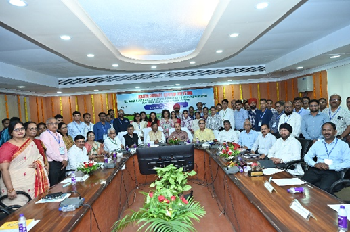
Earlier, Dr J.S. Mishra, Director, ICAR-Directorate of Weed Research, Jabalpur briefly mentioned about the role played by the AICRP-WM centres in developing and disseminating the weed management technologies and thereby reducing the yield losses caused by weeds in different crops and cropping systems. He emphasized the need to address emerging challenges of herbicide resistance in weeds and develop weed management solutions for natural farming, regenerative agriculture, and conservation agriculture using advanced tools and techniques.
Ten publications on various aspects of weed management were also released on the occasion.
More than 150 participants including principal investigators and scientists from different AICRP-WM centres, scientists from ICAR-DWR and other institutes, officials from State Government, representatives from herbicide industries, faculty members and students of IGKV, Raipur attended the inaugural programme.
(Source: ICAR-Directorate of Weed Research, Jabalpur)



Like on Facebook
Subscribe on Youtube
Follow on X X
Like on instagram