


20 August 2026, Bhopal
ICAR–Indian Institute of Soil Science, Bhopal, in collaboration with Core CarbonX Solutions Pvt. Ltd. and GIZ India, organised a one-day programme on ‘Carbon Pathshala: Carbon Market and Regenerative Agriculture’ today for farmers from Vidisha district. The programme was organised under the Krishi Roadmap Project for Vidisha district to sensitise farmers to carbon markets, agricultural carbon credits and regenerative agricultural practices.
Soil organic carbon plays a critical role in maintaining soil health, enhancing agricultural productivity and strengthening resilience to climate change. The programme highlighted how sustained adoption of improved agricultural practices can contribute to enhanced soil carbon and climate benefits, while also creating opportunities for farmers through emerging carbon markets.
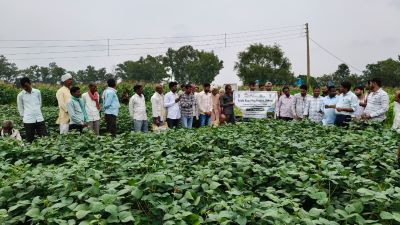
The participants were sensitised to practices such as avoiding crop residue burning, minimum tillage, residue incorporation, green manuring and integrated nutrient management, which can contribute to improved soil health and reduced greenhouse gas emissions. The discussions also highlighted the role of the Voluntary Carbon Market in incentivising farmers for adopting sustainable and climate-friendly agricultural practices.
At the outset, Dr M. Mohanty, Director, ICAR–IISS, highlighted regenerative agriculture practices being followed in Central India and their potential to generate carbon credits.
Dr Sangeeta Lenka, Course Director, outlined the objectives of the Carbon Pathshala and explained the concepts of the Voluntary Carbon Market, agricultural carbon credits and the carbon project cycle. She also highlighted the potential of farmers’ fields to generate verified climate benefits through scientifically assessed and sustainable practices.
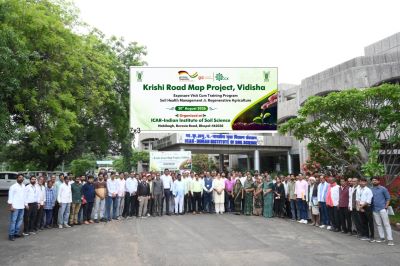
Experts shared experiences from carbon pilot projects being implemented in India and explained how scientifically measured and independently verified improvements in soil carbon, along with reductions in greenhouse gas emissions, can potentially provide additional income opportunities for farmers.
As part of the experiential learning component, a field visit was organised to demonstrate conservation agriculture and residue management practices, vermicomposting, organic and natural farming techniques, and improved farm machinery. The field exposure enabled farmers to gain practical understanding of sustainable practices based on the principle of ‘seeing is believing’.
Around 70 farmers from Vidisha participated in the programme and gained insights into regenerative agriculture, soil carbon management and emerging opportunities in agricultural carbon markets.
(Source: ICAR–Indian Institute of Soil Science, Bhopal)



Like on Facebook
Subscribe on Youtube
Follow on X X
Like on instagram