


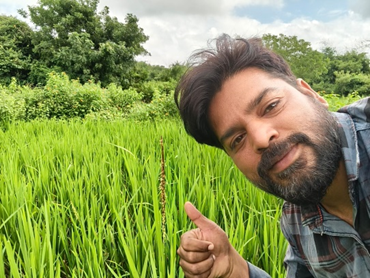
At a time when educated rural youth are increasingly looking beyond agriculture for employment opportunities, 36-year-old Mr. Bikram Gouda, a postgraduate from Chikiti Block of Ganjam district, Odisha, chose a different path. Instead of leaving farming behind, he returned to the fields with a conviction that agriculture could become a profitable and modern enterprise when backed by science, innovation and market intelligence.
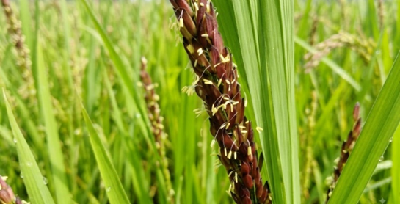
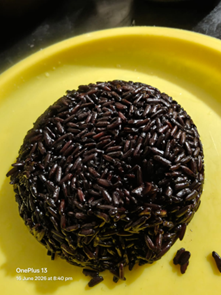
His search for a high-value crop with premium market potential led him to Labanya black rice, popularly known as “forbidden rice” or a “superfood” because of its rich antioxidant content, high nutritional value and growing demand among health-conscious consumers. But for Mr. Gouda, the objective was not simply to grow a different variety of rice. His ambition was much bigger to produce export-quality rice capable of competing in international markets.
That ambition would eventually take his produce from the fields of Chikiti to Chicago, USA, demonstrating how scientific farming, farmer-scientist collaboration and market-oriented thinking can transform agriculture into a globally competitive enterprise.
From Cultivation to a Global Vision
Growing a specialty crop is one thing; producing it to meet the expectations of international buyers is quite another. Mr Gouda soon realised that exporting black rice would require much more than conventional cultivation practices.
The challenge lay in maintaining quality throughout the entire value chain—from selecting appropriate production practices in the field to harvesting, drying, grading, cleaning, storage and packaging. The produce had to meet international quality specifications, while proper traceability and adherence to export requirements were essential for gaining the confidence of overseas buyers.
For a first-generation agri-entrepreneur, navigating these requirements was a formidable task. This was where scientific extension support became the bridge between his ambition and the global market.
When Science Meets the Farmer’s Vision
Recognising Mr Gouda’s commitment and entrepreneurial outlook, the scientists of Krishi Vigyan Kendra (OUAT), Ganjam-II, with guidance from ICAR–ATARI, Kolkata, provided continuous technical support throughout the crop cycle—from sowing to marketing.
The intervention went beyond routine advisory services. Mr Gouda was trained in scientific cultivation practices, integrated and organic nutrient management, eco-friendly management of pests and diseases, and scientific water management. Equal importance was given to what happened after the crop left the field.
The KVK placed special emphasis on scientific harvesting, drying, grading, cleaning, storage and packaging, ensuring that grain quality was maintained through every stage of post-harvest handling. He was also sensitised to export standards, traceability requirements and market-oriented production practices, while regular field visits and timely technical advisories provided handholding throughout the crop cycle.
For Mr. Gouda, this continuous engagement changed the way he looked at farming. As he puts it:
“The continuous support of the scientists of KVK Ganjam-II helped me understand that quality production, rather than quantity alone, is the key to reaching international markets. Their scientific guidance at every stage made this achievement possible.”
The message was simple but transformative: the path to a premium market begins with premium-quality production.
Seven Tonnes That Changed the Equation
Mr. Gouda diligently adopted the technologies and advisories provided by the KVK, bringing together scientific crop management and meticulous post-harvest handling. The result was premium-quality Labanya black rice that met international quality specifications.
The quality of the grain, maintained from production through post-harvest management, enabled the produce to satisfy the stringent requirements of overseas buyers.
Then came the breakthrough.
Seven tonnes of Labanya black rice produced by Mr. Gouda were exported to Chicago, USA, creating a niche market for Odisha-grown black rice in an international destination. The export generated a gross income of ₹8.4 lakh, making black rice cultivation significantly more remunerative than conventional paddy cultivation.
For a young farmer who had chosen to return to agriculture, the achievement was more than a successful harvest. It was proof that a farm in rural Odisha could produce for a global consumer.
The journey from Chikiti to Chicago had begun in the soil—but it was powered by knowledge, quality and market orientation.
One Farmer, Many New Possibilities
The impact of the achievement did not end with the export consignment.
Mr. Gouda’s experience has already begun influencing other farmers in the locality. Five progressive farmers have adopted black rice cultivation under his guidance, encouraged by the results he achieved.
His farm has also emerged as a learning site for neighbouring farmers interested in diversifying into high-value and export-oriented agriculture. In this way, one farmer’s experiment is gradually becoming a community-level pathway towards crop diversification and new market opportunities.
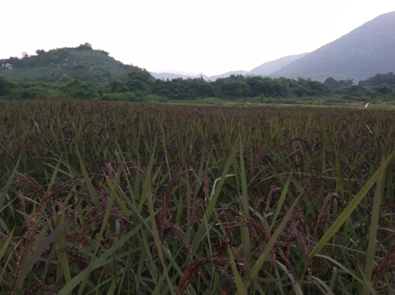
The ripple effect demonstrates an important reality of agricultural transformation: when farmers see a successful model working in conditions similar to their own, technology and innovation can spread much faster.
From Farmer to Agri-Entrepreneur
The story of Mr. Gouda also offers a larger lesson for India’s agricultural future.
According to Dr Pradip Dey, Director, ICAR–ATARI, Kolkata, the future of Indian agriculture lies not merely in increasing production, but in creating value through diversification, quality assurance, branding and market integration.
Reflecting on Mr. Gouda’s achievement, he observed:
“The success of Mr. Bikram Gouda demonstrates that the next generation of Indian agriculture must be market-driven, quality-centric and knowledge-intensive.”
He emphasised that Krishi Vigyan Kendras have a critical role in transforming farmers from producers into agri-entrepreneurs by providing technological backstopping, capacity building and market orientation. High-value specialty crops such as black rice, he noted, can substantially enhance farmers’ income, particularly when linked with premium domestic and international markets.
Such achievements, he added, reinforce the vision of ‘Viksit Krishi for Viksit Bharat’, where science-led agriculture can create employment opportunities for rural youth, strengthen India’s export competitiveness and improve farmers’ livelihoods.
He further stressed the need for KVKs to increasingly focus on developing export-oriented production clusters, facilitating quality certification, promoting Farmer Producer Organizations (FPOs), and strengthening market linkages, enabling more farmers to benefit from the growing global demand for specialty agricultural products.
A Model with a Message
Mr. Bikram Gouda’s journey from the fields of Chikiti to the markets of Chicago is therefore much more than an individual success story. It is a compelling example of what can happen when an educated young farmer’s entrepreneurial vision meets scientific knowledge, institutional support and access to global markets.
He did not simply replace conventional paddy with black rice. He changed the way the crop was approached from production to quality production; from farming to enterprise; and from local markets to global opportunity.
The story demonstrates the transformative potential of farmer-scientist collaboration, with KVK Ganjam-II providing the scientific and technical backstopping needed to translate ambition into measurable outcomes. It also illustrates how research, extension and market orientation can converge to create a replicable pathway for agricultural transformation.
Most importantly, Mr. Gouda’s journey sends a powerful message to India’s rural youth: agriculture need not be a profession one leaves behind in search of opportunity. With the right technology, continuous handholding, entrepreneurial vision and strong market linkages, agriculture itself can become the opportunity.
From a young postgraduate returning to the fields of Ganjam to an agri-entrepreneur sending seven tonnes of Odisha-grown Labanya black rice to Chicago and earning ₹8.4 lakh, Mr. Gouda has shown that the distance between a rural farm and a global market can be bridged one scientifically cultivated crop, one quality-conscious farmer and one market-oriented decision at a time.
His journey is not merely from Chikiti to Chicago.
It is a journey from traditional farming to value-driven agriculture, from production to enterprise, and from a local field to the global marketplace, showing the world what India young, knowledge-driven farmers can achieves.
(Source: ICAR-Agricultural Technology Application Research Institute, Kolkata)



Like on Facebook
Subscribe on Youtube
Follow on X X
Like on instagram