


ICAR-Central Citrus Research Institute, Nagpur, successfully conducted a three-day intensive capacity building programme titled "Training Programme for Master Trainers on Sustainable Citrus Production Technologies for Satpuda Pench Corridor of Madhya Pradesh (Phase -1)".
Organized in collaboration with WWF-India (World Wide Fund for Nature India), the training was held from 5 to 7 August, 2026, at the ICAR-CCRI campus. This initiative is a significant step forward following the MoU signed earlier this year on February 16, 2026, between ICAR-CCRI and WWF-India, which aims to promote sustainable citriculture through the engagement of forest fringe communities. The programme was inaugurated by Dr Dilip Ghosh, Director, ICAR-CCRI, Nagpur who highlighted the importance of regenerative agriculture and citrus based farming system in forest fringe areas of Madhya Pradesh.
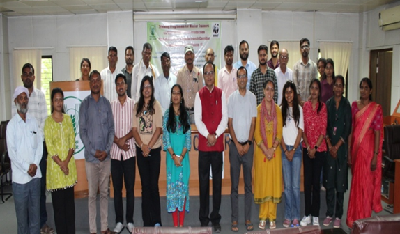
The capacity-building program was meticulously designed and led by the project investigator scientists of ICAR-CCRI. A Training Manual on “Sustainable Citrus Production Technologies for Satpuda Pench Corridor of Madhya Pradesh” was also released during the programme and distributed to all trainees. Over the course of three days, the scientists equipped the master trainers with comprehensive technical knowledge and advanced nature-based solutions tailored for citrus cultivation in sensitive ecological zones.
The Satpuda-Pench corridor is home to rich biodiversity and serves as a vital habitat for wildlife movement. Small and marginal farming communities living in these liminal spaces of forest fringes particularly in the Chhindwara and Pandhurna districts of Madhya Pradesh depend on citrus cultivation for their livelihoods.
The training focused on bridging the gap between agricultural needs and environmental conservation. The experts trained the participants on sustainable orchard management practices, soil and water conservation techniques, biofertilizers, nursery management technologies, irrigation management, integrated nutrient management and government schemes for supporting regenerative agriculture in the region.
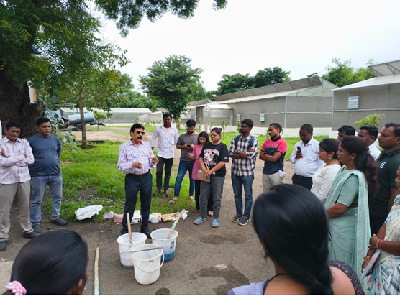
Practical demonstrations on orchard layout preparation, planting methods, roortstock identification, micro budding, raised bed system planting, acid lime variety identification, Bordeaux paste preparation, experimental orchard visit etc were conducted. With the successful completion of Phase-1, these 30 Master Trainers will now work directly at the grassroots level.
A total of 30 trainees comprising of field staff of NGOs WWF-India and Srijan working in Satpuda-Pench Wildlife Corridor areas of Madhya Pradesh along with members of FPOs of the region, participated in this programme.
(Source: ICAR-Central Citrus Research Institute, Nagpur)



Like on Facebook
Subscribe on Youtube
Follow on X X
Like on instagram