


21 August 2026, Barrackpore
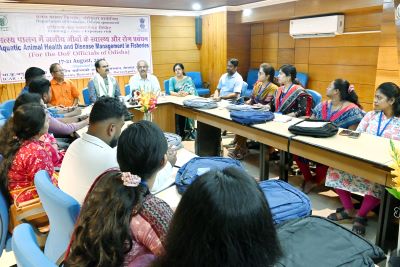
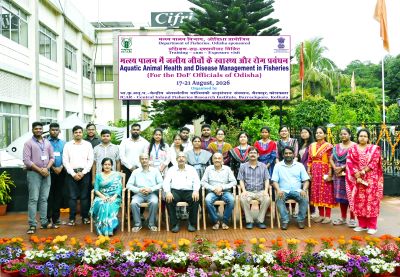
ICAR-Central Inland Fisheries Research Institute, Barrackpore, has taken a significant step towards strengthening fish health management and disease-control capabilities in Odisha’s inland fisheries sector by successfully organising a five-day specialised training programme on “Aquatic Animal Health and Disease Management in Fisheries” from 17–21 August 2026 for officials of the Department of Fisheries, Government of Odisha.
The programme brought together 20 Assistant Fisheries Officers (AFOs), including 11 women Officers, representing 14 districts of Odisha Jajpur, Kalahandi, Nayagarh, Balasore, Bhadrak, Mayurbhanj, Keonjhar, Angul, Jharsuguda, Ganjam, Koraput, Puri, Sambalpur and Bolangir. The programme was designed around the professional requirements of field-level fisheries officials, with a strong emphasis on practical skills, scientific diagnostics and technology-enabled disease surveillance.
From Classroom Learning to Field-Level Application
The training combined 11 classroom sessions, two hands-on laboratory exercises and two field exposure visits, providing participants with an integrated understanding of aquatic animal health management. Participants were trained in the identification of common fish diseases, disease symptoms and diagnostic procedures, including microscopic examination, PCR, qPCR and water-quality assessment. Laboratory sessions enabled them to gain hands-on experience in sample collection, pathogen identification and the use of diagnostic kits, thereby strengthening their capacity to provide timely technical support to fish farmers at the field level.
The programme also covered important areas such as inland fisheries management, soil and water quality analysis, disease management in enclosures, pen culture techniques and GIS applications in disease surveillance. A special field exposure to the East Kolkata Wetlands further enriched the learning experience by providing participants an opportunity to observe fisheries and aquatic-resource management practices in a complex wetland ecosystem.
Technology Takes Centre Stage
One of the major highlights of the programme was the demonstration of drone technology for pond monitoring and disease surveillance. The demonstration showcased how emerging digital technologies can support rapid assessment of aquatic systems, surveillance of fish-health risks and more efficient decision-making in fisheries management. The inclusion of GIS, molecular diagnostics and drone-based surveillance reflected ICAR-CIFRI’s focus on equipping field functionaries with modern tools to address increasingly complex fish-health challenges.
Strengthening the Last-Mile Support System
Inaugurating the programme, Dr Ashok Kumar Patra, Vice Chancellor, Bidhan Chandra KrishiViswavidyalaya (BCKV), emphasized the importance of strengthening scientific and technical capacities for sustainable fisheries development. He appreciated the efforts of ICAR-CIFRI in building the capacity of States and strengthening the inland fisheries sector through scientific and technical interventions.
Dr Pradip Dey, Director, ICAR-CIFRI, emphasised that building practical capabilities among field-level fisheries officials is critical for strengthening the last-mile delivery of technical services to fishers.He stressed the need for a science-based, preventive and technology-driven approach to fish health management to improve fish productivity and farm profitability. Dr Dey highlighted that effective fish health management is essential for sustainable inland fisheries and enhanced fisher livelihoods.
Strong Participant Response
The effectiveness and field relevance of the programme were reflected in the feedback received from participants. Ninety per cent of the trainees rated the training as highly effective and relevant to their field responsibilities, indicating strong appreciation for the combination of scientific knowledge, laboratory practice, field exposure and emerging technologies.
Towards Healthier and More Sustainable Inland Fisheries
The successful completion of the training marks an important step towards creating a stronger network of technically equipped fisheries officials capable of detecting health problems early, supporting scientific diagnosis and facilitating appropriate disease-management interventions.
(Source: ICAR-Central Inland Fisheries Research Institute, Barrackpore)



Like on Facebook
Subscribe on Youtube
Follow on X X
Like on instagram