


20 August 2026, Ganga Sagar, Sundarbans
In a significant step towards strengthening sustainable livelihoods and reducing dependence on externally transported fish seed, the ICAR-Central Inland Fisheries Research Institute, Barrackpore conducted a three-day hands-on training programme on “Seed Production and Scientific Pond Fish Culture” for Scheduled Caste (SC) fish farmers of Ganga Sagar and adjoining areas from 18–20 August 2026 under the Scheduled Caste Sub-Plan (SCSP).
Ganga Sagar, an island in the Sundarbans with limited connectivity and predominant dependence on water transport, faces major challenges in timely availability of quality fish seed. Farmers often procure seed from Kolkata and other parts of West Bengal, and long-distance transportation can result in significant stress and mortality. The ICAR-CIFRI initiative sought to address this critical bottleneck by building local technical capacity for fish seed production and scientific pond management.
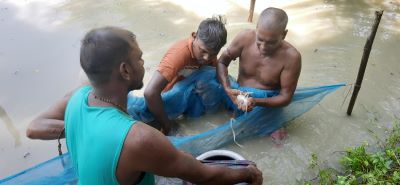
Considering their small pond holdings, traditional farming practices and resource constraints, the training emphasised low-cost, practical and locally adaptable technologies aimed at improving productivity and strengthening farm-level self-reliance.
The programme was conducted under the guidance of the Dr Pradip Dey, Director, ICAR-CIFRI, provided extensive hands-on exposure to pond preparation and management, quality seed selection, stocking density, feed and feeding practices, water-quality management and fish health monitoring.
A major highlight was practical training in fish seed production, including identification and selection of suitable brood fish, components and operation of a circular hatchery, preparation and use of inducing agents, hormonal injection techniques, induced breeding and seed production of Indian Major Carps (IMCs).
Reflecting on the occasion, Dr Pradip Dey, emphasised that strengthening local fish seed production should be viewed not merely as a technical intervention but as an important policy measure for enhancing livelihood resilience, reducing input dependence and promoting self-reliant aquaculture in geographically disadvantaged regions. He highlighted the need to promote decentralized seed production systems, particularly in island and remote areas where transportation constraints increase production costs and seed mortality. Dr Dey stressed that such interventions are aligned with the broader national priorities of Atmanirbhar Bharat, livelihood diversification, inclusive growth and sustainable fisheries development.
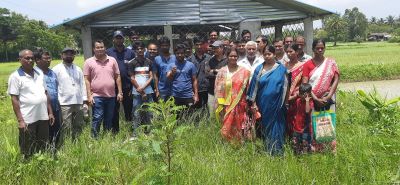
The initiative is expected to bring tangible benefits to the island's fish-farming community by reducing dependence on externally sourced seed, minimising transportation-related mortality and improving timely access to quality fish seed. In the longer term, local seed production can contribute to higher fish productivity, wider adoption of scientific aquaculture practices and enhanced livelihood opportunities for SC fish-farming communities in the Sundarbans.
The three-day programme thus marked an important step towards transforming traditional fish farming into a more productive, sustainable and self-reliant livelihood enterprise, while strengthening the capacity of island communities to harness their local aquatic resources.
A total of 25 fish farmers participated actively in the programme.
(Source: ICAR-Central Inland Fisheries Research Institute, Barrackpore)



Like on Facebook
Subscribe on Youtube
Follow on X X
Like on instagram