


4 November 2026, Motihari
ICAR–Mahatma Gandhi Integrated Farming Research Institute, Motihari, Bihar, organised a field demonstration of zero-tillage (ZT) mustard sowing technology today as part of Janjatiya Gaurav Pakhwada–2026, being observed from 1 to 15 November to commemorate the 151st birth anniversary of Bhagwan Birsa Munda. The programme aimed to promote climate-resilient farming practices, resource conservation and crop diversification among farmers and rural youth.
During the demonstration, institute scientists showcased the operation of a zero-tillage seed drill for direct mustard sowing without conventional land preparation. Participants were familiarised with the machinery, seed placement, sowing depth, crop establishment and essential management practices for successful mustard cultivation.
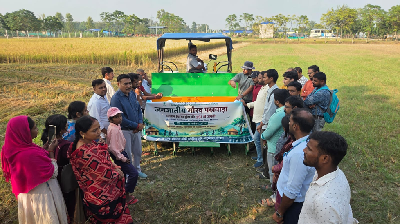
The technical session highlighted the benefits of zero-tillage technology, including reduced cultivation costs, timely sowing after rice harvesting, conservation of residual soil moisture, reduced soil disturbance and improved resource-use efficiency. Scientists also explained its potential to facilitate crop diversification and enhance the utilisation of land and water resources in rice-based cropping systems, particularly in the eastern Indo-Gangetic Plains.
Emphasis was laid on the relevance of this technology for small and marginal farmers, especially in areas where delayed rice harvesting and limited time for subsequent crop establishment affect agricultural productivity. Farmers interacted with scientists and sought guidance on machinery operation, seed requirements, field conditions and crop management practices.
Dr Raghavendra Singh, Director, ICAR-MGIFRI, underscored the importance of demonstrating practical, affordable and resource-efficient agricultural technologies at the field level. He highlighted the potential of zero-tillage mustard cultivation to reduce production costs, ensure timely sowing and improve the sustainability of rice-based farming systems. He also encouraged scientists to intensify field demonstrations and farmer-oriented capacity-building initiatives for wider adoption of climate-resilient technologies.
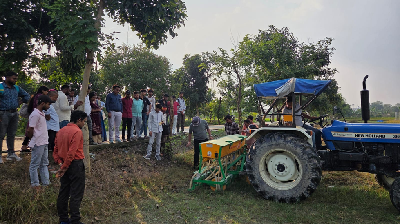
The programme further highlighted the role of conservation agriculture in improving soil health, optimising resource utilisation and strengthening the resilience of smallholder farming systems. The integration of scientific technologies with indigenous knowledge and local farming conditions was emphasised for promoting inclusive and sustainable agricultural development.
The demonstration witnessed the participation of 60 farmers and rural youth, including 45 male and 15 female participants. The programme concluded with an interactive field discussion, encouraging farmers to adopt zero-tillage and other resource-conserving technologies for sustainable agricultural production. It formed an important component of the institute's activities under Janjatiya Gaurav Pakhwada–2026.
(Source: ICAR–Mahatma Gandhi Integrated Farming Research Institute, Motihari, Bihar)



Like on Facebook
Subscribe on Youtube
Follow on X X
Like on instagram