


5 November 2026, Bengaluru
The two-day National Tabletop Exercise ‘VAJRA-SAT’, organised by the Department of Animal Husbandry and Dairying (DAHD), Government of India, in collaboration with ICAR–National Institute of Veterinary Epidemiology and Disease Informatics, Bengaluru, concluded today with key recommendations to strengthen India's preparedness against the potential incursion of the exotic Foot-and-Mouth Disease (FMD) serotype SAT1.
The concluding session was chaired by Shri Rama Shankar Sinha, Additional Secretary (Livestock Health), DAHD, in the presence of Dr Naveena B.M., Animal Husbandry Commissioner, DAHD; Dr Baldev R. Gulati, Director, ICAR-NIVEDI; Dr J.K. Mohapatra, Director, ICAR-NIFMD; and Brigadier M.M. Ramachandra, Director, National Security Council Secretariat.
Addressing the participants, Shri Sinha emphasised the need to strengthen preparedness at both national and State levels to effectively respond to emerging transboundary animal diseases. He informed that DAHD would support the strengthening of regional FMD laboratories and Regional Disease Diagnostic Laboratories (RDDLs) under the Pandemic Fund to enhance early detection and rapid laboratory confirmation of FMD SAT1, with technical support from ICAR-NIFMD.
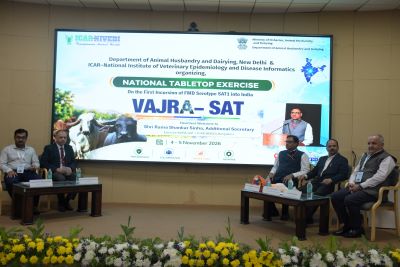
Conducted under the theme “Detect Early, Confirm Fast, Contain Together,” the exercise brought together 83 participants representing 25 States, three Union Territories and various national institutions, including veterinary services, diagnostic laboratories, research institutions, vaccine manufacturers and security agencies. Through simulated outbreak scenarios, participants assessed operational challenges and response mechanisms for detecting, investigating and containing a potential SAT1 incursion into India.
During the concluding plenary, all seven participating groups presented their key learnings, operational challenges and recommendations. The discussions highlighted the importance of recognising FMD outbreaks even in vaccinated herds, prompt reporting and sample collection, rapid serotype confirmation through ICAR-NIFMD, timely implementation of movement restrictions, epidemiological investigations and coordinated deployment of Rapid Response Teams. The need for vaccine preparedness, effective risk communication and stronger inter-State coordination was also emphasised, particularly as the FMD vaccines currently used in India do not provide protection against SAT1.
Representatives of the Indian vaccine industry stressed the importance of advance vaccine preparedness and sought Government support for procuring suitable SAT1 virus strains to facilitate indigenous vaccine development and production under the Make-in-India initiative. The deliberations underscored the need to strengthen domestic vaccine manufacturing capabilities to ensure the timely availability of suitable vaccines in the event of an exotic FMD incursion.
The exercise provided an opportunity to assess the operational readiness of veterinary services, identify gaps in existing Standard Operating Procedures (SOPs) and clarify institutional responsibilities during an exotic FMD emergency. The findings and recommendations will be consolidated into a post-exercise report to support further strengthening of the national FMD contingency plan.
Review of Progress towards Establishing FMD-Free Compartments
Following the conclusion of Exercise VAJRA-SAT, a separate meeting was convened under the chairmanship of Shri Rama Shankar Sinha to review progress towards establishing FMD-free compartments across States. The initiative aims to strengthen disease prevention, safeguard valuable livestock genetic resources and facilitate safe livestock trade.
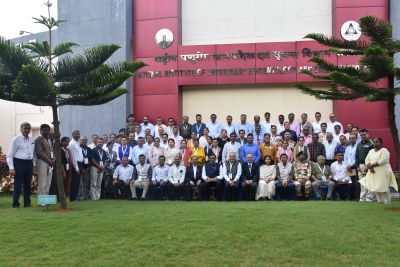
The discussions focused on establishing semen production centres and semen banks as FMD-free compartments in the first phase. Representatives from Karnataka, Telangana, Maharashtra, Andhra Pradesh, Uttar Pradesh, Punjab, Haryana and Gujarat shared updates on the progress achieved and challenges encountered in implementing the initiative.
During the deliberations, States were advised to identify suitable establishments and constitute State-level committees involving relevant stakeholders, including ICAR-NIFMD, ICAR-NIVEDI and vaccine manufacturers, in accordance with the prescribed SOPs. These committees will assess the proposed compartments and recommend appropriate measures for achieving and maintaining FMD-free status.
The exercise and subsequent review reaffirmed the importance of coordinated efforts among Central and State Governments, research institutions, diagnostic laboratories and the vaccine industry in strengthening India's animal disease preparedness, protecting livestock health and ensuring the sustainability of the livestock sector.
(Source: ICAR–National Institute of Veterinary Epidemiology and Disease Informatics, Bengaluru)



Like on Facebook
Subscribe on Youtube
Follow on X X
Like on instagram