

5 November 2026, Barrackpore
Promoting environmental responsibility, healthy living and sustainable agriculture and fisheries, ICAR–Central Inland Fisheries Research Institute, Barrackpore, organised an awareness programme under BRICS Sustainable Lifestyle Week (BSLW) 2026, observed from 1–7 November, on the theme “Adopt Healthy Lifestyles”.
The programme witnessed enthusiastic participation of young students and professionals, including 26 fourth-year students from the College of Fisheries, Gumla, Birsa Agricultural University (BAU), Jharkhand, and the Institute of Agricultural Sciences, Banaras Hindu University (BHU), Uttar Pradesh, along with ICAR-CIFRI staff. The initiative focused on sensitising Gen Z to sustainable agricultural and fisheries practices, preventive healthcare, responsible animal care and environmental conservation.
A key highlight was an interactive session on nature-based waste-to-wealth solutions for sustainable agriculture and fisheries, including the preparation of vermicompost using water hyacinth. Students were sensitised to the preparation and application of vermicompost, its role in enhancing soil fertility, improving soil health, recycling organic waste and promoting sustainable crop production. Its potential in fisheries, particularly in improving pond productivity through responsible nutrient management, was also highlighted.
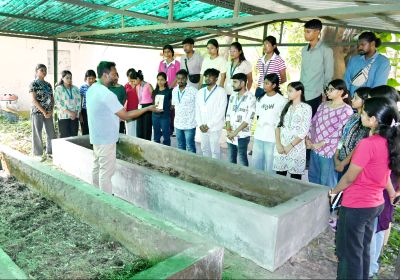
Addressing the participants, Dr Pradip Dey, Director, ICAR-CIFRI, envisioned transforming agriculture and fisheries through science-led, resource-efficient and nature-positive practices. He emphasised that achieving Viksit Bharat@2047 requires healthy soils, clean water, sustainable food systems, biodiversity conservation and resilient rural livelihoods.
Highlighting the interlinkages between agriculture and fisheries, he advocated integrated, circular and climate-resilient production systems that optimise resource use and minimise environmental footprints. He also underscored Mission LiFE as a catalyst for translating individual environmental responsibility into collective action towards sustainable development.
Dr Dey emphasised the need to move beyond production-centric approaches towards resource-efficient agriculture and fisheries that conserve soil, water and ecosystems. Highlighting vermicomposting as a nature-based solution linking waste recycling, soil health and sustainable production, he urged youth to translate scientific knowledge into grassroots innovation and champion environmentally responsible practices for a resilient Blue Economy and Viksit Bharat@2047.”
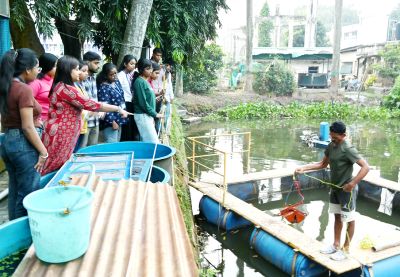
The programme was organised in alignment with India's BRICS Chairship 2026and the objectives of Mission LiFE (Lifestyle for Environment) under the overarching theme “One Week, Seven Actions, One Planet”. It also underscored the importance of preventive healthcare and rabies awareness as essential elements of healthy, safe and responsible living.
Through this initiative, ICAR-CIFRI reinforced its commitment to youth engagement, environmental stewardship and sustainable resource management. By connecting healthy lifestyles with responsible agricultural and fisheries practices, the Institute encouraged the next generation of fisheries professionals to become ambassadors of sustainability and advocates of a healthier planet.
(Source: ICAR–Central Inland Fisheries Research Institute, Barrackpore)