


15 December 2025, Assam
Phase-III of the Mega Project on Rapeseed–Mustard, aimed at enhancing toria–mustard production and strengthening oilseed-based farming systems in Assam, was inaugurated today through a joint initiative of the Zonal Research Station, Shillongani, Assam Agricultural University and the ICAR–Indian Institute of Mustard Research, Bharatpur.
The inaugural programme was graced by Dr. Bidyut Chandan Deka, Vice-Chancellor, Assam Agricultural University; Dr. V. V. Singh, Director, ICAR–IIRMR, Bharatpur; and Sri Rupak Sarmah, Member of Legislative Assembly, Nagaon, Assam.
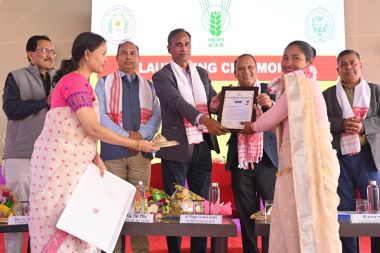
In his concluding address, Dr. B. C. Deka, Vice-Chancellor, AAU, emphasized the importance of collaborative research and extension efforts in achieving agricultural growth and farmer prosperity. He stated that the Mega Project aims to enhance farmers’ income through double cropping, increased adoption of improved varieties, expansion of quality seed production, and strengthened market linkages.
Addressing the gathering, Sri Rupak Sarmah emphasized the role of mega projects in strengthening farmers’ livelihoods and promoting sustainable agriculture.
Dr. V. V. Singh highlighted the strategic importance of rapeseed–mustard among oilseed crops and underscored Assam’s vast potential to contribute significantly to national oilseed production. He stressed the adoption of improved varieties, optimum spacing, timely sowing, and balanced nutrient management to enhance productivity, and assured full technological support from ICAR–IIRMR for promoting rapeseed–mustard cultivation in the state. Phase-III of the Mega Project was formally launched by Dr. V. V. Singh.
A felicitation ceremony was organized to honour progressive farmers Mr. Nayanjyoti Borkakati and Mrs. Archana Bordoloi Patar for their exemplary adoption of scientific farming practices. On the occasion, a Training Manual titled “Natural and Integrated Approaches in Oilseed Farming: Pests, Diseases, Nutrition and Seed System” was released, marking an important step towards farmer capacity building and effective knowledge dissemination.
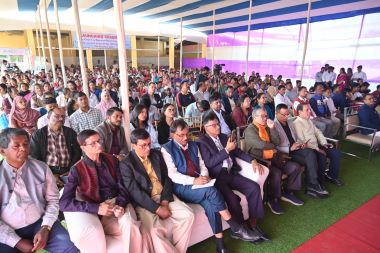
On the occasion, Principal Scientist, ICAR–IIRMR, Bharatpur, was felicitated with a letter of appreciation for his significant contribution to promoting scientific rapeseed–mustard cultivation in Assam over the past five years. He also shared insights on the national perspective of rapeseed–mustard research and development.
It was highlighted that prior to the implementation of the project, nearly 9–10 lakh hectares of land in Assam remained fallow after rice harvest. Through focused interventions under MPRM, this has been reduced to 8.5–9 lakh hectares, reflecting the positive impact of bringing fallow land under oilseed cultivation. Furthermore, adoption of improved scientific practices has resulted in a 15–27% increase in toria–mustard productivity, demonstrating the effectiveness of the project in enhancing production and farmer income in the state.
(Source: Indian Institute of Rapeseed-Mustard Research, Bharatpur)



Like on Facebook
Subscribe on Youtube
Follow on X X
Like on instagram