


23–24 July 2026, Patna
The XXII Research Advisory Committee (RAC) Meeting of the ICAR–Research Complex for Eastern Region (ICAR–RCER), Patna, was held during 23–24 July 2026 under the chairmanship of Dr A.K. Singh, Former Deputy Director General (Natural Resource Management), ICAR, New Delhi. The meeting reviewed the Institute's research achievements and provided strategic directions for strengthening agricultural research, technology development, and dissemination to address emerging challenges and enhance farmers' prosperity in Eastern India.
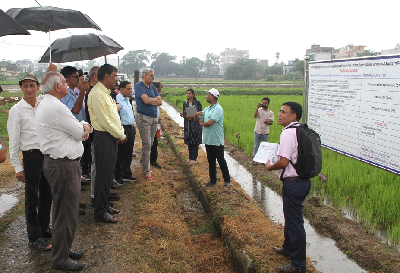
The meeting was attended by Dr C.L. Acharya, Former Director, ICAR–Indian Institute of Soil Science (ICAR–IISS), Bhopal; Dr A.S. Panwar, Former Director, ICAR–Indian Institute of Farming Systems Research (ICAR–IIFSR), Modipuram; Dr Rakesh Kumar, Assistant Director General (Agronomy, Agroforestry, Forestry & Climate Change), ICAR, New Delhi; Dr Anup Das, Director, ICAR–RCER, Patna, along with Heads of Divisions, scientists of the Institute, and representatives from the Krishi Vigyan Kendras (KVKs), Buxar and Ramgarh.
Addressing the meeting, Dr A.K. Singh emphasized the need to enhance land and water productivity through resource-efficient and climate-smart agricultural practices, particularly for the small and marginal farmers of Bihar, Jharkhand, and the wider Eastern Region. He stressed improving water and nutrient use efficiency and promoting sustainable agricultural practices to enhance resilience and productivity.
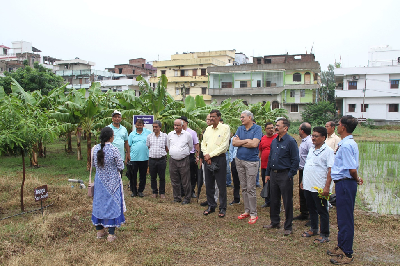
Dr Rakesh Kumar, Assistant Director General, ICAR, appreciated the Institute's significant research contributions and emphasized that future research should remain closely aligned with national priorities. He highlighted the importance of developing climate-smart villages, rehabilitating coal mine-affected areas, and designing technologies tailored to the needs of small and marginal farmers.
Welcoming the dignitaries, Dr Anup Das, Director, ICAR–RCER, presented an overview of the Institute's major research achievements, ongoing programmes, and future priorities. He highlighted the Institute's commitment to not only generating quality research but also ensuring the effective transfer of proven technologies to farmers through extension and capacity-building programmes. He informed the Committee that Rice Fallow Management has emerged as one of the Institute's flagship programmes, significantly contributing to sustainable agricultural intensification through resource conservation technologies and improved rice, pulse, and oilseed varieties. As a result, the area under the rice fallow system in Eastern India has reduced by nearly 1.5 million hectares over the past decade.
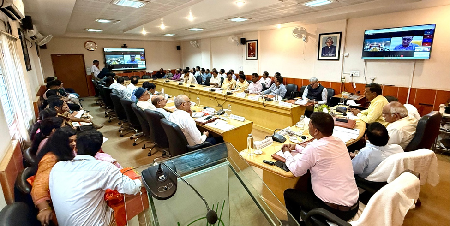
The RAC provided strategic guidance for strengthening research in the areas of sustainable rice fallow intensification, Integrated Farming Systems (IFS), water-smart agriculture, climate-resilient farming, livestock and fisheries, resource-efficient horticulture, processing and value addition, and evidence-based policy support. The Committee also emphasized the need for systematic impact assessment of research programmes and encouraged greater interdisciplinary and collaborative research to expand the outreach and impact of technologies across Eastern India.
Earlier, the RAC members participated in rice transplanting along with the Institute's scientists and visited various experimental fields, research facilities, and laboratories to gain first-hand insights into the ongoing research activities.
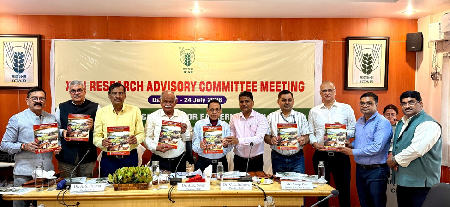
As part of the programme, the Committee also participated in a tree plantation drive by planting fruit trees, including mango and guava. An exhibition showcasing the Institute's technologies and products was organized for the visiting members. The occasion also witnessed the release of four publications and the signing of a Memorandum of Understanding (MoU) with Gbiome Private Limited for the scientific management of agricultural waste through microbial inoculation, reinforcing collaborative efforts towards sustainable agriculture.
During the technical sessions, Heads of Divisions and representatives from the KVKs presented the Institute's key research achievements, technology developments, extension initiatives, and future strategies covering crop improvement, farming systems, land and water management, livestock and fisheries, agricultural socio-economics, and the activities of the KVKs at Buxar and Ramgarh.
Expressing satisfaction over the Institute's achievements during its 25-year journey, the RAC members appreciated the quality and impact of the research undertaken for the benefit of farmers and agricultural development in Eastern India. The Committee recommended greater emphasis on enhancing land and water productivity, promoting climate-smart agriculture, quality seed and planting material production, fish seed and livestock production through the Public-Private Partnership (PPP) mode, strengthening policy support for technology dissemination, and developing value chains for key agricultural commodities.
(Source: ICAR-Research Complex for Eastern Region, Patna)



Like on Facebook
Subscribe on Youtube
Follow on X X
Like on instagram