


For India’s mechanised fishing sector, fuel is one of the biggest operating expenses, accounting for nearly 50–60% of the cost of fishing operations. At the same time, rising fuel prices and growing concerns over greenhouse gas emissions are placing increasing pressure on the profitability and environmental sustainability of marine fisheries. One of the major contributors to fuel consumption is the high hydrodynamic drag generated by conventional otter boards used to keep trawl nets open during fishing operations.
Recognising the need for a more efficient alternative, ICAR–Central Institute of Fisheries Technology, Kochi initiated an Institute Research Project in April 2020 to improve the hydrodynamic performance of conventional V-form otter boards. The effort built upon earlier studies undertaken by ICAR-CIFT in collaboration with M/s Garware Technical Fibres Ltd., which demonstrated the potential of slotted otter boards to improve the lift-to-drag ratio.
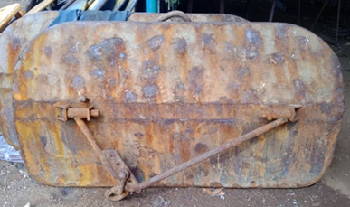
Building on these findings, ICAR-CIFT scientists developed the CIFT-V Form Double Slotted Otter Board (CIFT-VSOB)—an indigenous innovation that retains the simplicity and practicality of the conventional V-form design while incorporating scientifically designed hydrodynamic slots to reduce drag. Fabricated initially using IS 2062 Grade-B steel, the boards offer strength, corrosion resistance, wear resistance and longer operational life under commercial fishing conditions. ICAR-CIFT has also initiated the development of stainless-steel versions to further enhance durability and reduce maintenance requirements.
The innovation has demonstrated clear benefits under both research and commercial fishing conditions. By allowing water to pass through the slots, the CIFT-VSOB reduces hydrodynamic drag and, in trials, delivered an average fuel saving of 3 litres per hour of trawling compared with conventional non-slotted V-form boards of similar specifications. At the same time, the technology provided a greater trawl-mouth opening, contributing to improved catch performance.
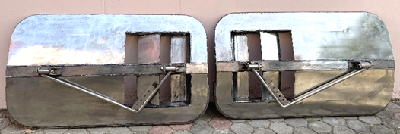
These results were validated through extensive sea trials conducted onboard the ICAR-CIFT research vessel, using fuel-consumption meters and trawl telemetry sensors to assess fuel efficiency and net-mouth opening. A year-long study reaffirmed the average saving of 3 litres of fuel per hour, while feedback from commercial fishing vessels, particularly in Kerala and Karnataka, indicated similar fuel-saving benefits. Improved trawl-mouth opening and catch performance further strengthened the technology’s potential for practical adoption.
Importantly, the innovation has been designed as a practical and accessible replacement for existing equipment. CIFT-VSOBs are compatible with prevailing fishing practices and are available through local workshops at a cost of approximately ₹30,000–₹50,000 per pair, depending on their size and weight. Their weight ranges from 80 to 160 kg per board, depending on the engine capacity of the trawler.
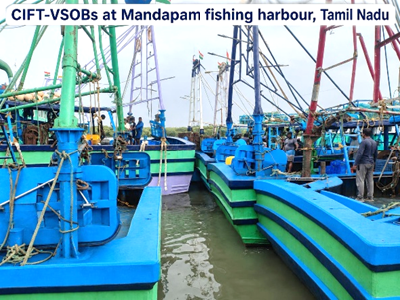
Encouraged by the results, ICAR-CIFT secured financial support under the Pradhan Mantri Matsya Sampada Yojana through the National Fisheries Development Board (NFDB), with a funded project commencing in April 2023 to promote awareness, dissemination and commercial adoption of the technology across different States. The technology has since received encouraging acceptance from fishermen, and the Maharashtra Fisheries Department procured 20 pairs for its fishing community. Adoption has also been demonstrated among commercial trawlers in other parts of the country.
The potential impact of wider adoption is substantial. India has approximately 32,000 trawlers, and the document estimates that if 50% of the fleet adopts CIFT-VSOB, nearly 9 million litres of diesel could be saved, along with a reduction of approximately 18 million kg of CO₂ emissions from the fishing sector. This positions the technology not only as a cost-saving innovation for fishermen, but also as an important step towards more sustainable and climate-resilient fisheries.
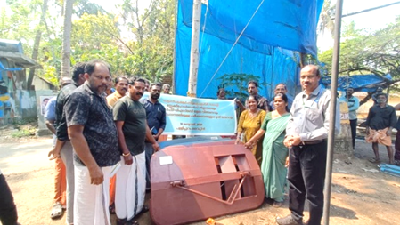
The journey from research to field adoption reflects ICAR-CIFT’s sustained effort to translate scientific innovation into practical solutions for the fishing community. With continued commercial validation, development of stainless-steel variants and wider dissemination across India’s mechanised trawl fleet, the CIFT-VSOB offers a promising pathway towards fuel-efficient, environmentally responsible and economically viable fishing, contributing to India’s Blue Economy and broader Net Zero ambitions.
(Source: ICAR–Central Institute of Fisheries Technology, Kochi)



फेसबुक पर लाइक करें
यूट्यूब पर सदस्यता लें
X पर फॉलो करना X
इंस्टाग्राम पर लाइक करें