


Meeting focuses on operationalizing the approved Action Plan and preparing location-specific interventions for the next phase
22 September 2026, Hyderabad
A three-day Stakeholders’ Meeting on “Operationalizing the Action Plan and Preparing Location-Specific Action Plans” under the National Innovations on Climate Resilient Agriculture (NICRA)–Technology Demonstration Component (TDC) was inaugurated today at the ICAR–Central Research Institute for Dryland Agriculture, Hyderabad. The meeting is being organized from 22–24 September 2026.
The meeting aims to review the achievements and lessons of the past five years and translate the approved NICRA-TDC Action Plan into location-specific action plans for the next phase.
Dr B. Venkateswarlu, Former Vice Chancellor, Vasantrao Naik Marathwada Agricultural University, Parbhani, was the Chief Guest of the inaugural session. The other dignitaries included Dr S.R.K. Singh, Director, ICAR-Agricultural Technology Application Research Institute (ATARI), Jabalpur; Dr Shaik N. Meera, Director, ICAR-ATARI, Hyderabad; and Dr M. Prabhakar, Director, ICAR-ATARI, Bengaluru. Dr Ranjay Singh, Assistant Director General (Agricultural Extension), ICAR, New Delhi, attended the programme virtually.
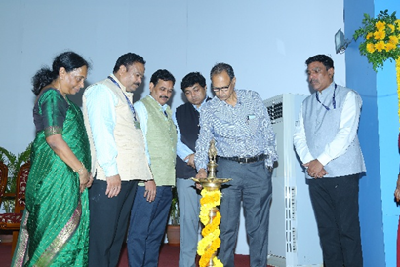
In his welcome address, Dr V.K. Singh briefed the participants on the objectives of the meeting and highlighted the importance of NICRA-TDC in strengthening climate resilience in agriculture. He appreciated the contribution of Krishi Vigyan Kendras (KVKs) to the programme over the past 15 years and noted that several States have been utilising the contingency plans prepared by ICAR-CRIDA. He informed that NICRA-TDC, implemented through 151 KVKs in climate-vulnerable districts across 33 States, has significantly enhanced the adaptive capacity of farmers through location-specific interventions.
Dr S.R.K. Singh stressed the importance of leveraging digital tools in agricultural extension to facilitate wider and more efficient outreach to farmers. He also emphasised the need for greater convergence among stakeholders for effective implementation of climate-resilient agricultural interventions.
Highlighting the evolution of NICRA-TDC over the past 15 years, Dr Shaik N. Meera appreciated its contribution towards strengthening climate resilience in agriculture. He also highlighted the importance of the contingency plans prepared by ICAR-CRIDA in addressing weather-related challenges, including the impacts associated with El Niño. He emphasised the growing role of digital agriculture, mobile advisories, GeoAI, real-time field monitoring and wide-reach digital dissemination in strengthening climate-resilient agricultural extension.
Dr M. Prabhakar highlighted the role of contingency plans in responding to weather-related challenges and noted their utility in addressing the impacts associated with El Niño conditions during 2026.
In his virtual address, Dr Ranjay Singh highlighted the experiences gained in addressing climate-related challenges, including El Niño, during the current year. He emphasised the need to update contingency plans based on field-level experiences and called for stronger coordination with State Departments for their effective implementation.
Addressing the gathering, Dr B. Venkateswarlu emphasised the importance of knowledge-sharing and interaction among KVKs to facilitate the exchange of field experiences and successful practices. He highlighted the progress achieved in agriculture and allied sectors over the past 15 years through technology-driven interventions, including precision agriculture, drip irrigation, fertigation, conservation agriculture and drones. He noted that NICRA has played an important role in sensitising stakeholders, from farmers to policymakers, about the challenges posed by climate change. He stressed the need to leverage Artificial Intelligence (AI), Machine Learning (ML), Internet of Things (IoT) and other digital technologies to develop innovative approaches for addressing emerging climate challenges.
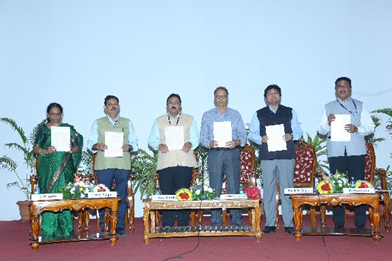
During the inaugural programme, publications were also released. The inaugural session was followed by concurrent zone-wise review sessions on NICRA-TDC progress, during which scientists from KVKs presented their progress, experiences and learnings from the past five years.
The three-day meeting comprises seven sessions, including a dedicated session on ‘Operationalizing the Action Plans’, focusing on translating the approved programme framework into practical, location-specific interventions.
The deliberations are focusing on reviewing progress, identifying gaps, sharing successful experiences and operationalizing the approved Action Plan. The recommendations emerging from the meeting will guide the next phase of NICRA-TDC, with emphasis on location-specific farming-system interventions, institutional convergence, digital monitoring and sustainable climate resilience at the village level.
More than 100 delegates, including Directors of ATARIs and ICAR institutes in Hyderabad, Nodal Scientists, Zonal Monitoring Committee (ZMC) members, scientists from ICAR institutes and KVKs, programme stakeholders and scientists from ICAR-CRIDA, are participating in the meeting.
(Source: ICAR-Central Research Institute for Dryland Agriculture, Hyderabad)



फेसबुक पर लाइक करें
यूट्यूब पर सदस्यता लें
X पर फॉलो करना X
इंस्टाग्राम पर लाइक करें