


The Government of Goa launched the Financial Assistance Scheme for Setting up Mud Crab Culture Units on National Fish Farmers Day (10 July 2026) to promote scientific pen and box culture of mud crab (Scylla spp.) in the State.
ICAR–Central Coastal Agricultural Research Institute, Old Goa, which provides training and technical support for crab culture in Goa, deputed a team to Koduru Mandal in Krishna District, Andhra Pradesh, one of India's largest smallholder pond-based crab farming clusters, to study a working commercial model, understand the challenges faced by farmers and identify research and development solutions that can be adapted to Goan conditions.
The experts interacted with farmers, seed suppliers and collection agents. The Koduru cluster covers about 3,000 acres and nearly 500 small farmers across nine coastal villages, stocking about 10 lakh crab seed per crop and supplying around 500 kg of live crabs to the market every day.
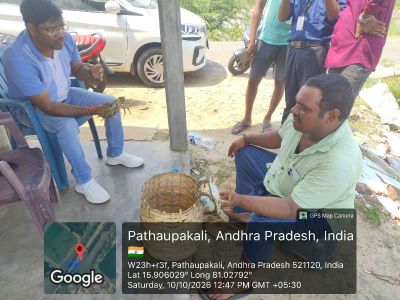
Crabs are grown in earthen ponds of 1–3 acres with 3–4 feet of water and salinity of 25–35 ppt, and farmers take two crops of about six months each year. Seed is brought from Tamil Nadu, from RGCA hatchery sources and wild collection, at ₹25–35 per instar, and groups of 10–20 farmers purchase it collectively to reduce cost. Seed is stocked at 500 per acre with 50–60% survival, and crabs are fed trash fish at about 10% of body weight with a feed conversion ratio of 3.0–3.4.
Harvested crabs move from village collection points to aggregators at Koduru and then to Chennai and other metros, with onward export, and are sold by size grade at prices ranging from ₹400/kg for crabs below 350 g to ₹1,700/kg for extra-large crabs above 750 g. The farm budget shows a total cost of ₹1.02 lakh and gross revenue of ₹1.70 lakh per acre per crop from a 160 kg harvest, giving a net return of ₹67,960 and a benefit–cost ratio of 1.67.
The team noted that farmers depend on out-of-state seed of variable quality, lose a large share of stock to cannibalism during moulting because shelters are rarely used, rely heavily on trash fish, face disease problems, use diesel pumps for water exchange and keep few farm records. These lessons define the research agenda of ICAR–CCARI for Goa: securing a reliable supply of healthy seed and developing nursery rearing to deliver larger juveniles; standardising low-cost shelters and stocking densities for Goan ponds, pens and box systems; biomass-based feeding and alternatives to trash fish; disease diagnosis and biosecurity in collaboration with ICAR fisheries institutes; and solar-powered water pumping, which was already seen at some Andhra farms.
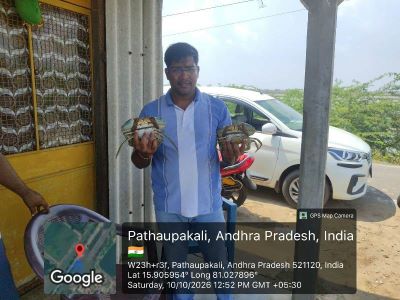
The Andhra experience also shows that collective seed purchase, a cluster approach and size-graded marketing are the main reasons small farmers there earn steady profits.Building on this study, ICAR–CCARI will develop a Goa-specific mud crab culture package of practices covering pond, pen and box (horizontal and vertical) systems suited to khazan lands, estuarine banks and mangrove fringes, together with standard protocols for nursery rearing, shelter use, feeding, water quality and crab health.
Demonstration units will be set up at the Institute's Ela farm and on farmers' fields, and beneficiaries of the State scheme, especially women self-help groups, fisher families and rural youth, will be trained through hands-on programmes. The Institute will also help form crab farmer clusters for collective seed procurement and marketing, and link them with hotels, restaurants and the tourism sector, where demand for large live crabs is strong.
The expected outcomes are the productive use of fallow and underused khazan and brackishwater lands, an additional and dependable income for Goan farm families, with the Andhra figures indicating net returns of around ₹65,000–70,000 per acre per crop under good management, new self-employment for women and youth in coastal villages, reduced dependence on crabs brought from other States, and less fishing pressure on wild crab stocks, in line with the State's call to protect berried female crabs. Together, these efforts are expected to make crab culture a reliable, climate-resilient livelihood for Goa's coastal communities.
(Source: ICAR–Central Coastal Agricultural Research Institute, Goa)



फेसबुक पर लाइक करें
यूट्यूब पर सदस्यता लें
X पर फॉलो करना X
इंस्टाग्राम पर लाइक करें