
For generations, tossa jute (Corchorus olitorius) was known across rural India simply as the "golden fiber"—a hardy crop harvested for biodegradable fibre for manufacturing of industrial sacks, hessian, ropes, and geo-textiles. Although, traditionally the farmers often pick tender leaves to cook as leafy vegetables at home, the crop’s true potential as a nutrient-dense food remained hidden because of its current popularity as fiber crop.
ICAR-Central Research Institute for Jute and Allied Fibres, Barrackpore has started a targeted breeding approach to develop a nationally rich jute variety suitable for multiple cuts in short duration ideal for leafy vegetables and jute leaf-based drink for farm income generation from byproducts.
The Breakthrough
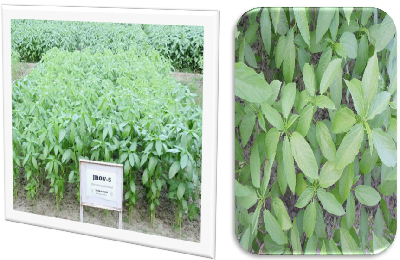
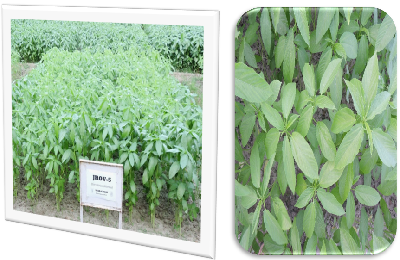
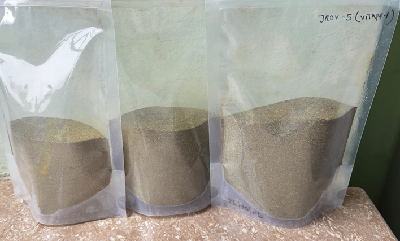
ICAR-CRIJAF developed nutritionally enriched India’s first vegetable-type jute variety “Vitapat-1” (JROV-5). Unlike traditional fiber cultivars, Vitapat-1 was bred to enhance the nutritional quality of jute leaves. Its leaves yielded 15% to 30% more Vitamin C, alongside rich concentrations of iron, essential minerals, and antioxidant flavonoids. Laboratory tests further confirmed that extracts from these leaves possessed natural chemo-preventive and immune-boosting properties. The dry leaf powder of this variety contains 7.13% moisture, 11.3 % ash and 28% crude protein which is also ideal for enhancing its shelf-life.
The advantages: Rapid Harvests and Year-Round Yields
30-Day harvest: When sown in trial fields, Vitapat-1 demonstrated remarkable faster growth. Within just 30 days of planting, an impressive foliage yield of 150 q/ha is obtained which has the potential to increase in cases of high-density sowing.
Flexible Harvesting: Farmers can get a wide harvesting window between 25 and 45 days, allowing them to adjust picking schedules based on local market prices.
Continuous Cropping: Because it can be cultivated continuously from February–March through November–December (and year-round in suitable climates), farmers can harvest multiple consecutive crops on the same area of land.
The marketing is not adversely affected even though market demand for leafy vegetable fluctuates.
Transforming Rural Communities
As Vitapat-1 can be grown across agro-climatic zones, it gives a great opportunity to the farmers to eanr more in a short period of time from a smaller piece of land. In rural areas, the crop provides immediate nutritional security, offering women and children an affordable source of vital micronutrients. Economically, the shorter crop cycle enables the farmers to get profit in very short period of time.
The Road Ahead: Building a Superfood Market
Today, the story of Vitapat-1 is a case study to be expanded from farmers’ fields to urban health-conscious consumers for which following innovations have been initiated.
Value-Added processing can further be taken up for transforming leaves into bio fortified powders which can be consumed directly or to enrich staples like rice, wheat, millets, and pulses. The leaves being the primary source of nutraceuticals, bioactive compounds can be extracted for packaged health supplements and functional foods. Establishing direct market linkages to supply fresh, pre-packaged jute greens to urban supermarkets.
(Source: ICAR-Central Research Institute for Jute and Allied Fibres, Barrackpore)