
ICAR-Central Research Institute for Jute and Allied Fibres (ICAR-CRIJAF), Barrackpore, is promoting the development of high-quality jute fibre and its diversified, high-value applications beyond traditional uses. With a focus on need-based and market-driven products that can serve as sustainable alternatives to plastics and synthetic materials, the Institute is also creating new livelihood opportunities for rural communities, particularly farm women.
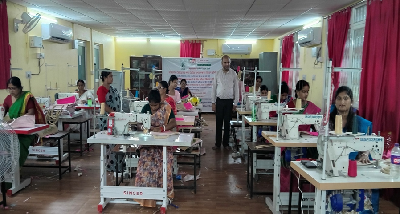
A major step in this direction has been the establishment of a Skill Development Centre at the Institute, which has emerged as an important platform for empowering rural women, especially members of Self-Help Groups (SHGs), through skill development and entrepreneurship. Over the last five years, ICAR-CRIJAF has conducted 55 skill development training programmes, benefiting 870 farm women in the value addition and diversified utilisation of jute fibre and fabrics.
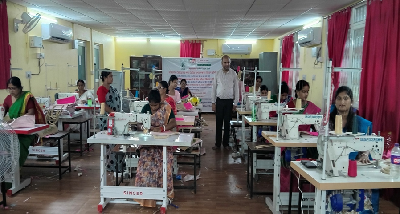
Moving beyond conventional training, the programmes emphasise intensive hands-on practical sessions, followed by guidance on entrepreneurship development, product improvement and market linkages. After acquiring skills in manufacturing diversified jute products, the trained women are connected with Farmer Producer Companies (FPCs) and SHGs, providing them with institutional support for collective production, enterprise development and marketing.
To expand the outreach of these initiatives, ICAR-CRIJAF has also facilitated the establishment of off-campus skill development centres in North 24 Parganas and South 24 Parganas districts of West Bengal. The Institute continues to support these groups through technical guidance, product development, exposure visits and participation in exhibitions, fairs and promotional events, enabling them to improve product visibility and access wider markets.
From Skill Development to Lakhpati Didis: Building an End-to-End Jute Value Chain
The impact of these interventions is increasingly evident at the grassroots level. SHGs such as Ashirbad, Sankalpa and Ichamoti have generated incomes running into lakhs of rupees through the sale of diversified jute products. What began as a skill development initiative is gradually evolving into a pathway towards the Lakhpati Didi vision, enabling rural women to emerge as entrepreneurs and generate substantial household incomes through their own enterprises.

The financial growth of ICAR-CRIJAF-trained farm women SHGs engaged in the production of value-added jute products reflects the success of this integrated approach. Through sustained capacity building, skill development, product diversification and market-oriented training, the combined annual turnover of these SHGs has increased from ₹0.74 lakh in 2021–22 to ₹13.30 lakh in 2022–23, ₹44.71 lakh in 2023–24, ₹82.25 lakh in 2024–25 and ₹96.25 lakh in 2025–26. This represents an increase of more than 130 times over five years, highlighting the effectiveness of the Institute's interventions in transforming traditional skills into viable income-generating enterprises.
The initiative demonstrates how women's empowerment can be integrated with the growth of the jute sector through an end-to-end value chain approach—from farm, fibre, fashion and factory to foreign markets. By bringing together improved jute cultivation, scientific production practices, skill development, product diversification, collective organisation and market-oriented entrepreneurship, the Institute is helping ensure that greater economic value is retained within rural communities.
Beyond Income: Building Confidence and Economic Independence
The transformation extends beyond financial gains. Participation in production, enterprise management and marketing has strengthened women's economic independence, self-confidence, decision-making abilities and social recognition. Women who were earlier primarily engaged in household and agricultural activities are increasingly emerging as skilled producers, entrepreneurs and income earners, contributing significantly to their families and the local rural economy.

A Replicable Model of Institution-Led Rural Transformation
The experience of ICAR-CRIJAF demonstrates that skill development alone is not sufficient to establish sustainable livelihood enterprises. Continuous technical handholding, technology support, productive inputs, collective organisation, entrepreneurship guidance and market linkages are equally essential. This integrated approach bridges the gap between training and income generation, enabling rural women to translate acquired skills into sustainable enterprises.
The Institute's initiative is emerging as a replicable model of institution-supported rural transformation, highlighting the role of agricultural research institutions beyond technology development in promoting women-led entrepreneurship and rural economic growth. By converting the creativity, skills and entrepreneurial potential of rural women into viable micro-enterprises, ICAR-CRIJAF is not only strengthening livelihoods but also contributing to a sustainable, diversified and economically vibrant jute-based rural economy.
(Source: ICAR-Central Research Institute for Jute and Allied Fibres, Barrackpore)