


15 July 2026, Bengaluru
ICAR–National Bureau of Agricultural Insect Resources, Bengaluru, in collaboration with the Center for International Research, Education and Development (CIRED), Virginia Tech, USA, organized an International Workshop on “Areawide Management of Melon Fly: From Research to Field Application” in hybrid mode today in ICAR-NBAIR, Bengaluru. The workshop served as a platform for scientists, policymakers, industry representatives, extension personnel, and international experts to deliberate on sustainable management strategies for melon fly and strengthen collaborative research efforts.
The workshop highlighted the growing need for integrated, environmentally sustainable management strategies for melon fly (Zeugodacus cucurbitae), one of the most destructive pests of cucurbit crops, in the context of climate change, expanding cultivation of cucurbits, and increasing global movement of agricultural commodities. Discussions emphasized the role of area-wide integrated pest management (AW-IPM), semiochemical-based approaches, biological control, sterile insect techniques, and digital surveillance as effective alternatives to conventional insecticide-dependent management.
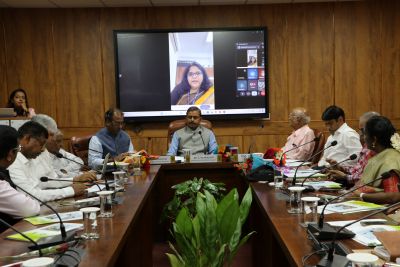
The inaugural session featured opening remarks by Dr Poonam Jasrotia, Assistant Director General (Plant Protection & Biosafety), ICAR, who emphasized the importance of international collaboration in developing sustainable and economically viable management strategies for melon fly.
Dr T. Venkatesan, Director (Acting), ICAR-NBAIR, highlighted the importance of strengthening research and international collaborations for developing effective and sustainable management strategies against invasive insect pests.
Dr R. Muniappan, Director, CIRED, Virginia Tech, USA, emphasized the need for global cooperation in translating research findings into practical field applications for area-wide management programmes.
The technical sessions covered a broad spectrum of topics including the status and distribution of tephritid fruit flies in India, biogeography of melon fly, sanitation measures, conservation and utilization of natural enemies, semiochemical-based management, bisexual attractants, biosensor technologies for pest detection, genomic tools for melon fly management, impact assessment of management technologies, sanitary and phytosanitary issues related to agricultural exports, and the role of stakeholders in implementing effective management programmes. These presentations showcased recent advances in research and highlighted practical strategies for translating scientific innovations into field-level applications.
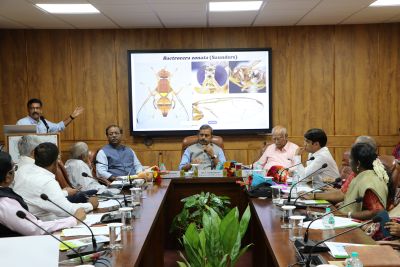
The workshop also featured an interactive brainstorming session involving scientists from ICAR institutes, State Agricultural Universities, State Departments, Krishi Vigyan Kendras, industry, and export organizations.
Participants discussed future research priorities, technology dissemination, policy support, and institutional partnerships required for implementing area-wide melon fly management programmes in India.
The workshop concluded with a networking session focusing on strengthening national and international collaborations for developing coordinated area-wide management programmes and externally funded research initiatives. The deliberations underscored the importance of integrated surveillance, adoption of innovative pest management technologies, biological control, and multidisciplinary collaboration for achieving sustainable management of melon fly and enhancing the productivity and profitability of cucurbit cultivation.
(Source: ICAR–National Bureau of Agricultural Insect Resources, Bengaluru)



Like on Facebook
Subscribe on Youtube
Follow on X X
Like on instagram