


25 April 2026, Goa
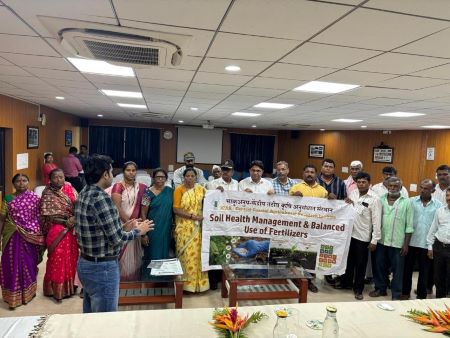
ICAR–Krishi Vigyan Kendra, North Goa, under the aegis of ICAR–Central Coastal Agricultural Research Institute, Goa, organized a Kisan Gosthi on ‘Soil Test-Based Balanced Nutrient Management for Sustainable Crop Production’ at ICAR–CCARI, Goa.
The programme aimed to create awareness among farmers on the importance of soil test-based nutrient management for sustaining soil health and enhancing long-term agricultural productivity. Experts emphasized the need for applying the right type and quantity of nutrients based on actual soil nutrient status, rather than relying on generalized fertilizer recommendations.
During the session, experts elaborated on the role of soil testing in identifying deficiencies and excesses of essential nutrients such as nitrogen, phosphorus, potassium, sulphur, and micronutrients. This approach enables balanced fertilization, improves nutrient use efficiency, and helps reduce unnecessary input costs. They also highlighted that excessive and imbalanced fertilizer use can lead to soil degradation, including issues such as soil acidity, salinity, nutrient depletion, and reduced organic matter content.
The programme further underscored the importance of integrated nutrient management through the combined use of organic manures, biofertilizers, green manuring, crop residues, and chemical fertilizers in appropriate proportions. Experts noted that soil test-based nutrient management is a scientific, cost-effective, and environmentally sustainable approach that supports improved crop yields, enhanced farm income, and long-term food security.
A total of 16 participants, including 11 men and 5 women, attended the programme, indicating growing interest among farmers in adopting scientific nutrient management practices.
(Source: ICAR–Central Coastal Agricultural Research Institute, Goa)



Like on Facebook
Subscribe on Youtube
Follow on X X
Like on instagram