


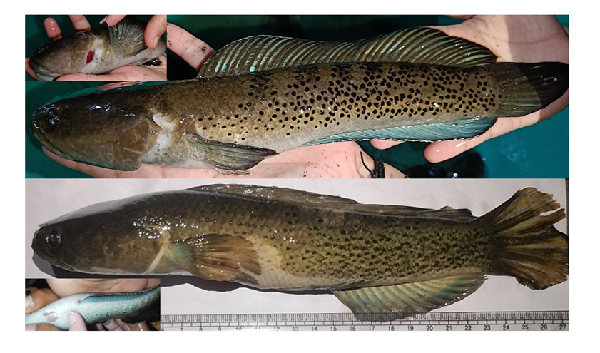
In the crystal-clear hill streams of the upper Brahmaputra, Channa stewartii the Assamese snakehead has long shimmered as a hidden jewel of Northeast India’s aquatic biodiversity. Measuring barely 20 cm, yet adorned with iridescent blue fins and elegant stripes, this visually captivating species has rapidly gained prominence in the ornamental fish trade, fetching ₹600–1200 per pair. However, its growing market demand has come at a cost. With most supplies still sourced from the wild, increasing pressure on fragile hill-stream ecosystems has raised serious concerns about overexploitation and habitat degradation. The absence of a standardized captive breeding protocol had, until recently, constrained both conservation efforts and sustainable commercialization.
Recognizing this critical gap, the ICAR–Central Inland Fisheries Research Institute, Barrackpore initiated a pioneering intervention under the AINP on Ornamental Fish Breeding and Culture at its Regional Centre, Guwahati. Beginning in April 2024, nearly 30 wild-caught brooders (200–230 g each) were carefully acclimatized in controlled conditions to initiate systematic breeding research.
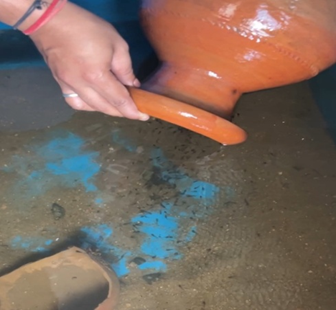
The brooders were maintained in cemented tanks thoughtfully designed to replicate their natural habitat. By incorporating sand substrates, bamboo structures, and earthen refugia, researchers recreated a semi-natural ecosystem that minimized stress and encouraged natural breeding behaviour, laying the foundation for successful captive propagation.
Scientific precision guided every step of broodstock management. Water quality parameters were consistently maintained within optimal ranges, while a carefully curated live feed earthworms, ant larvae, and aquatic invertebrates enhanced gonadal maturation and reproductive readiness. This conditioning led to the identification of a mature breeding pair, clearly exhibiting sexual dimorphism: males with nuptial tubercles and active milt release, and females with distended abdomens and ova release.
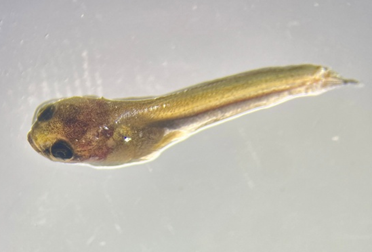
The selected pair was transferred to a semi-natural FRP tank, where a remarkable transformation unfolded. The species exhibited a fecundity range of 1,578–2,769 eggs (217–346 eggs g⁻¹), producing spherical, buoyant eggs of approximately 820 µm in diameter. In April 2026, a historic milestone was achieved the first successful natural captive breeding and larval rearing of Channa stewartii in India. With a hatching success of 73%, the larvae (~8.4 mm) displayed notable parental care before being safely shifted to rearing systems.
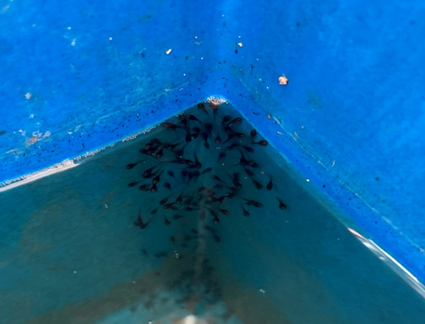
The success extended beyond breeding to the subsequent larval rearing phase under controlled conditions. The larvae demonstrated healthy emergence from hideouts and active free-swimming behaviour, marking a critical advancement in completing the propagation cycle of this high-value ornamental species.
This achievement represents a significant breakthrough in ornamental fisheries, demonstrating for the first time the feasibility of hormone-free natural breeding through optimized environmental design and broodstock management. It establishes a replicable, eco-friendly approach for sustainable fish production.
Reflecting on the success, Dr Pradip Dey, Director, ICAR-CIFRI, emphasized that captive breeding of Channa stewartii offers a clear pathway for sustainable ornamental fisheries. He highlighted the need to scale hatchery production under PMMSY, reduce pressure on wild stocks, and promote aquapreneurship among youth and farmer groups. He further stressed the importance of establishing a robust framework for captive-bred certification and regulated harvesting, along with regional clustering in Northeast India through convergence among ICAR, KVKs, and State Fisheries Departments for effective last-mile delivery. He also congratulated the team for this landmark achievement.
This achievement is far more than a technical success. It establishes a sustainable pathway to reduce dependency on wild stocks, thereby alleviating ecological pressure on vulnerable hill-stream habitats. Simultaneously, it opens new avenues for aquapreneurship, enabling farmers and rural youth to cultivate a premium ornamental species with strong market demand.
As the first documented report of captive breeding of Channa stewartii in India, this work lays a strong scientific foundation for future research on large-scale propagation, genetic improvement, and commercialization strategies. Ultimately, it reflects a powerful convergence of conservation and enterprise where science not only safeguards biodiversity but also transforms it into a sustainable engine of livelihood and innovation.
(Source: ICAR–Central Inland Fisheries Research Institute, Barrackpore)



Like on Facebook
Subscribe on Youtube
Follow on X X
Like on instagram