


22-24 April 2026, Kayamkulam
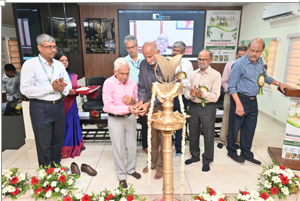
A National Seminar on “Biosecurity risks and mitigation strategies in horticultural crops” was held at the ICAR-Central Plantation Crops Research Institute, Regional Station, Kayamkulam from 22–24 April 2026. The seminar aimed to address biosecurity risks in horticultural crops and promote innovative technological solutions aligned with the One Health approach.
The seminar was inaugurated virtually by Dr S. K. Singh, Deputy Director General (Horticulture Science), ICAR. In his address, he highlighted the growing threats of bio invasions to horticultural crops, stating their significant economic impact and potential risks to national livelihood security. He called for detailed deliberations and the development of actionable strategies, including a white paper on sustainable biological solutions to combat biosecurity threats.
The Presidential address was delivered by Dr K. B. Hebbar, Director, ICAR-CPCRI, Kasaragod, emphasizing the interconnected nature of abiotic and biotic stress factors. He cited examples such as the rugose spiralling whitefly and coconut eriophyid mite infestations, along with leaf spot disease in arecanut, which have caused severe economic losses. He noted that area-wide, farmer-participatory management strategies are being implemented for effective outreach.
The keynote address was delivered by Dr T. P. Rajendran, former Assistant Director General (Plant Protection & Biosafety). He stressed that although India has stringent quarantine laws, their implementation remains slow. He advocated for the creation of a Biosecurity Risk Atlas and stronger policy measures to prevent the entry of invasive pests.
A highlight of the seminar was the Dr K. P. V. Menon Memorial Lecture Award 2026, delivered by Dr. George V. Thomas, former Director, ICAR-CPCRI. He outlined the research contributions of Dr K. P. V. Menon and discussed future research directions, particularly focusing on innovative solutions to manage root (wilt) disease in coconut and improve productivity.
Felicitations were offered by Dr R. Selvarajan, Director, ICAR-NRC for Banana, Tiruchirapalli, and Dr J. Dinakara Adiga, Director, ICAR-DCR, Puttur.
Shri. I. Samsutheen, a progressive farmer from Tenkasi and beneficiary of the Laying out of Demonstration Project (LODP) implemented by ICAR-CPCRI, received the Kalpa Vajra Best Coconut Farmer Award–2026 for his innovative integrated farming model. The award included a cash prize of ₹10,000, a citation, trophy and a shawl.
Three technology products were released during the seminar:
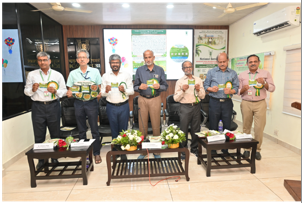
• Kalpa Steinernema keralense capsules for biosuppression of red palm weevil
• Kalpa Anastatus egg cards for managing nut crinkling coreid bug
• Kalpa Vridhi a PGPR (Pseudomonas migulae) formulation for soil-health amelioration in coconut plantations
Additionally, two technical bulletins- “Coconut Health Management” and “Invasive Pests of Coconut: Biosecurity Risks and Mitigation Strategies”-along with a technical folder on ‘Coconut cultivation practices’, were released.
The seminar featured three technical sessions and a workshop on biosecurity issues in planting materials while renowned experts delivered insightful lectures.
In the valedictory session, Dr N. K. Krishnakumar, former Deputy Director General (Horticultural Science), emphasized the urgent need for revival of the Agricultural Biosecurity Bill, 2013 and for establishment of Agricultural Biosecurity Authority of India (ABAI) which is needed to tackle transboundary pests. He raised concerns about the unregulated movement of planting materials and highlighted gaps in interdisciplinary surveillance and diagnostic systems.
A plenary lecture highlighted recent advancements in research on coconut root (wilt) disease, while also acknowledging important historical contributions to the field.
On 24 April 2026, a cruise workshop on biosecurity outreach was conducted with a focus on strengthening awareness and collaborative efforts.
A session provided a historical overview of plantation crops, drawing on the classical work Hortus Malabaricus. Experts further discussed topics such as biodiversity literacy, economic impacts, and effective outreach strategies.
Around 120 delegates participated in the seminar.
(Source: ICAR-Central Plantation Crops Research Institute, Kasargod)



Like on Facebook
Subscribe on Youtube
Follow on X X
Like on instagram