


In the heart of Balipatna block in Odisha, where acidic soils and low nutrient use efficiency once constrained productivity, a quiet transformation has taken root. Years of imbalanced fertilizer use had eroded soil health, inflated input costs, and stalled farm incomes. What seemed like a persistent agrarian challenge became an opportunity for innovation led by science, and powered by women.
Recognizing this, ICAR-Krishi Vigyan Kendra (CIFE)–Khordha, guided by ICAR-ATARI, Kolkata, launched a focused intervention for the last four years under the Scheduled Caste Sub Plan. The strategy was simple yet powerful: restore soil health through balanced nutrient management while creating sustainable livelihoods through vermicomposting placing women Self-Help Groups (SHGs) at the center of change.
Impact of KVK Interventions
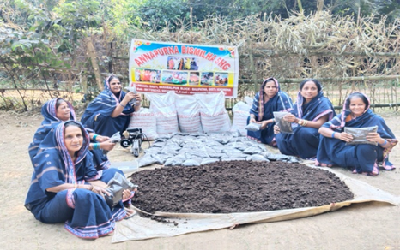
Over 300 Scheduled Caste farmwomen from 30 SHGs across villages like Majhihara, Dhanahara, Rajas, Danapada, Guapur, Alishi Sasan, and Barahala were trained in soil testing, integrated nutrient management, and scientific vermicompost production. With the provision of silpaulin vermibeds and Eisenia fetida earthworms, knowledge was swiftly translated into action. Soon, 100 vermicomposting units flourished converting farm waste into wealth.
Economic Transformation
The results were striking. The SHGs collectively built an annual production capacity of 300–320 tonnes of quality vermicompost, meeting the rising demand from farmers, nurseries, urban households, and government agencies. With a steady market and prices ranging from ₹10–15 per kg, these women began earning an additional ₹3,000–₹6,000 per month turning supplemental income into a reliable economic pillar.
One inspiring example is the Annapurna Bismilah SHG of Majhihara village, which elevated the initiative by branding and marketing its product as “VERMIGOLD”. This leap from producers to entrepreneurs enhanced product visibility, trust, and profitability.
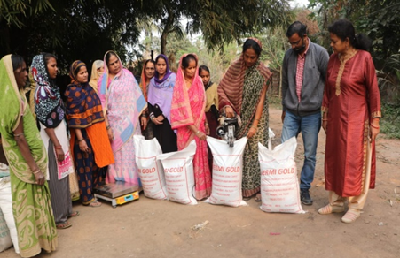
Simultaneously, ICAR-KVK Khordha advanced soil test–based nutrient management by synergistically integrating vermicompost with judicious chemical fertilizer use, enhancing soil health and input efficiency. The impact was multidimensional: improved soil structure and fertility, better crop quality, reduced pest and disease incidence, and lower input costs paving the way for resilient and sustainable farming systems.
Scaling and Inspiration
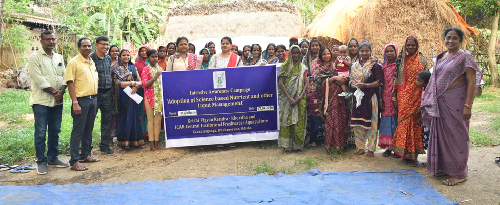
Emphasizing a decisive paradigm shift in rural transformation, Dr. Pradip Dey, Director, ICAR-ATARI Kolkata, highlighted that the initiative weaves together soil health restoration, circular bio-economy, and women’s empowerment into a unified, field-ready model. Its low-cost, scalable, and replicable design positions it as a powerful vehicle for convergence and widespread adoption under programmes such as SCSP and NRLM, while advancing the larger vision of climate-resilient, inclusive, and sustainable agriculture.
Beyond economic gains, the initiative has catalyzed a deep social transformation. Women have emerged as agri-entrepreneurs and knowledge leaders, strengthening their voice in household decision-making and gaining renewed confidence as they evolve from beneficiaries to drivers of change. Dr. Dey aptly described them as the true ambassadors of the ongoing campaign on balanced fertilizer use—championing sustainability from the soil to society.
Conclusion
What began as a response to soil degradation has evolved into a model of ecological restoration and inclusive rural development. The Balipatna vermicomposting initiative stands today as a compelling testament to how science-led, community-driven interventions can rejuvenate soils, secure livelihoods, and empower women—offering a scalable blueprint for sustainable agriculture across similar agro-ecologies.
(Source: ICAR- Agricultural Technology Application Research Institute, Kolkata)



Like on Facebook
Subscribe on Youtube
Follow on X X
Like on instagram