


A one-day Farmer–Scientist Interaction Meet-cum-Input Distribution Programme was organized today in Mayurbhanj district, Odisha, under the Development Action Plan for Scheduled Castes/Scheduled Tribes (DAPSC/ST) and AICRP schemes. The programme was jointly organised by ICAR-National Institute of Animal Nutrition and Physiology, Odisha University of Agriculture and Technology (OUAT), and the Department of Animal Husbandry & Veterinary Services, Cuttack, Odisha. The initiative focused on promoting scientific feeding practices and nutritional interventions for dairy cattle, with the objective of disseminating knowledge on precision feeding, nutrient optimization, and metabolic health management in dairy animals.
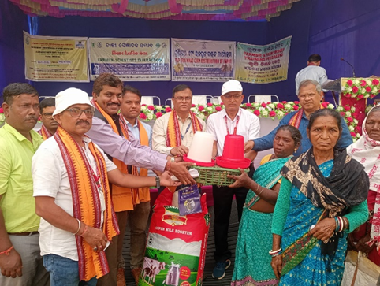
The programme was inaugurated by Dr. Artabandhu Sahoo, Director, ICAR-NIANP, who highlighted the critical role of strategic nutritional management in improving milk yield and fat content. He emphasized the importance of addressing micronutrient deficiencies to enhance rumen microbial efficiency. Dr. Sahoo also explained the use of rubber mats in clean milk production protocols, noting their role in improving animal welfare by reducing the incidence of laminitis. Input kits were subsequently distributed to the participating farmers.
The Guest of Honor, Prof. Niranjan Panda, Dean, Research, OUAT, addressed the gathering and outlined key practices for profitable livestock farming.
Experts from ICAR-National Dairy Research Institute, delivered a special lecture on the importance of adopting modern reproductive technologies to improve reproductive efficiency in dairy cattle.
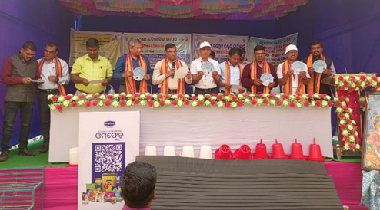
Scientists interacted extensively with farmers, underscoring the significance of outreach programmes in enhancing livestock-based livelihoods among SC/ST beneficiaries under the DAPSC/ST and AICRP schemes. The event served as an effective platform for promoting nutritional equity and productivity improvement in smallholder dairy systems.
A total of 100 Scheduled Caste and Scheduled Tribe dairy farmers participated in the programme and benefited from the distribution of essential inputs, including rubber mats (6 × 4 feet), 150 kg of cattle pellet feed (Type-1), 5 kg of Fertimin Plus mineral mixture, and a reproductive calendar chart in the Odia language.
(Source: ICAR–National Institute of Animal Nutrition and Physiology, Bengaluru)



Like on Facebook
Subscribe on Youtube
Follow on X X
Like on instagram