


The development of Kashi Sookshma-Shakti Plus, a liquid multi-micronutrient formulation enriched with plant growth regulators (PGRs), represents a significant advancement in the biofortification and productivity enhancement of leguminous vegetable crops. This technology was developed at ICAR–Indian Institute of Vegetable Research, Varanasi, through systematic research conducted from 2021–22 to 2023–24. The formulation was evolved after evaluating four customized micronutrient combinations (Micromix A, B, C, and D) under field conditions in pea and French bean. Among these, Micromix C, comprising vermiwash as a base along with essential micronutrients (Zn, Fe, Mn, Cu, B, Mo) and PGRs (GA₃ and NAA), consistently outperformed other treatments as well as existing commercial products. This optimized formulation was subsequently named Kashi Sookshma-Shakti Plus.
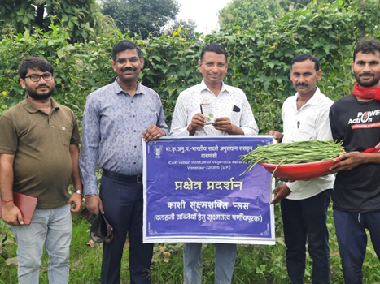
A key impactful finding of the study is that foliar application of this formulation (2 ml/l at 10–15 day intervals after 20–30 days of sowing) resulted in a significant yield enhancement of 13.39% in pea and 12.37% in French bean over control conditions. In addition to yield gains, notable improvements were observed in growth parameters such as shoot length, number of branches, and plant biomass. Importantly, the formulation also demonstrated strong biofortification potential. It enhanced nutritional quality by increasing protein content (up to 41% in pea), total soluble solids, ascorbic acid, and phenolic compounds. Furthermore, substantial increases in micronutrient concentrations in pods were recorded, including Zn (21–26%), Fe (19–35%), Cu (23–26%), and Mn (26–139%).
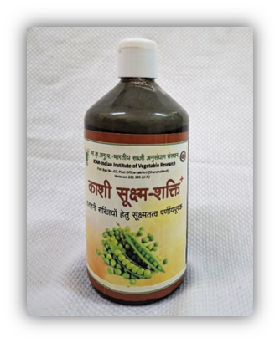
The innovation is distinct from earlier formulations due to its integration of micronutrients with PGRs in a vermiwash-based liquid matrix, ensuring rapid solubility, ease of application, and improved nutrient uptake efficiency. The technology has been validated both at the institute and farmers’ fields across Varanasi and Mirzapur, confirming its consistency and field applicability. Overall, Kashi Sookshma-Shakti Plus provides a scientifically validated, user-friendly, and effective solution to address widespread micronutrient deficiencies in vegetable production systems.
Potential impact of the research findings
The research has significant implications for agricultural productivity, nutritional security, and farmer income. By addressing multi-micronutrient deficiencies prevalent in Indian soils, the technology enhances both yield and nutritional quality of leguminous vegetables, directly contributing to hidden hunger mitigation. The demonstrated yield increase (≈12–13%) and improved produce quality translate into higher market value and profitability, as reflected by favorable benefit–cost ratios (2.15 in pea and 2.48 in French bean). The liquid formulation’s ease of use reduces operational complexity, making it highly adoptable by farmers. At a broader scale, this technology supports sustainable intensification of vegetable production, promotes efficient nutrient management, and offers strong commercialization potential for agro-input industries. Its adoption can play a vital role in improving livelihoods of small and marginal farmers while contributing to national goals of nutrition-sensitive agriculture.
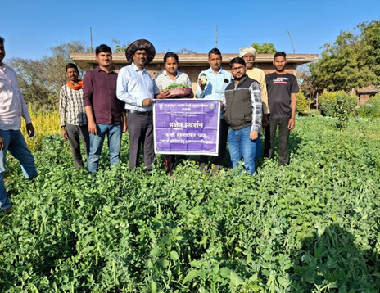
Field Validation and Success Story
A standout case was observed in 2024 at the farmer’s field of Shri Nagesh Kumar Singh in Kailhat village, Mirzapur district, where the application of the formulation resulted in marked improvement in crop performance, yield, and quality under real farming conditions. This on-farm success demonstrates the practical utility, scalability, and farmer acceptability of the technology beyond experimental conditions. The consistent performance across research trials and farmers’ fields highlights its robustness and potential for wider dissemination.
(Source: ICAR–Indian Institute of Vegetable Research, Varanasi)



Like on Facebook
Subscribe on Youtube
Follow on X X
Like on instagram