


15–16 December 2025, Bengaluru
ICAR–National Bureau of Agricultural Insect Resources, Bengaluru, in collaboration with The Prof. T. N. Ananthakrishnan Foundation, Chennai; the Entomological Society of India, New Delhi; the Society of Biocontrol Advancement, Bengaluru; and the University of Agricultural Sciences, Bengaluru, organized a two-day National Dialogue on “Insects in Agriculture, Health and Environment” from 15-16 December 2025 at the ICAR–NBAIR Yelahanka Campus, Bengaluru. The event was held in commemoration of the birth centenary of the eminent entomologist Prof. T. N. Ananthakrishnan, a pioneer in insect taxonomy and ecology. The programme commenced with dignitaries paying homage to Prof. T. N. Ananthakrishnan.
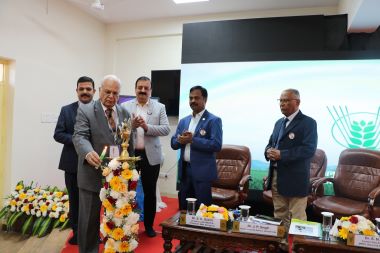
Dr. S. N. Sushil, Director, ICAR–NBAIR, highlighted the remarkable scientific contributions of Prof. Ananthakrishnan to entomology, particularly in frontier areas of insect science, and briefed participants on the ongoing research and outreach initiatives of ICAR–NBAIR. He also welcomed the Chief Guest, Dr. S. N. Puri, Former Vice-Chancellor, MPKV, Rahuri and CAU, Imphal, and the Guests of Honour, including Dr. J. P. Singh, Plant Protection Advisor, Government of India; Dr. N. Muraleedharan, Former Director General, Tocklai Tea Research Institute, Jorhat; and Mr. P. Sivakumar, Member Secretary and CEO, Central Silk Board, Bengaluru, along with family members of Prof. Ananthakrishnan and other eminent dignitaries.
In his address, Dr. S. N. Puri highlighted Prof. Ananthakrishnan’s pioneering work on thrips and emphasized the need for advancing research on natural farming technologies and standardization of drone-based delivery systems for biocontrol agents.
Dr. J. P. Singh, in his address, elaborated on the National Pest Surveillance Scheme (NPSS) and stressed the importance of systematic pest scouting to guide judicious pesticide use by farmers.
Other Guests of Honour, Dr. N. Muraleedharan and Mr. P. Sivakumar, also reflected on Prof. Ananthakrishnan’s seminal contributions to thrips taxonomy and ecology. On the occasion, a special commemorative issue on Prof. T. N. Ananthakrishnan was released by the Entomological Society of India.
Dr. V. V. Ramamurthy, President, Entomological Society of India, recalled the outstanding contributions of Prof. Ananthakrishnan to the field of entomology.
The two-day dialogue featured keynote lectures and technical sessions by eminent scientists on diverse themes, including insect nutrition and social behaviour, plant defence mechanisms under insect attack, vector-borne arboviruses and public health, and classical biological control of weeds using insects. The programme also included in-depth deliberations and brainstorming sessions on conventional insect taxonomy, with participation from leading taxonomists, former Directors of ICAR–NBAIR, experts from the Zoological Survey of India, and other national institutions.
The valedictory session marked the culmination of extensive deliberations on the critical role of insects in agriculture, public health, environmental sustainability, and climate resilience.
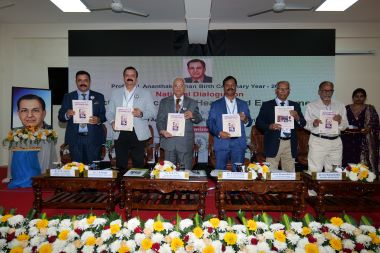
Dr. S. N. Sushil presented the key recommendations emerging from the dialogue, which included strengthening molecular and genomic research in entomology, promoting eco-friendly and precision-based pest management approaches, advancing AI-based pest diagnostics, and enhancing networking among biocontrol production units and laboratories across the country. The creation of a national collaborative network anchored at ICAR–NBAIR was recommended to facilitate data sharing, capacity building, and outreach in insect taxonomy. Participants also emphasized the need for stronger public–private partnerships, focused research on climate change impacts on insect biology, and greater attention to stingless bees for sustainable agriculture.
The valedictory address highlighted the enduring scientific legacy of Prof. T. N. Ananthakrishnan, whose pioneering contributions continue to inspire generations of entomologists in India and abroad. The organizers expressed confidence that the outcomes of the National Dialogue would help shape future research priorities and policy directions in insect science.
The event witnessed the participation of over 125 delegates, including eminent scientists, academicians, industry representatives, and students from across the country, making it a significant platform for scientific exchange, reflection, and collaboration.
(Source: ICAR–National Bureau of Agricultural Insect Resources, Bengaluru)



Like on Facebook
Subscribe on Youtube
Follow on X X
Like on instagram