

In the remote villages of Car Nicobar Island, where agriculture was once largely subsistence-based and dependent on traditional practices, a quiet transformation is reshaping the lives of Nicobari tribal farmers. Through sustained technological interventions and continuous handholding support by ICAR-Krishi Vigyan Kendra Nicobar under ICAR-Central Island Agricultural Research Institute, Andaman & Nicobar farmers are gradually transitioning from low-input traditional farming to diversified, market-oriented, and sustainable integrated farming systems.
The initiative has significantly improved livelihood security, farm profitability, nutritional well-being, and resilience among tribal farming communities across villages such as Tamaloo, Tapoiming, Big Lapathy, and other parts of Car Nicobar Island.
From Subsistence Farming to Sustainable Livelihoods
For decades, agriculture in Nicobar district remained largely rainfed, traditional, and subsistence-oriented. Farmers depended mainly on tuber-based mixed cropping under the traditional Tuhet system (joint family gardens), with minimal crop diversity and low productivity. Scientific crop management practices, improved varieties, irrigation facilities, and modern farm technologies were virtually absent.
Food consumption patterns were also limited, primarily consisting of tuber crops, fish, and pork, with very low intake of vegetables, especially green leafy vegetables. As a result, farming households faced poor nutritional security, low incomes, and limited livelihood opportunities.
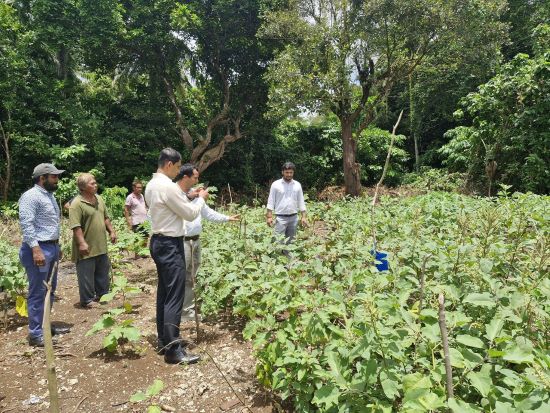
Recognizing these challenges, ICAR-Krishi Vigyan Kendra Nicobar launched a series of need-based interventions through On-Farm Trials (OFTs), Front Line Demonstrations (FLDs), training programmes, and field-level technical support to promote scientific and sustainable farming practices among Nicobari tribal farmers.
Scientific Interventions Driving Change
The interventions focused on introducing location-specific technologies suited to the island ecosystem and the socio-economic conditions of tribal farmers. Over more than 10 hectares across several villages, the KVK promoted integrated and climate-resilient farming systems aimed at ensuring year-round income and better resource utilization.
Key interventions included:
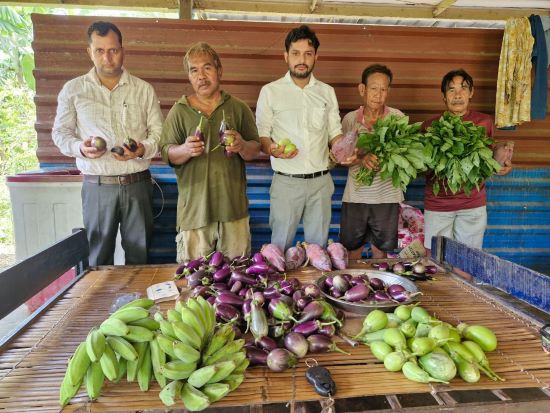
• Introduction of improved vegetable varieties, including Dweep ICAR-CIARI brinjal varieties and IIHR varieties
• Promotion of Integrated Farming Systems (IFS)
• Establishment of kitchen and nutrition gardens
• Construction of water harvesting structures
• Development of low-cost polyhouses for protected cultivation
• Promotion of Dweep Verti-grow technology for efficient land utilization
• Adoption of organic and bio-inputs
• Introduction of small-scale farm mechanization such as mini power tillers, harvesting machines, and brush cutters
Regular training programmes, demonstrations, and advisory services helped farmers gain confidence in adopting scientific farming practices and diversified livelihood activities.
Farmers Leading the Transformation
The impact of these interventions is clearly reflected in the lives of farmers such as Patrick Jerimah, Esther Reginal, Leslie, Jackson, Manoj Nicholas, and Jaan Mohammed, who successfully adopted integrated farming practices combining crop cultivation, livestock rearing, piggery, poultry, beekeeping, and protected vegetable cultivation.
With the adoption of improved technologies and diversified enterprises, farm productivity and income witnessed a remarkable increase. Analysis of selected farmers revealed that the average annual income increased from approximately ₹47,742 before intervention to nearly ₹1,67,075 after adoption of KVK-led technologies. The average Benefit-Cost ratio also improved substantially from 1.75 to 2.92, reflecting enhanced economic viability and efficient farm resource management.
Among the beneficiaries, farmer Patrick Jerimah recorded an increase in annual income from ₹81,700 to ₹3,11,600 through adoption of Integrated Farming Systems, improved crop varieties, livestock integration, Dweep Verti-grow technology, and bio-inputs. Similarly, Esther Reginal significantly improved household nutrition and income through intensive vegetable cultivation, nutrition gardens, water harvesting, and beekeeping activities.
Improving Nutrition, Sustainability, and Community Resilience
Beyond economic gains, the interventions have brought meaningful socio-economic changes within the Nicobari tribal communities. Farmers who once relied mainly on tuber crops have now incorporated vegetables such as brinjal and other nutritious crops into their daily diets, improving household nutritional security.
Kitchen gardens and Verti-grow systems have ensured year-round availability of fresh vegetables while making efficient use of limited land resources. Integrated farming approaches have diversified income sources and reduced farmers’ vulnerability to climatic and market risks.
The success of the programme has also encouraged neighbouring farmers across the island to adopt similar practices. More than 20 farmers have already adopted the technologies introduced by the KVK, and interest continues to grow in surrounding villages and other islands of the district.
Recognition and Wider Impact
The remarkable efforts and achievements of the beneficiary farmers have received wider recognition. Several farmers were honoured with prestigious awards, including the District Commendation Certificate, the IARI Innovative Farmer Award, and the ICAR-CIARI Best Farmer Award for their successful adoption of scientific farming practices and contribution to sustainable agriculture in the region.
The continuous efforts of ICAR-Krishi Vigyan Kendra Nicobar have played a pivotal role in bridging the gap between agricultural research and field-level adoption in one of the country’s most remote island regions. The initiative has emerged as a successful model for sustainable tribal livelihood development through integrated farming, improved nutrition, resource conservation, and climate-resilient agriculture.
Today, the transformation unfolding in Car Nicobar stands as a compelling example of how scientific interventions, community participation, and sustained institutional support can empower tribal farmers, strengthen rural livelihoods, and build a pathway towards sustainable and self-reliant agriculture in island ecosystems.
(Source: ICAR-Central Island Agricultural Research Institute, Andaman & Nicobar)



फेसबुक पर लाइक करें
यूट्यूब पर सदस्यता लें
X पर फॉलो करना X
इंस्टाग्राम पर लाइक करें