

Indigenous Vaccine Against H5N1 Clade 2.3.2.1a to Strengthen Poultry Health, Biosecurity and India's Self-Reliance in Animal Healthcare
20 November 2026, Bhopal
Shri Shivraj Singh Chouhan, Union Minister of Agriculture and Farmers Welfare and Rural Development, today launched India's first indigenous inactivated H5N1 (Clade 2.3.2.1a) vaccine for chickens against Highly Pathogenic Avian Influenza (HPAI), commonly known as bird flu, at ICAR-National Institute of High Security Animal Diseases, Bhopal. Developed indigenously by ICAR-NIHSAD, the vaccine marks a significant milestone in strengthening India's preparedness for controlling avian influenza outbreaks, safeguarding the poultry sector and advancing self-reliance in animal vaccine development.
Shri Chouhan described the indigenous avian influenza vaccine as a historic achievement and a matter of national pride, reflecting India’s growing scientific capabilities. Highlighting the progress in agriculture under the leadership of Prime Minister Shri Narendra Modi, he noted 4.4% growth in agriculture and allied sectors, with foodgrain production rising from 265 million tonnes in 2014 to 378 million tonnes in 2026 and horticulture production from 280 million tonnes to 386 million tonnes. He also highlighted India’s leadership in milk and pulses production and growing agricultural exports.
Emphasising the importance of animal husbandry and poultry in rural livelihoods, particularly for women and self-help groups, he noted that Foot-and-Mouth Disease causes annual losses of around ₹22,000 crore. Referring to successive avian influenza outbreaks in Navapur, Maharashtra, he stressed the vaccine’s potential to protect poultry farmers, safeguard livelihoods and reduce economic losses.
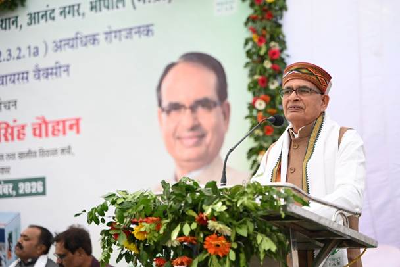
The Minister congratulated the scientists of ICAR-NIHSAD, Bhopal, and associated institutions for developing the vaccine, acknowledging their dedication and adherence to stringent biosafety protocols. He also highlighted indigenous innovations such as the Lumpy ProVac vaccine in strengthening animal healthcare.
Announcing a major research initiative, Shri Chouhan stated that a BSL-4 laboratory would be established at ICAR-NIHSAD, Bhopal, at an estimated cost of ₹300 crore to strengthen advanced research, early disease detection, surveillance and control of emerging animal diseases. He expressed confidence that the vaccine would advance self-reliance in animal healthcare and urged scientists to continue driving innovation.
The programme was attended by Shri Vishwas Kailash Sarang, Minister, Government of Madhya Pradesh; Shri Alok Sharma, Member of Parliament, Bhopal; Smt. Malti Rai, Mayor of Bhopal; Dr. M.L. Jat, Secretary, Department of Agricultural Research and Education (DARE) and Director General, Indian Council of Agricultural Research (ICAR); and Dr Raghavendra Bhatta, Deputy Director General (Animal Science), ICAR, along with Assistant Directors General, Directors of more than 20 ICAR research institutes, scientists, poultry industry representatives and farmers.
Speaking on the occasion, Dr M.L. Jat described the vaccine as a historic achievement in strengthening India’s animal health security and self-reliance in vaccine development. He said that India is steadily advancing towards self-reliance in animal-health vaccines, with ICAR research institutes making significant contributions. Referring to the indigenous vaccine developed for African Swine Fever (ASF), he highlighted the development of the H5N1 vaccine against the specific variant 2.3.2.1a as another major scientific accomplishment, noting that no vaccine was available globally against this variant.
Dr. Jat emphasised that avian influenza is not merely a challenge for the poultry sector; its zoonotic potential also makes it a concern for human health. He stated that the indigenous vaccine would, therefore, contribute to strengthening the Government of India’s One Health approach, which recognises the interconnectedness of animal, human and environmental health. Congratulating ICAR scientists and researchers, he said that such innovations strengthen the country’s capabilities in animal disease control, biosecurity and vaccine development, while advancing the vision of Atmanirbhar Bharat. He also welcomed representatives of the poultry industry, farmers and directors of more than 20 ICAR research institutes, describing the initiative as an important step towards safeguarding the country’s livestock and poultry health.
Earlier, welcoming the dignitaries and participants, Dr. Raghavendra Bhatta, Deputy Director General (Animal Science), ICAR, described the launch of India's first indigenous HPAI vaccine as a proud testament to the country's scientific excellence, self-reliance and collective commitment towards protecting poultry health and farmers' livelihoods. He acknowledged the visionary leadership and continued support of Shri Shivraj Singh Chouhan in advancing the agricultural and animal husbandry sectors.
Highlighting ICAR's role in veterinary and animal science research, Dr. Bhatta emphasised the importance of translating scientific research into effective field-level solutions. He also acknowledged the poultry industry's participation and cooperation in taking indigenous vaccine technologies from the laboratory to practical application.

The vaccine specifically targets the H5N1 virus belonging to Clade 2.3.2.1a, which has been responsible for most bird flu outbreaks in chickens. Its development addresses a critical gap, as no specific commercial vaccine was previously available against this particular variant. The indigenous vaccine is aimed at providing protection against H5N1 strains of Clade 2.3.2.1a circulating in India.
Highly Pathogenic Avian Influenza is a serious infectious disease affecting poultry and other bird species. Outbreaks can cause mortality of nearly 100% among infected birds, resulting in substantial economic losses due to large-scale culling, movement restrictions and disruptions in trade. Since its first detection in India in 2006, the country has reported more than 500 combined outbreaks involving H5N1 and H5N8 subtypes. The disease also poses a public health concern due to its zoonotic potential.
The development of this indigenous vaccine assumes particular significance in view of the economic and livelihood implications of avian influenza. A major outbreak could put more than 20% of India's poultry population at risk and potentially reduce the country's GDP growth by up to 1.5%. The 2006 outbreak alone resulted in estimated direct and indirect economic losses of ₹2,200–3,000 crore.
The vaccine marks an important advancement in strengthening India's indigenous animal vaccine development capabilities, enhancing poultry disease preparedness and promoting biosecurity. It also reinforces the country's commitment to the Atmanirbhar Bharat vision and the integrated One Health approach, recognising the interconnectedness of animal, human and environmental health.