


23 February 2026, Pune
ICAR-National Research Centre for Grapes, Pune, in collaboration with the Pune Chapter of the National Academy of Agricultural Sciences (NAAS) and the Society for Advancement of Viticulture and Enology (SAVE), organized a workshop titled “Droplets to Defense: Spray Science for Managing Biotic Stresses in Horticultural Crops” today.
Dr. Yogendra Nerkar, the senior-most NAAS Fellow in the Pune region, graced the occasion as Chief Guest, while Dr. K. Sammi Reddy, FNAAS and Director, ICAR-National Institute of Abiotic Stress Management, Baramati, attended as Guest of Honour.
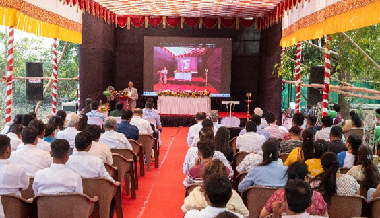
The workshop featured two panel discussions: “From Impact to Absorption: Droplets on Leaf Surfaces” and ‘Better Spraying in Orchards: Problems and Solutions.” Describing the programme as unique and first of its kind in the country, Dr. Nerkar appreciated the deliberations by resource persons and their intensive interaction with ICAR scientists, R&D officials from leading sprayer and nozzle manufacturers, and representatives from agrochemical industries.
Experts from premier institutions including the Department of Power Engineering at Jadavpur University, Indian Institute of Technology Madras, and Indian Institute of Technology Gandhinagar shared insights on spray dynamics, droplet behaviour, and application efficiency.
Dr. Kaushik Banerjee, Director, ICAR-NRCG, highlighted researchable issues emerging from the Viksit Krishi Sankalp Abhiyan and described the workshop as an important step toward developing holistic pest and disease management strategies for farmers through interdisciplinary research and public–private partnerships.
During the event, a multilingual e-publication titled ‘Grape Growers’ Resolution–2026’ and a documentary film showcasing the post-COVID achievements of ICAR-NRCG were released.
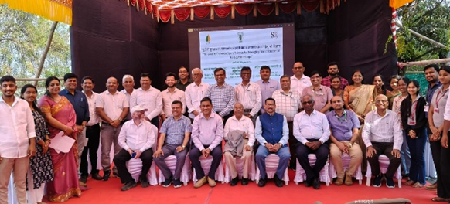
The workshop provided participants with comprehensive exposure to surface science fundamentals, static and dynamic interactions of spray droplets on leaf surfaces, and criteria for selecting appropriate sprayers and nozzles under diverse crop canopy conditions. The deliberations also underscored the need for a comprehensive interdisciplinary project aimed at achieving superior canopy coverage and enhanced bio-efficacy of plant protection measures.
A total of 110 representatives from various stakeholder organizations including scientists, industry professionals, and progressive farmers participated in the event, comprising 75 men and 35 women.
(Source: ICAR-National Research Centre for Grapes, Pune)



Like on Facebook
Subscribe on Youtube
Follow on X X
Like on instagram