

From Vegetable Farming to Profitable Floriculture
Sri Ramanjunaiah, a progressive farmer from Yettinahalli village in Pavagada Taluk of Tumakuru district, Karnataka, has emerged as a role model in commercial floriculture through the successful cultivation of tuberose (Polianthes tuberosa), popularly known as rajnigandha. Earlier dependent on vegetable crops particularly tomato he faced fluctuating prices and uncertain returns. Determined to find a more stable and profitable alternative, he explored new agricultural opportunities and turned to floriculture.
His journey took a decisive turn when he adopted the high-yielding tuberose variety Arka Prajwal (Single type) developed by ICAR-Indian Institute of Horticultural Research, Bengaluru.
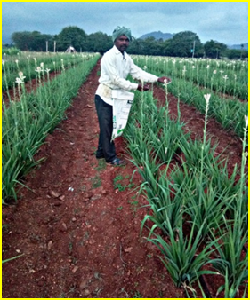
Scientific Training and Adoption of Improved Practices
Ramanjunaiah gained technical knowledge on tuberose cultivation during a floriculture training programme conducted by ICAR-Krishi Vigyan Kendra Tumakuru. Recognizing the crop’s commercial potential, he adopted the improved variety Arka Prajwal, known for:
Larger and more attractive florets than local cultivars
About 20% higher loose flower yield
High suitability for garlands and floral decorations
Under the Front Line Demonstration (FLD) programme, the KVK supplied quality planting bulbs, enabling him to follow scientific cultivation practices such as recommended spacing, organic nutrient management, efficient irrigation, and timely pest and disease control.
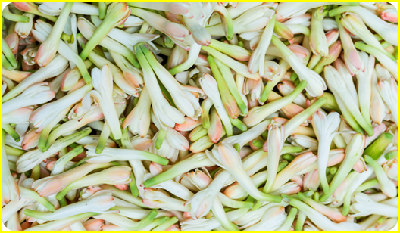
Impressive Returns and Diversified Income
Cultivating tuberose on 2 acres, he achieved an outstanding yield of 11.74 tonnes of loose flowers within a year, earning nearly ₹5.85 lakh far exceeding his previous income from vegetables.
Beyond flowers, he also initiated systematic bulb production. By the end of the crop cycle, he expected to harvest 18–20 tonnes per hectare of bulbs and bulblets, which can be reused for farm expansion or sold to other farmers creating an additional and reliable income stream.
Year-Round Income and Expanding Market Reach
One of the biggest advantages of tuberose is its near year-round flowering, ensuring continuous income. Flowers from Yettinahalli now reach major markets including Pavagada, Tumakuru, Bengaluru, Chennai, and beyond. Bulk procurement by traders, especially during festivals and wedding seasons, further boosts earnings.
Support from the KVK and the Hulume Farmer Producer Organization (FPO), Pavagada, has strengthened collective marketing, improved price realization, and reduced dependence on middlemen.
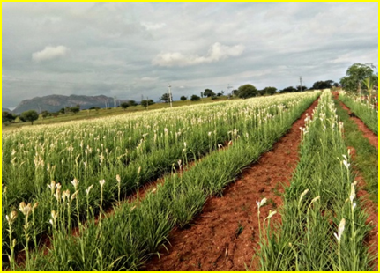
Transforming Livelihoods and Empowering the Community
The shift to tuberose cultivation has dramatically improved livelihoods in the village. Many farmers now earn several times more than before, while floriculture activities generate regular employment for local labourers. Women play a crucial role in harvesting, grading, and sorting, contributing to both household income and social empowerment.
Collectively, tuberose farming in the village generates over ₹30 lakh annually and supports nearly 15 farm families. Yettinahalli has emerged as a model floriculture village, drawing farmers from neighboring areas eager to replicate its success.
A Ripple Effect of Prosperity
Inspired by Ramanjunaiah’s achievements, many nearby farmers have transitioned from tomato and other vegetables to tuberose cultivation. Today, about 15 hectares in and around Yettinahalli are under tuberose, creating sustainable livelihoods and fostering rural prosperity.
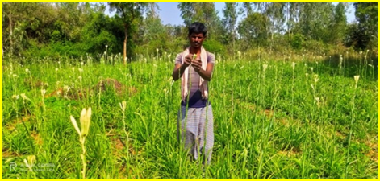
Sri Ramanjunaiah’s openness to innovation, willingness to adopt scientific practices, and strong institutional support have not only transformed his own fortunes but also reshaped the agricultural landscape of his region. His story stands as a powerful example of how technology, training, and determination can unlock new opportunities and bring lasting prosperity to rural communities.
(Source: ICAR–Indian Institute of Horticultural Research, Bengaluru)



फेसबुक पर लाइक करें
यूट्यूब पर सदस्यता लें
X पर फॉलो करना X
इंस्टाग्राम पर लाइक करें