


ICAR–Indian Institute of Vegetable Research, Varanasi, has been at the forefront of advancing vegetable research and innovation in India. Among its significant contributions is the development and standardization of grafting technologies for vegetable crops such as brinjal, tomato, chilli, and cucurbits. The institute has also pioneered innovative grafted crops like Pomato—a unique combination of tomato grafted onto potato—and Brimato, where tomato and brinjal are grafted onto disease-resistant brinjal rootstocks. These technologies have emerged as sustainable solutions for enhancing crop productivity, improving resilience against biotic and abiotic stresses, and promoting vegetable cultivation in urban and peri-urban environments.
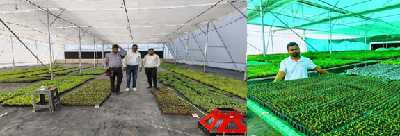
Between 2023–24 and 2025–26, ICAR-IIVR produced approximately 36,000 Brimato seedlings, 28,000 Pomato seedlings, and 45,000 grafted seedlings of brinjal, tomato, chilli, and cucurbits. These were distributed and demonstrated across 41 districts spanning eight states—Uttar Pradesh, Bihar, Jharkhand, Madhya Pradesh, Chhattisgarh, Maharashtra, Odisha, and Telangana. Demonstrations conducted in nearly 50 farmers’ fields validated the superior productivity, adaptability, and stress tolerance of grafted vegetables, opening new avenues for entrepreneurship and income generation in rural and peri-urban areas.
Building on the success of its grafting innovations, the institute has standardized comprehensive packages of practices, including rootstock-scion combinations, grafting procedures, and crop management techniques. The successful development of Pomato and Brimato stands out as a landmark achievement. Recognizing the potential of these technologies, state government agencies such as UPCAR and the Mission for Integrated Development of Horticulture (MIDH) have supported their promotion through dedicated projects aimed at entrepreneurship development in vegetable grafting.
Over the past three years, ICAR-IIVR has organized extensive capacity-building and demonstration programmes for farmers and aspiring entrepreneurs. These efforts have yielded remarkable results, with 11 trained farmers emerging as successful entrepreneurs and four establishing large-scale grafted vegetable seedling production enterprises.
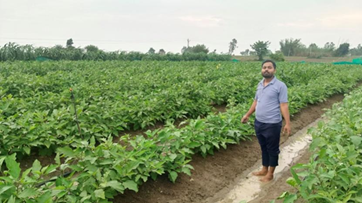
One notable example is Mr. Gaurav Maurya, a progressive farmer from Sonbhadra district of Uttar Pradesh. After receiving training and technical guidance from ICAR-IIVR, Mr. Maurya adopted grafted brinjal cultivation on a commercial scale. In April 2023, he transplanted grafted hybrid brinjal seedlings produced using Solanum torvum as the rootstock over an area of 0.125 hectares. The crop exhibited exceptional vigour and health, with harvesting commencing in the first week of July when wholesale market prices averaged ₹42 per kilogram.
The grafted brinjal crop continued to produce fruits until March 2024, resulting in a harvest of approximately 112 quintals and a net profit of ₹2.27 lakh. The outstanding performance of the crop demonstrated the effectiveness of grafting technology in overcoming challenges such as bacterial wilt and root-knot nematode infestations, which often limit vegetable productivity in many regions.
Encouraged by these results, Mr. Maurya expanded his enterprise to include large-scale production of grafted vegetable seedlings. During the subsequent year, he produced and sold nearly 75,000 grafted tomato and brinjal seedlings, generating a net profit of ₹3.37 lakh. Leveraging social media platforms for marketing, he successfully reached farmers across several districts of Uttar Pradesh, including Sonbhadra, Chandauli, Mirzapur, Prayagraj, Ghazipur, Gorakhpur, and Azamgarh.
Beyond economic gains, Mr. Maurya’s enterprise has made a meaningful contribution to rural development. With support from the State Government, he established a Hi-Tech Polyhouse valued at approximately ₹14 lakh. The enterprise has created employment opportunities for local youth and farm women through activities such as nursery management, grafting operations, and seedling marketing.
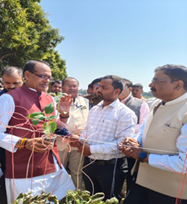
His success highlights the transformative power of scientific innovation when combined with entrepreneurship, training, and institutional support. The growing demand for Pomato, Brimato, and other grafted vegetable seedlings reflects increasing farmer confidence in these technologies. Particularly noteworthy is the use of rootstock IC111056 in Brimato production, which provides resistance to bacterial wilt and root-knot nematodes while offering tolerance to abiotic stresses such as waterlogging and salinity.
Looking ahead, Mr. Maurya plans to further scale up his operations, expand into new districts, and promote the adoption of grafted vegetables in areas facing severe biotic and abiotic stress challenges. His journey exemplifies how innovative agricultural technologies can transform small-scale farming into a profitable and sustainable enterprise.
The collaboration between ICAR-IIVR and young entrepreneurs like Mr. Maurya underscores the institute’s commitment to translating research into tangible benefits for farmers and rural communities. By fostering entrepreneurship, generating employment, and promoting resilient vegetable production systems, ICAR-IIVR continues to empower farmers and contribute to sustainable agricultural development across the country.
(Source: ICAR – Indian Institute of Vegetable Research, Varanasi)



फेसबुक पर लाइक करें
यूट्यूब पर सदस्यता लें
X पर फॉलो करना X
इंस्टाग्राम पर लाइक करें