


In the drought-prone district of Bankura, West Bengal, the inspiring journey of Mrs. Chhabita Pramanik stands as a powerful example of how scientific agriculture, institutional support, and women’s collective leadership can transform rural livelihoods and communities. Emerging from a conservative rural background where agriculture was traditionally viewed as a male-dominated activity, she overcame social and economic barriers through determination, innovation, and community mobilization to become a respected farmer leader and rural entrepreneur.
Beginning with just two acres of land, Mrs. Pramanik gradually transformed her small farm into a sustainable and diversified production system by adopting resource-conserving technologies, scientific farming methods, and eco-friendly agricultural practices. Her association with Krishi Vigyan Kendra (KVK), Bankura under WBCADC proved to be a turning point, equipping her with technical knowledge, entrepreneurial skills, and the confidence to lead collective rural transformation.
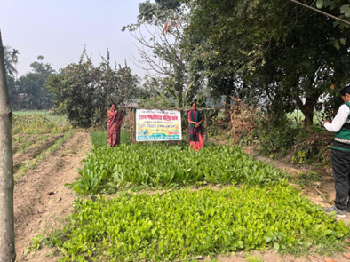
Through continuous scientific guidance and capacity-building programmes conducted by KVK Bankura, she acquired practical expertise in resource-conserving paddy cultivation, oilseed farming, integrated nutrient management, and groundnut oil processing. These interventions not only enhanced productivity and reduced production costs but also diversified household income and strengthened livelihood security.
What began as an individual effort soon evolved into a wider social movement. Mrs. Pramanik initiated her leadership journey by forming Rangamatichar Vachati Swanirvar Dal with only 10 women members. Over time, this grassroots initiative expanded into Dihipara Monalisa Sangha, which initially connected around 500 women and eventually grew into a collective involving nearly 3,500 women across the district with the shared vision of establishing a Farmer Producer Company and strengthening women-led agri-enterprises.
Recognizing the need for scientific support and institutional convergence, Mrs. Pramanik and members of her Self-Help Group approached KVK Bankura for technical interventions and field demonstrations. Under the guidance of KVK scientists, resource-conserving technologies in paddy cultivation were introduced in the locality for the first time, resulting in improved productivity and enhanced resource-use efficiency compared to conventional farming systems.

KVK Bankura further strengthened the women’s collective by providing hands-on training and technical support in vermicompost production, mushroom cultivation, off-season vegetable cultivation under shade-net structures, oilseed production, and value-added processing activities. Under the Rashtriya Krishi Vikas Yojana (RKVY), the KVK facilitated the establishment of a mushroom spawn production unit, shade-net facility, and electric dheki for brown rice processing, enabling the women’s group to move beyond primary agriculture into processing, value addition, and enterprise-led income generation.
Today, the brown rice produced by Mrs. Pramanik and her collective is marketed through a Government of West Bengal retail outlet, reflecting successful institutional market linkage and the emergence of women-led rural enterprises with strong commercial potential. Alongside enterprise development, she has also emerged as an active advocate for balanced and judicious fertilizer use, leading awareness campaigns in collaboration with KVK Bankura under sustainable agriculture initiatives.
From working as a wage labourer on others’ farms to becoming a progressive farmer, entrepreneur, and women’s leader, Mrs. Chhabita Pramanik’s journey reflects a profound transformation marked by resilience, leadership, and community empowerment. She now cultivates her own land and earns an estimated monthly net income of approximately ₹15,000 through agriculture and allied activities. More importantly, her efforts have inspired widespread social and economic change within the farming community.
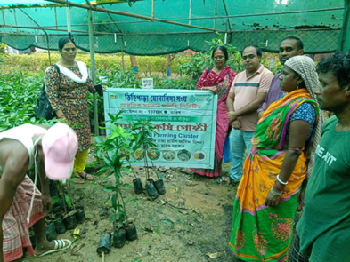
Currently serving as a Senior Community Resource Person (CRP), she supports nearly 500 rural families and leads a network of 347 Self-Help Groups across Bankura district. Through her continued engagement, hundreds of rural women have adopted sustainable farming practices, participated in collective enterprises, and become active contributors to household and community economies.
The success of Dihipara Monalisa Sangha has gained recognition across institutional and government platforms for advancing women’s empowerment through agriculture and collective entrepreneurship. In recognition of her remarkable achievements and dedicated service towards rural development, Mrs. Pramanik was recently felicitated by the Hon’ble Governor of West Bengal.
Reflecting on her journey and its broader significance, Dr Pradip Dey, Director, ICAR-ATARI, Kolkata, stated that Mrs. Chhabita Pramanik’s success exemplifies the transformative potential of integrating scientific agriculture, women’s collective institutions, and market-oriented rural enterprises for building sustainable livelihoods. He emphasized that ICAR-ATARI, Kolkata and its KVKs remain committed to promoting resource-conserving technologies, livelihood diversification, value addition, and women-led entrepreneurship as key pillars of climate-resilient and inclusive agricultural development.
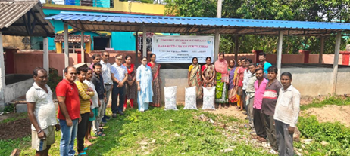
Her story demonstrates that when rural women are provided access to scientific knowledge, institutional handholding, technology support, and market opportunities, they emerge not merely as beneficiaries but as innovators, entrepreneurs, and leaders capable of driving transformative social and economic change.
Mrs. Pramanik and her collective have also actively aligned themselves with the ongoing Campaign on Balanced Use of Fertilisers. Acknowledging their contribution, Dr. Dey described them as true torchbearers of the Khet Bachao Abhiyan, demonstrating how balanced nutrient management can create a continuum of sustainability extending from healthy soils to resilient communities.
Mrs. Chhabita Pramanik’s inspiring journey is not just a story of individual success; it is a powerful testament to the transformative role of empowered rural women in shaping sustainable agriculture, resilient livelihoods, and inclusive rural development in India.
(Source: ICAR- Agricultural Technology Application Research Institute, Kolkata)



फेसबुक पर लाइक करें
यूट्यूब पर सदस्यता लें
X पर फॉलो करना X
इंस्टाग्राम पर लाइक करें