

Stylosanthes hamata emerges as a promising crop with notable nutritional attributes. Green leaf crude protein (CP) content ranges from 17 to 24%, while stems contain 6-12%, influenced by re-growth age and environmental factors. Seed production in Stylosanthes hamata, an important forage legume, is a complex process requiring a thorough understanding of plant morphology, flowering physiology, and their interaction with environmental factors. Effective seed production strategies depend not only on recognizing species-specific traits but also on identifying recurring characteristics that influence crop performance under varying field conditions.
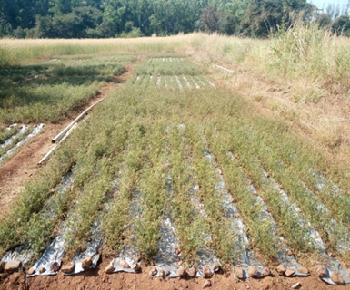
It is a short-day, indeterminate species that flowers continuously over an extended period of 3–4 months. This prolonged flowering habit leads to a gradual transition from vegetative to reproductive phases, largely influenced by prevailing weather conditions and crop duration. One of the major challenges in seed production of S. hamata is the lack of synchronization in seed maturity. Due to continuous flowering, seeds mature at different times, resulting in significant shattering losses. It is estimated that nearly 90% of the seeds shatter at maturity, creating serious constraints for efficient seed harvesting.
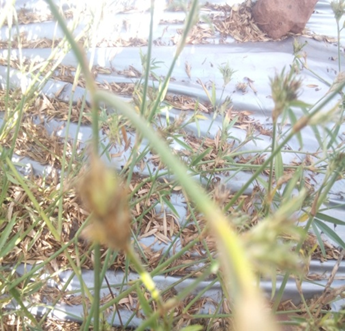
Traditionally, farmers resort to sweeping the entire field to collect fallen seeds, a method that is labor-intensive, costly, and often results in contamination with soil particles and other impurities (poor physical purity). Consequently, this practice reduces both seed quality and market value. In this context, polythene mulching emerges as an effective and economical alternative for seed collection in S. hamata. By placing polythene sheets beneath the crop canopy, fallen seeds can be directly collected without coming into contact with soil, thereby minimizing contamination.
The experimental results showed that 12 % higher yield was obtained in mulched crop over un-mulched, similarly the same treatment recorded the higher physical purity (83.66 %) compared the un-mulched crop in which the physical purity of only 72.65 % was recorded. This method significantly improves physical purity and reduces post-harvest processing requirements such as sieving and cleaning.
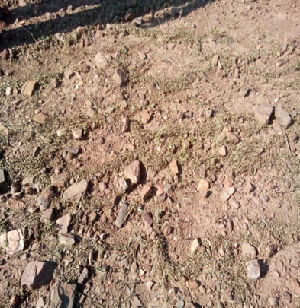
Additionally, it enhances seed recovery efficiency (97 % in mulched crop compared to un-mulched crop in which 94.37 % seeds fallen on ground) by preventing losses due to shattering and dispersal. The adoption of polythene mulching not only reduces labour costs associated with sweeping but also contributes to improved seed quality by maintaining cleanliness and minimizing mechanical damage. Furthermore, it offers a practical solution to the inherent problem of asynchronous seed maturity in Stylosanthes, allowing periodic collection of seeds over the flowering duration. Overall, polythene mulching represents a simple, cost-effective, and efficient strategy for enhancing seed yield, quality, and profitability in Stylosanthes hamata seed production systems.
(Source: ICRA-Indian Grassland and Fodder Research Institute, Jhansi)



फेसबुक पर लाइक करें
यूट्यूब पर सदस्यता लें
X पर फॉलो करना X
इंस्टाग्राम पर लाइक करें