

25 June 2026, Motihari, Bihar
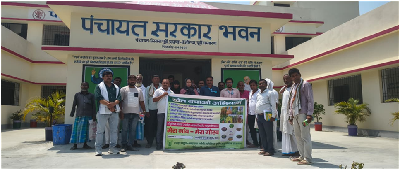
As part of the nationwide Khet Bachao Abhiyan–2026, ICAR–Mahatma Gandhi Integrated Farming Research Institute, Motihari, in collaboration with Siswa Purvi Gram Panchayat, East Champaran, Bihar, organized a Farmer Training-cum-Kisan Gosthi to promote soil health conservation, balanced fertilizer use, climate-resilient agriculture, crop diversification, and Integrated Farming Systems (IFS).
The programme brought together farmers, Panchayat representatives, scientists, agricultural officials, and extension personnel to discuss practical strategies for improving farm resilience in the face of climate variability and changing rainfall patterns.
The programme was graced by a distinguished local representative as the Chief Guest. Addressing the participants, the importance of climate-resilient agriculture, crop diversification, and Integrated Farming System (IFS) models for ensuring year-round income and livelihood security was emphasized. Farmers were encouraged to diversify agricultural enterprises by integrating crops, livestock, fisheries, horticulture, and allied activities to reduce risks associated with climate uncertainty and market fluctuations.
During the keynote technical address, the objectives of the Khet Bachao Abhiyan were highlighted, with emphasis on the importance of balanced fertilizer use, biofertilizers, biopesticides, organic manures, and IFS approaches for restoring soil health and reducing excessive dependence on agrochemicals. It was stressed that healthy food originates from healthy soils, and farmers were urged to adopt sustainable agricultural practices for long-term productivity, profitability, and environmental sustainability.
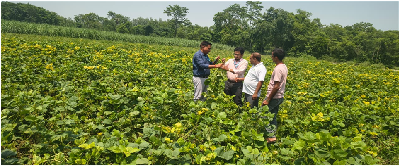
The role of green manuring through Dhaincha (Sesbania) in improving soil organic matter, enhancing microbial activity, increasing nutrient-use efficiency, and reducing fertilizer requirements in succeeding crops was also discussed. Farmers were encouraged to cultivate Dhaincha before rice transplantation and incorporate the biomass into the soil to improve soil fertility and long-term soil health.
During the technical session, the possibility of a weak or uncertain monsoon associated with El Niño-like conditions was discussed, and farmers were advised on contingency crop planning strategies. It was emphasized that under moisture-stressed situations, greater attention should be given to pulses, oilseeds, and Shri Anna (millets), which are comparatively more resilient under limited rainfall conditions. Considering the prevailing hot and dry weather conditions, rice cultivation in upland areas without assured irrigation was considered less advisable. Farmers having irrigation facilities were encouraged to continue with medium-duration rice varieties while ensuring life-saving irrigation for rice nurseries. The importance of moisture conservation, diversified cropping systems, and timely crop establishment to minimize climatic risks was also highlighted.
Scientists emphasized the inclusion of green gram and other legumes in cropping systems to improve soil fertility through biological nitrogen fixation, reduce fertilizer requirements, and enhance farm profitability. Discussions also covered PMFBY (Pradhan Mantri Fasal Bima Yojana), Kisan Credit Card (KCC), crop diversification opportunities, and climate-resilient agricultural technologies available to farmers.
Participants were advised that delayed rice transplanting during mid-August should be accompanied by the adoption of short-duration rice varieties (90–120 days) to avoid delays in sowing succeeding rabi crops such as wheat and maize, which often result in significant yield penalties. Scientists explained that scientific crop planning and crop calendar-based varietal selection help farmers maximize cropping intensity, improve resource-use efficiency, and increase profitability while maintaining the sustainability of rice-based production systems.
The programme witnessed active participation from Panchayat representatives, officials of the Department of Agriculture, Government of Bihar, ATMA functionaries, Agriculture Coordinators, ATMs, BTMs, progressive farmers, and staff members of ICAR-MGIFRI. Their collective participation highlighted the importance of collaboration among local governance institutions, extension agencies, and research organizations in promoting sustainable agriculture at the grassroots level.
The programme concluded with a strong message that soil testing, balanced fertilization, green manuring, crop diversification, climate-resilient crop planning, and residue recycling are key pillars of healthy soils and sustainable agriculture. Farmers appreciated the practical recommendations and expressed their commitment to adopting the scientific practices promoted under the Khet Bachao Abhiyan.
The event demonstrated how partnerships between scientific institutions and local self-governance bodies can accelerate the adoption of climate-smart agricultural technologies and strengthen rural livelihoods in Bihar.
A total of 58 farmers, including 41 male and 17 female participants, actively participated in the programme.
(Source: ICAR–Mahatma Gandhi Integrated Farming Research Institute, Motihari, Bihar)



फेसबुक पर लाइक करें
यूट्यूब पर सदस्यता लें
X पर फॉलो करना X
इंस्टाग्राम पर लाइक करें