

25 June 2026, Motihari, Bihar
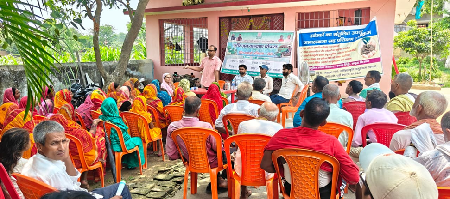
As part of the nationwide Khet Bachao Abhiyan–2026, the ICAR–Mahatma Gandhi Integrated Farming Research Institute, Motihari, in collaboration with the Agricultural Technology Management Agency (ATMA) and the Department of Agriculture, Government of Bihar, organized a farmer awareness-cum-training programme at Pantoka Panchayat in Raxaul Block of East Champaran district, one of the last Indian village settlements along the India–Nepal international border.
The programme was jointly conducted under the Khet Bachao Abhiyan and the Bihar Krishi Jan Kalyan Chaupal, a flagship farmer outreach initiative of the Department of Agriculture and ATMA, with the objective of strengthening awareness on soil health management, balanced fertilizer use, climate-resilient agriculture, and sustainable farming practices.
Recognizing the predominance of rice–wheat production systems in the region, along with maize, sugarcane, vegetables, livestock, and horticultural enterprises, the programme focused on promoting balanced fertilizer application, soil-test-based nutrient management, rice nursery management, green manuring, crop residue recycling, and Integrated Farming Systems (IFS) to sustain soil fertility and agricultural productivity.
Scientists highlighted the emerging challenges of declining soil organic carbon, imbalanced fertilizer use, and micronutrient deficiencies, emphasizing the need for soil-test-based nutrient management. Farmers were encouraged to integrate farmyard manure (FYM), compost, biofertilizers, crop residues, and micronutrients with recommended fertilizer doses to improve soil health, nutrient availability, and long-term productivity.
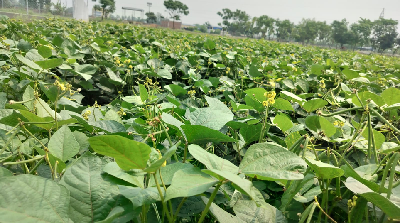
Special emphasis was laid on the cultivation of Dhaincha (Sesbania) and summer green gram as biological nitrogen sources in rice-based cropping systems. Farmers were informed that Dhaincha can contribute approximately 50–60 kg nitrogen per hectare, equivalent to nearly 110–130 kg of urea, while summer green gram can contribute 25–30 kg nitrogen per hectare, equivalent to about 55–65 kg of urea, through biological nitrogen fixation. Adoption of these crops can substantially reduce fertilizer requirements while improving soil organic matter and biological activity.
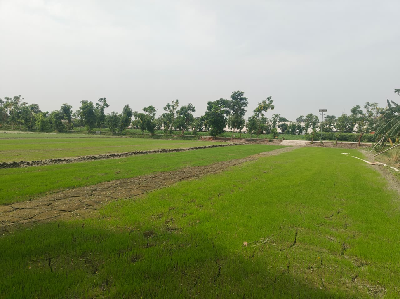
A dedicated technical session on rice nursery management covered healthy seed selection, seed treatment, optimum seed rate, proper drainage, and timely nutrient management to produce vigorous seedlings. Farmers were also advised to adopt seed treatment with Trichoderma and beneficial microbial inoculants to minimize seed- and soil-borne diseases and improve crop establishment.
Scientists further highlighted the importance of farmyard manure, compost application, and organic nutrient recycling in improving soil structure, enhancing water-holding capacity, increasing nutrient availability, and strengthening beneficial microbial populations. The harmful effects of crop residue burning on soil organic carbon, nutrient loss, and soil biological health were also discussed. Farmers were encouraged to adopt residue incorporation, composting, mulching, and vermicomposting for improved soil fertility and moisture conservation.
The programme also underscored the role of Integrated Farming Systems involving crops, livestock, horticulture, vermicomposting, and resource recycling in improving farm income, enhancing resource-use efficiency, reducing production risks, and building resilience to climate variability, particularly in flood-prone and border regions.
During the interactive session, farmers discussed local challenges related to fertilizer use, soil degradation, rice nursery management, and changing climatic conditions. Participants appreciated the practical recommendations and expressed their willingness to adopt soil health-centred farming practices, balanced nutrient management, green manuring, and integrated farming approaches.
The programme witnessed the active participation of officials from the Department of Agriculture, Government of Bihar, ATMA functionaries, Agriculture Coordinators, Agriculture Technology Managers (ATMs), Block Technology Managers (BTMs), Panchayat representatives, progressive farmers, and field staff of ICAR–MGIFRI, reflecting strong collaboration between research, extension, and local governance institutions to promote sustainable agriculture at the grassroots level.
The programme concluded with a strong message that healthy soils, balanced fertilization, organic nutrient recycling, green manuring, and Integrated Farming Systems are the foundation of productive, profitable, and climate-resilient agriculture. The joint outreach demonstrated how research and extension institutions can work together to carry the message of soil conservation and sustainable agriculture to India's frontier villages under the Khet Bachao Abhiyan–2026.
A total of 62 farmers, including 21 men and 41 women, actively participated in the programme.
(Source: ICAR–Mahatma Gandhi Integrated Farming Research Institute, Motihari, Bihar)



फेसबुक पर लाइक करें
यूट्यूब पर सदस्यता लें
X पर फॉलो करना X
इंस्टाग्राम पर लाइक करें