

30 June 2026, Motihari, Bihar
As part of the ongoing Khet Bachao Abhiyan–2026, ICAR–Mahatma Gandhi Integrated Farming Research Institute, Motihari, organized a one-day FPO–Scientist–Progressive Farmer Interface Workshop to strengthen collaboration among Farmer Producer Organizations (FPOs), researchers, extension agencies, and progressive farmers for promoting soil health, climate-resilient agriculture, and market-oriented farming systems.
The workshop brought together representatives from 14 Farmer Producer Organizations (FPOs), progressive farmers, scientists, and extension personnel to deliberate on sustainable agricultural practices, balanced fertilizer use, natural farming, Integrated Farming Systems (IFS), value addition, branding, collective marketing, and agribusiness entrepreneurship. A total of 40 participants attended the programme.
The inaugural session emphasized that healthy soils are the foundation of productive, profitable, and sustainable agriculture. Participants highlighted the importance of Integrated Nutrient Management (INM), balanced fertilizer application, green manuring with Dhaincha, vermicomposting, crop diversification, and Integrated Farming Systems, particularly for the flood- and waterlogging-prone regions of Bihar. The role of FPOs in promoting soil-health technologies and climate-resilient farming practices among member farmers was also underscored.
The programme further highlighted the adoption of biological and eco-friendly inputs, including Trichoderma, Rhizobium, biofertilizers, composts, and natural farming formulations. Farmers were sensitized to the use of botanical extracts, indigenous pest management practices such as Dashparni Ark, residue recycling, soil conservation measures, and soil-test-based fertilizer recommendations for improving soil fertility and reducing input costs.
Discussions also focused on the opportunities and challenges of farming in flood- and waterlogging-prone areas of Bihar. Participants were encouraged to develop village-level FPO clusters covering two to three villages for collective production, aggregation, value addition, and market linkages. Information was also shared on various government initiatives supporting FPO development and agribusiness entrepreneurship through the Ministry of Agriculture & Farmers Welfare, SFAC, NABARD, ATMA, and other institutional support programmes.
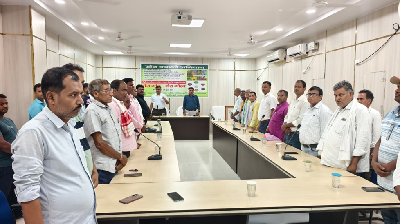
Technical sessions covered a wide range of topics, including the role of FPOs in technology dissemination and farmer empowerment, Integrated Nutrient Management and soil health restoration, balanced fertilizer use and green manuring, value addition and branding, packaging and market linkages, climate-resilient agriculture, natural resource management, and government support mechanisms for FPOs and agri-enterprises.
Participants also visited the institute's field demonstration units showcasing fish-based, goat-based, and raised-and-sunken bed Integrated Farming System models, along with water management technologies and soil sampling demonstrations. Scientists explained how these integrated approaches improve resource-use efficiency, diversify farm income, enhance resilience to climate variability, and strengthen livelihood security.
During the interactive session, FPO representatives and progressive farmers shared field-level challenges related to fertilizer use, input availability, market access, and climate risks. Practical recommendations were provided to address these issues, and FPOs were encouraged to play a catalytic role in accelerating technology adoption and sustainable agricultural transformation.
The workshop concluded with a collective commitment to promote soil testing, balanced fertilization, green manuring, crop diversification, Integrated Farming Systems, residue recycling, value addition, and farmer-led innovation. Participants appreciated the opportunity to engage directly with researchers and expressed their commitment to disseminating the knowledge gained among their farmer groups and FPO networks.
The programme highlighted the importance of collaboration among research institutions, Farmer Producer Organizations, extension agencies, and farming communities in advancing sustainable agriculture and achieving the objectives of Khet Bachao Abhiyan–2026.
(Source: ICAR–Mahatma Gandhi Integrated Farming Research Institute, Motihari, Bihar)



फेसबुक पर लाइक करें
यूट्यूब पर सदस्यता लें
X पर फॉलो करना X
इंस्टाग्राम पर लाइक करें