

1 July 2026, Dirang, Arunachal Pradesh
In a major breakthrough for yak breeding and genetic improvement, the ICAR–National Research Centre on Yak, Dirang, has successfully demonstrated estrus synchronization and Fixed-Time Artificial Insemination (FTAI) in yaks under field conditions in Sikkim. The achievement marks an important milestone in extending advanced reproductive technologies to remote yak-rearing areas of the country.
The programme was implemented in Gnathang Valley, East Sikkim, a high-altitude yak-rearing village near the India-China border. Despite the challenging terrain and climatic conditions, scientists of ICAR–NRCY successfully established the FTAI protocol after three earlier attempts, demonstrating its practical applicability under the prevailing traditional free-ranging management system practiced by yak farmers.
A total of 25 female yaks were enrolled in the programme, of which 14 conceived following Fixed-Time Artificial Insemination, recording a 56% conception rate. Within two days, on June 29 and 30, 2026, ten healthy yak calves were born, while the remaining successful pregnancies are expected to calve in the coming days. These encouraging results demonstrate the feasibility of adopting FTAI in high-altitude yak production systems, where timely detection of estrus remains a major constraint.
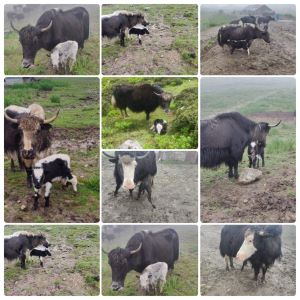
The successful field demonstration is expected to enhance reproductive efficiency by facilitating the use of genetically superior breeding bulls, accelerating genetic improvement, and improving the productivity, profitability, and sustainability of yak husbandry. It also lays a strong foundation for the wider adoption of assisted reproductive technologies across other yak-rearing states, including Himachal Pradesh and the Union Territory of Ladakh.
Dr. Mihir Sarkar, Director, ICAR–National Research Centre on Yak, congratulated the scientific team for this significant achievement. He emphasized that translating scientific innovations into practical applications is essential for improving the livelihoods of yak-rearing communities and strengthening sustainable yak production and genetic improvement in the Indian Himalayan Region.
The Centre acknowledged the valuable support extended by the Department of Animal Husbandry, Livestock, Fisheries and Veterinary Services, Government of Sikkim and the yak farmers of Gnathang Valley, whose active cooperation was instrumental in the successful implementation of the programme.
The successful demonstration of estrus synchronization and FTAI in Sikkim reflects the commitment of ICAR–National Research Centre on Yak towards developing, validating and disseminating farmer-centric technologies for reproductive management, genetic improvement and the sustainable development of yak farming across the yak-rearing regions of India.
(Source: ICAR–National Research Centre on Yak, Dirang, Arunachal Pradesh)



फेसबुक पर लाइक करें
यूट्यूब पर सदस्यता लें
X पर फॉलो करना X
इंस्टाग्राम पर लाइक करें