

30 June 2026, Motihari, Bihar
As part of the nationwide Khet Bachao Abhiyan–2026, ICAR–Mahatma Gandhi Integrated Farming Research Institute, Motihari organized a farmer awareness-cum-training programme on scientific nutrient management in mango orchards in East Champaran district, Bihar. The programme aimed to enhance orchard productivity, improve fruit quality, restore soil health, and promote climate-resilient horticulture through scientific nutrient management.
During the programme, scientists emphasized that balanced nutrient management is the foundation of profitable mango production. They highlighted that declining soil organic carbon, nutrient mining, and indiscriminate fertilizer application are major factors responsible for reduced orchard productivity. Farmers were encouraged to adopt soil-test-based Integrated Nutrient Management (INM) by combining chemical fertilizers with organic manures and biofertilizers.
Stage-specific nutrient management practices for mango orchards were demonstrated. For newly established orchards, farmers were advised to apply 50 g Azotobacter, 50 g Phosphate Solubilizing Bacteria (PSB), and 3 kg vermicompost per plant, placed in a 15–20 cm deep circular trench about one foot away from the trunk under adequate soil moisture.
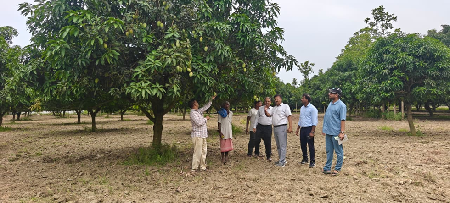
For fully grown orchards, the recommended annual nutrient dose is 1500 g nitrogen, 500 g phosphorus, 1000 g potassium, and 40–50 kg well-decomposed farmyard manure (FYM) per tree. Farmers were advised to apply half of the nitrogen (750 g) along with the full dose of phosphorus (500 g), potassium (1000 g), and FYM at the onset of the monsoon, while the remaining 750 g nitrogen should be applied at the flowering stage. Fertilizers should be placed in a 15–20 cm deep circular trench located 1–1.5 m away from the trunk to ensure efficient nutrient uptake.
Scientists further explained that fertilizer recommendations should always be modified according to soil-test results. Compared with the standard recommended dose, fertilizer application should be increased by 50% in extremely nutrient-deficient soils, increased by 25% in low-fertility soils, maintained at 100% under medium fertility, reduced by 25% in nutrient-rich soils, and reduced by 50% where nutrient availability is very high, thereby maximizing fertilizer-use efficiency while minimizing unnecessary expenditure.
For high-density mango plantations (3-year-old orchards), farmers were advised to follow a four-stage nutrient schedule with an annual application of 300 g nitrogen, 150 g phosphorus, and 300 g potassium per plant. Nutrients should be applied in four splits: 120:60:75 g NPK after harvest, 75:60:60 g before flowering, 60:30:75 g at fruit set, and 45:0:90 g during fruit development, ensuring a continuous nutrient supply throughout the crop growth cycle.
Scientists also highlighted the importance of biofertilizer boosters, recommending 5 ml Azotobacter and 5 ml PSB mixed with one litre of water and well-decomposed organic manure per tree, applied during the onset of the monsoon and again at flowering. Adoption of this practice can save approximately 15% of the recommended nitrogen and phosphorus fertilizer requirement while improving soil microbial activity and nutrient availability.
Special emphasis was placed on micronutrient management, particularly zinc, iron, and boron, which play critical roles in chlorophyll synthesis, enzyme activity, flowering, fruit setting, pollen viability, and fruit development. Farmers were advised to apply 50 g Grade-I micronutrient mixture (Zn 5%, Fe 2%, Mn 1%, Cu 0.5%, B 1%) incubated with 10 kg FYM per tree after harvest, particularly in calcareous soils.
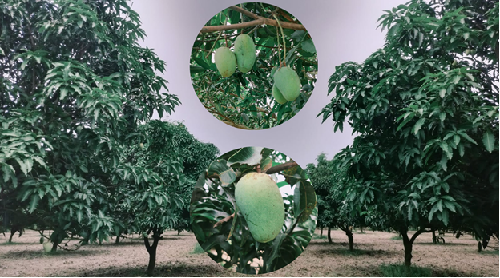
To improve fruit yield and minimize fruit drop, scientists recommended three foliar sprays of 1% water-soluble fertilizer (13:0:45) at the pea stage, marble stage, and egg-size fruit stage, along with 20 ppm NAA sprays at the pea and marble stages to reduce premature fruit drop.
The programme also emphasized that soil testing should always precede fertilizer application. Farmers were encouraged to integrate FYM, vermicompost, crop residue recycling, green manuring, and biofertilizers with chemical fertilizers to improve soil organic carbon, soil aggregation, microbial activity, nutrient-use efficiency, and long-term orchard productivity. They were further advised to recycle crop residues instead of burning them to conserve valuable nutrients and improve soil biological health.
Scientists also highlighted the importance of integrating balanced nutrition with Integrated Pest Management (IPM). Farmers were advised to maintain orchard sanitation, undertake regular pest surveillance, carry out timely pruning, and use neem-based botanicals and bio-pesticides for effective and environmentally safe pest management.
The programme concluded with a strong message that scientific nutrient management, soil testing, biofertilizers, organic nutrient recycling, micronutrient application, and integrated orchard management are essential for producing healthy mango orchards, high-quality fruits, and sustainable farm income. Farmers appreciated the practical recommendations and expressed their willingness to adopt the complete package of scientific nutrient management practices under Khet Bachao Abhiyan–2026.
(Source: ICAR–Mahatma Gandhi Integrated Farming Research Institute, Motihari, Bihar)



फेसबुक पर लाइक करें
यूट्यूब पर सदस्यता लें
X पर फॉलो करना X
इंस्टाग्राम पर लाइक करें