

3 July 2026, Bengaluru
ICAR-National Bureau of Agricultural Insect Resources, Bengaluru, in collaboration with CAB International (CABI) and the Society for Biocontrol Advancement (SBA), organized a National Workshop on Economic Impact Assessment of Classical Biological Control Agents for Pest Management in hybrid mode today at ICAR-NBAIR, Bengaluru. The workshop brought together scientists, agricultural economists, policy experts, and stakeholders to deliberate on methodologies for assessing the economic benefits of classical biological control (CBC) programmes in India.
Dr. T. Venkatesan, Director (Acting), ICAR-NBAIR, delivered the introductory remarks, highlighting the significance of classical biological control as an environmentally sustainable and economically viable approach for managing invasive pests while reducing dependence on chemical pesticides.
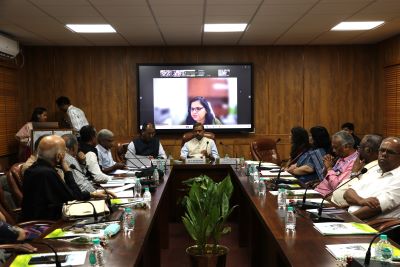
The workshop was chaired by Dr. Poonam Jasrotia, Assistant Director General (Plant Protection & Biosafety), ICAR, New Delhi, who underscored the importance of documenting the long-term economic, environmental, and societal benefits of biological control programmes for informed policy formulation and future investments.
In the technical sessions, Dr. T. Venkatesan presented an overview of India's experience in classical biological control, showcasing successful interventions against invasive pests and their contributions to sustainable agriculture. This was followed by a presentation from Dr. Malvika Chaudhary, CAB International, who discussed global experiences and best practices in implementing and evaluating classical biological control programmes across different countries.
A dedicated session on the economic perspectives of classical biological control programmes featured expert presentations. The experts highlighted various approaches for quantifying the economic returns of biological control interventions, including cost-benefit analysis, valuation of ecosystem services, reduction in pesticide usage, enhancement of biodiversity, and long-term socio-economic benefits. The discussions also focused on developing standardized methodologies, data requirements, modelling tools, and impact metrics for evaluating CBC programmes in India.
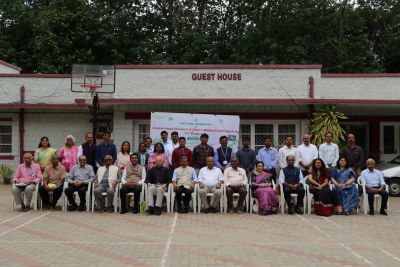
The workshop included an extensive expert interaction session, during which participants deliberated on successful case studies, challenges in economic valuation, and opportunities for integrating economic assessments into national biological control programmes. The discussions emphasized the need for interdisciplinary collaboration among entomologists, agricultural economists, policymakers, and extension agencies to strengthen evidence generation and facilitate wider adoption of biological control technologies.
The workshop concluded with a wrap-up session and formulation of recommendations, highlighting the importance of developing standardized frameworks for economic impact assessment, strengthening data collection systems, incorporating ecosystem service valuation, and generating policy-relevant evidence to support sustainable pest management strategies.
The workshop reaffirmed ICAR-NBAIR's commitment to promoting environmentally sustainable pest management through classical biological control and strengthening the scientific and economic evidence base required for its wider adoption in Indian agriculture.
(Source: ICAR-National Bureau of Agricultural Insect Resources, Bengaluru)



फेसबुक पर लाइक करें
यूट्यूब पर सदस्यता लें
X पर फॉलो करना X
इंस्टाग्राम पर लाइक करें