

23–24 July 2026, New Delhi
India, one of the world's leading agricultural producers, records an annual production of nearly 357 million tonnes of food grains, 27 million tonnes of pulses, 16 million tonnes of millets, and over 315 million tonnes of fruits and vegetables. Agriculture contributes nearly 18% to the national GDP, while the food processing sector accounts for 7–8% of agricultural GDP, supporting over 2.3 million enterprises and generating employment for more than 7 million people. However, post-harvest losses ranging between 6–18% continue to pose a major challenge, underscoring the need for advanced technologies in storage, packaging, preservation, transportation, and value addition.
Packaging has emerged as a critical component of the agricultural value chain and is currently the fifth-largest sector of the Indian economy, growing at a Compound Annual Growth Rate (CAGR) of 26.7% with an estimated valuation of USD 84–102 billion. Globally, the packaging industry is valued at approximately USD 1.14 trillion and is projected to reach USD 1.59 trillion by 2034. Smart and intelligent packaging systems are increasingly gaining prominence for their ability to enhance product quality, safety, shelf life, and traceability. While active packaging extends shelf life by modifying the internal packaging environment, intelligent packaging monitors and communicates information on product quality throughout the post-harvest value chain.
Recognizing the growing importance of these technologies, ICAR–Central Institute of Agricultural Engineering, Bhopal, in collaboration with the Indian Institute of Packaging (IIP), Delhi, organized a two-day Brainstorming Session on "Harmonization of Smart and Intelligent Packaging Systems for Agricultural Products" during 23–24 July 2026 at IIP, Delhi.
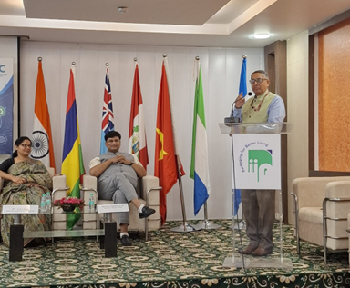
The programme brought together eminent scientists, academicians, policymakers, industry experts, entrepreneurs, and students to deliberate on recent advancements, challenges, and future strategies in smart and intelligent packaging technologies. The event witnessed the participation of 18 delegates from ICAR institutes, CSIR laboratories, State Agricultural Universities (SAUs), and Banaras Hindu University (BHU), along with 17 international participants, fostering meaningful national and global collaborations. Deliberations focused on reducing post-harvest losses, enhancing food quality and safety, improving shelf life, promoting sustainable packaging solutions, and strengthening agricultural value chains.
Dr Tanweer Alam, Additional Director and Regional Officer, IIP Delhi, emphasized the growing significance of innovative packaging technologies in ensuring food quality, sustainability, market competitiveness, and consumer confidence.
The inaugural session was graced by distinguished dignitaries. Prof. J. P. Sharma, Former Vice-Chancellor, SKUAST-Jammu, delivered the Guest of Honour address and highlighted the need for multidisciplinary research, institutional collaboration, and policy support to develop next-generation smart packaging technologies.
Dr Kairam Narsaiah, ADG (Process Engineering) and Acting Director, ICAR-IASRI, New Delhi, emphasized the integration of digital technologies, artificial intelligence, and precision agriculture in advancing intelligent packaging systems.
Delivering the Chief Guest address, Prof. Baldev Raj Kamboj, Vice-Chancellor, CCS Haryana Agricultural University, Hisar, stressed the commercialization of indigenous packaging innovations, stronger industry-academia partnerships, and farmer-centric technology development.
Mr Pravin Malik, CEO, Agro Innovate India Ltd. (ICAR Unit), outlined strategies for technology commercialization, startup promotion, intellectual property management, and effective transfer of research innovations.
During the event, it was announced that a consolidated report on ongoing research and development activities in smart and intelligent packaging across institutions would be compiled, followed by the publication of a White Paper. The need to formulate large-scale collaborative projects, coordinated by ICAR–CIAE, Bhopal, for submission to the Office of the Principal Scientific Adviser to seek potential funding support was also emphasized.
Two technical sessions held on the first day featured expert presentations by scientists from ICAR-NDRI, Karnal; Indian Institute of Packaging (IIP), Delhi; ICAR–CIAE, Bhopal; ICAR-IARI, New Delhi; CSIR-CFTRI, Mysuru; ICAR-CIFT, Kochi; ICAR-NRC on Meat; SKUAST-Kashmir; and Punjab Agricultural University, Ludhiana. The presentations covered smart and intelligent packaging materials, freshness indicators, biodegradable and active packaging systems, quality monitoring tools, sensor-based technologies, and emerging commercialization opportunities. Speakers also showcased technologies developed at their respective institutions, discussed their Technology Readiness Levels (TRLs), commercialization status, and identified research and industrial gaps requiring collaborative interventions.
The second day of the brainstorming session was chaired by Dr. Alka Rao, Director, CSIR-IMTECH, Chandigarh. The programme featured four student oral presentations followed by an invited lecture from a scientist of Banaras Hindu University (BHU).
Industry perspectives discussed commercialization opportunities in intelligent packaging, market demand for freshness indicators, biodegradable plastics, testing methodologies, material composition, and concerns related to microplastics.
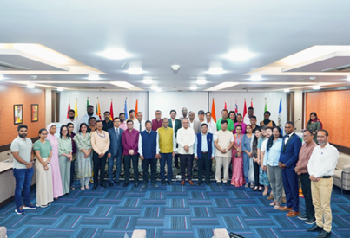
A panel discussion brought together experts from academia and industry to deliberate on emerging trends and challenges in food packaging. The discussion highlighted commercialization pathways, technology standardization and labelling, biodegradable and cellulose-based packaging materials, enzyme-based packaging systems, QR code-enabled traceability, cost-effective packaging technologies, and strategies to address the evolving needs of the food industry.
The programme concluded with the Valedictory Session on 24 July 2026, with Dr C. N. Ravishankar, Member, ASRB, gracing the occasion as the Chief Guest. In his address, he underscored the importance of strengthening collaborations among academia, research institutions, and industry to accelerate the development and commercialization of smart and intelligent packaging technologies for agricultural products.
The brainstorming session served as a significant national platform for knowledge exchange and strategic deliberations on the future of smart and intelligent packaging systems. The recommendations emerging from the deliberations are expected to strengthen research collaborations, accelerate technology development, promote standardization and commercialization, and facilitate the adoption of sustainable packaging solutions. These outcomes will contribute to reducing post-harvest losses, enhancing food safety and quality, extending shelf life, and improving the competitiveness and sustainability of India's agricultural sector.
(Source: ICAR–Central Institute of Agricultural Engineering, Bhopal)



फेसबुक पर लाइक करें
यूट्यूब पर सदस्यता लें
X पर फॉलो करना X
इंस्टाग्राम पर लाइक करें