

In the hills of Chizami in Nagaland’s Phek district, a quiet revolution is taking root not through sophisticated machinery or modern infrastructure, but through something far more fundamental: seeds, traditional knowledge and the collective strength of women.
For generations, indigenous seeds have been conserved, exchanged and passed down within Naga farming communities. These seeds were more than planting material; they were repositories of agricultural wisdom, adapted over time to the local environment and embedded in the community’s food culture and traditions. But as hybrid seeds gained ground, climate change intensified, biodiversity declined and farming practices began to change, the future of these precious local landraces became increasingly uncertain.
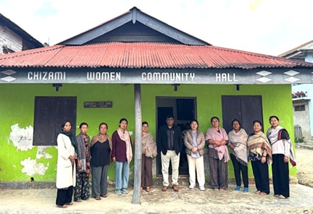
The women of Chizami recognised the danger and chose to preserve what their ancestors had entrusted to them.
With the support of the North East Network (NEN), the Chizami Women Society formally established the Chizami Community Seed Bank on 9 February 2018, transforming a long-standing tradition of indigenous seed conservation and exchange into an organised, community-led initiative.
The vision was clear: conserve indigenous crop varieties and traditional knowledge, strengthen food and nutritional security, and build a more sustainable and climate-resilient farming system. What followed was a powerful demonstration of how community ownership and women’s leadership can turn conservation into a living, self-sustaining practice.
Today, the seed bank is managed by 20 women representatives from different khels of Chizami and conserves more than 200 indigenous crop varieties, covering an impressive range of crops from rice, maize and millets to pulses, vegetables and tubers. But its significance lies not merely in the number of varieties conserved. It lies in the system that keeps those varieties alive, circulating and evolving within the farming community.
At the heart of this system is a traditional yet remarkably effective seed-lending and repayment model. Farmers borrow seeds from the community seed bank and, after harvest, return twice the quantity they had borrowed. The returned seeds are then multiplied and made available again, creating a continuous cycle of conservation, regeneration and sharing. In this way, the seed bank is not simply a place where seeds are stored it is a living seed system, ensuring continuous availability while strengthening community seed sovereignty.
Protecting the Past to Secure the Future
The driving force behind Chizami’s seed bank was deeply rooted in the community’s concern for the future.
The women recognised that valuable local landraces could disappear under the combined pressures of climate change and changing agricultural practices. Yet these very landraces hold qualities that make them critically important for the future of sustainable agriculture. Many are well adapted to changing environmental conditions and possess inherent resistance to pests and diseases.
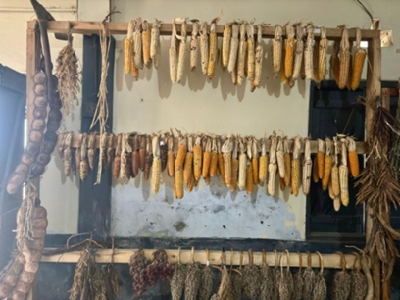
Conserving them, therefore, was not simply about protecting agricultural heritage. It was about preserving a valuable resource for future generations while strengthening the community’s ability to withstand environmental and economic uncertainties.
Equally important was the community’s aspiration for self-reliance. By producing and conserving their own seeds, farmers could reduce dependence on external sources and strengthen control over one of the most fundamental inputs in agriculture.
The journey from an idea to a resilient community institution was shaped by a series of carefully nurtured, community-driven steps. The mobilisation of local women through the Chizami Women Society created a strong institutional foundation based on collective ownership and management. Capacity-building programmes strengthened their skills in seed selection, storage and documentation, while simultaneously helping revive traditional knowledge systems.
The systematic collection and conservation of indigenous seeds was followed by their regeneration through organised seed production in a compact field dedicated exclusively to the multiplication of indigenous seeds. The traditional seed-lending system further ensured that the stocks remained viable and sustainable by bringing larger quantities back into the community after every harvest.
As the initiative grew, awareness programmes and farmer interactions encouraged wider participation and adoption of indigenous seeds, while collaborations with supporting organisations provided technical guidance and strengthened institutional linkages. Together, these efforts transformed Chizami’s seed bank into a resilient model of agro-biodiversity conservation and self-reliant farming.
When Seed Conservation Becomes a Livelihood Strategy
The impact of this initiative extends well beyond the conservation of crop diversity.
By promoting indigenous, locally adapted varieties, the Chizami Community Seed Bank has contributed to farm productivity, food security and household income. Their ability to perform under climate variability, coupled with natural tolerance to pests and diseases, can help farmers maintain stable yields while reducing dependence on external seed markets and lowering production costs.
The diversity itself creates opportunity. Traditional rice, millets, pulses and vegetables support diversified farming, multiple harvests and additional avenues for income generation. Meanwhile, the seed-lending and multiplication system ensures that farmers have continued access to seeds, strengthening livelihood resilience and self-reliance and supporting sustainable income generation.
And at the centre of this transformation are the women.
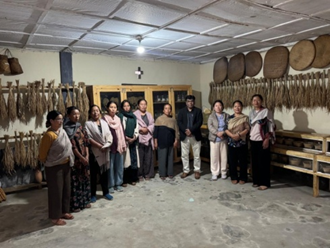
Their active involvement in decision-making, seed conservation and resource management has strengthened leadership, skills and confidence. What began as a conservation initiative has consequently become a platform for women’s empowerment, social cohesion and collective action.
Through seed sharing, farmer interactions and awareness programmes, access to quality seeds and knowledge has improved, while farmers’ resilience to climate variability has been strengthened and dependence on external inputs reduced. At the same time, the initiative has helped revive traditional knowledge and reinforce cultural identity, while inspiring neighbouring villages to explore similar community-led approaches to seed conservation and biodiversity-based, sustainable and self-reliant farming.
From Chizami’s Fields to the National Genebank
The story of Chizami’s seeds gained another important dimension through the support of ICAR–Krishi Vigyan Kendra (KVK), Phek, associated with ICAR–National Research Centre on Mithun, Medziphema, under ICAR–ATARI Zone VII, Umiam.
ICAR–KVK, Phek has been actively conducting capacity-building programmes and awareness campaigns on seed conservation in the National Genebank under ICAR–National Bureau of Plant Genetic Resources, New Delhi, while also promoting the registration of farmers’ varieties under the Protection of Plant Varieties and Farmers’ Rights Authority.
A major milestone came in 2025, when eight paddy landraces from the Chizami Community Seed Bank were submitted to ICAR–NBPGR, New Delhi, for long-term conservation and were assigned Indigenous Collection (IC) numbers.
Scientific profiling of these landraces further underlined their value. Biochemical profiling revealed desirable traits such as soft rice, good cooking quality and suitability for Kheer making, highlighting not only their agricultural potential but also their nutritional and cultural significance.
The partnership has also helped connect Chizami’s community-level conservation efforts with wider national platforms. ICAR–KVK, Phek facilitated the nomination of the Community Seed Bank, Chizami, for the Genome Saviour Community Award 2024 and encouraged its participation in PPV&FRA awareness programmes and exhibitions.
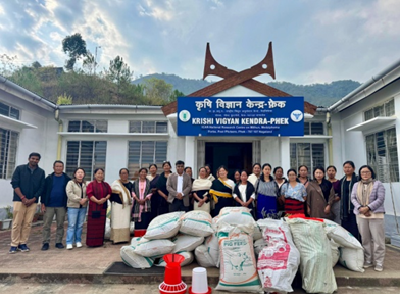
The seed bank has also attracted the attention of national and international experts. On 9 April 2024, Dr. J. C. Rana, Country Director–India, Bioversity International & CIAT, visited the seed bank and interacted with its management committee led by Mrs. Welhizou Wetsah. Such interactions have helped enhance awareness of the importance of safeguarding indigenous crop diversity and further strengthened community-led conservation efforts.
Recognition for a Community That Chose to Preserve
The significance of Chizami’s work received national recognition on 29 March 2026, when, during the 132nd episode of Mann Ki Baat, Prime Minister Shri Narendra Modi highlighted and appreciated the commendable efforts of the Self-Help Group (SHG) associated with the Chizami Community Seed Bank in conserving and promoting indigenous crop diversity.
The initiative has also received recognition and appreciation from the North East Network (NEN), Chizami; ICAR–National Bureau of Plant Genetic Resources (NBPGR), New Delhi; ICAR–Krishi Vigyan Kendra, Phek; and ICAR–National Research Centre on Mithun, Medziphema, Nagaland.
The support has extended beyond seed conservation to broader livelihood development. ICAR–KVK, Phek conducted an awareness programme on the judicious use of fertilizers for soil health for the SHG members of the Chizami Seed Bank, followed by their felicitation for the seed bank’s exemplary efforts in conserving indigenous crop landraces.
Recognising that resilient livelihoods require more than crop production alone, ICAR–KVK, Phek also distributed essential piggery and poultry inputs to the SHG members, supporting sustainable livestock production, household nutrition and income generation.
Seeds That Carry a Community’s Future
The Chizami Community Seed Bank is ultimately a story about much more than seeds.
It is a story about women who chose conservation over disappearance, community ownership over dependence, and traditional knowledge as a foundation for the future.
Every indigenous seed conserved at Chizami carries a piece of agricultural heritage. Every seed lent to a farmer and returned after harvest keeps that heritage in circulation. Every landrace regenerated in the community strengthens biodiversity. And every woman who participates in managing this living repository adds another layer of confidence, leadership and resilience to the community.
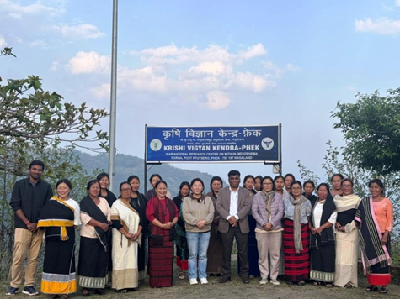
From traditional seed exchange among Naga farming communities to a formally established community seed bank; from more than 200 indigenous crop varieties conserved by 20 women representatives to eight paddy landraces secured for long-term conservation at ICAR–NBPGR; and from local livelihood support to recognition on the national stage, Chizami demonstrates what becomes possible when traditional wisdom, women’s leadership, community participation and institutional support converge.
In Chizami, the past is not being preserved merely for remembrance.
It is being conserved, multiplied and passed forward—one seed, one farmer and one generation at a time.
And in every seed saved by these women lies a promise: that Nagaland’s rich crop diversity, traditional knowledge and farming heritage will continue to live, grow and nourish future generations.
(Source: ICAR–Krishi Vigyan Kendra, Phek, Nagaland)



फेसबुक पर लाइक करें
यूट्यूब पर सदस्यता लें
X पर फॉलो करना X
इंस्टाग्राम पर लाइक करें