

The journey of Dr. S. Jeya Shunmugam, M.B.A., Ph.D., and his wife and Co-Founder, S. Janaki Rani, M.A., M.Phil., is an inspiring example of how entrepreneurship, traditional livestock resources and scientific knowledge can be brought together to create a sustainable rural enterprise. With more than two decades of corporate experience in the renewable energy sector, Dr. Jeya Shunmugam took a bold step into entrepreneurship in 2021, together with S. Janaki Rani, with a vision of establishing a structured and sustainable integrated farming enterprise.
Their journey began with organically certified farming at Alangulam, Tenkasi, Tamil Nadu, which gradually evolved into an integrated farm ecosystem involving indigenous cattle, poultry, goats, ducks and, eventually, donkeys. As their understanding of livestock-based enterprises developed, the founders recognised the potential of donkey farming as an emerging and underexplored opportunity in India.
Discovering the Potential of Donkey Farming
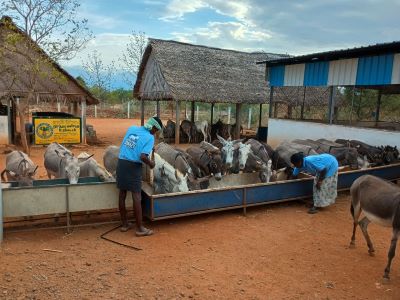
The founders' interest developed through their broader vision of sustainable agriculture and livestock diversification. They recognised that donkeys, despite their long association with rural livelihoods, remained largely underutilised as a productive livestock resource. Their growing interest and commitment ultimately resulted in the establishment of The Jack & Jenny Donkey Farm LLP, with the objective of developing donkey farming as an organised, sustainable and value-driven rural enterprise.
From Donkey Milk to Value-Added Products
The enterprise has progressively moved towards processing and value addition of donkey milk. Among their major products and initiatives are freeze-dried donkey milk powder, donkey milk-based dark chocolate and natural skincare products marketed under the J4’s brand.
The freeze-drying approach provides an opportunity to convert fresh donkey milk into a more stable and convenient form while retaining its value as a premium dairy product. The founders have also explored the use of donkey milk in innovative food and cosmetic applications.
Their donkey milk dark chocolate represents an effort to introduce donkey milk to consumers through a familiar and attractive food product, while their J4’s natural skincare range seeks to utilise donkey milk along with selected natural ingredients.
An important feature of their enterprise is the integration of their organic farming activities with product development. Selected herbs, plants and natural ingredients cultivated on their own farm are incorporated into skincare formulations, creating a unique connection between organic agriculture, livestock farming, traditional knowledge and modern product innovation.
At the same time, one of the most significant milestones in their journey was their interaction and scientific training imparted at the ICAR–National Research Centre on Equines, Hisar.
ICAR-NRC Equines Hisar: Turning Experience into Scientific Practice
ICAR-NRC on Equines, Hisar and ICAR-National Institute of Agricultural Economics and Policy Research, New Delhi developed Donkey policy for the country in which one recommendation was to organize training and entrepreneurship development for scientific donkey rearing. ICAR-NRCE is extensively involved in organizing training for all the stake holders in the country. The scientific training received at ICAR-NRCE, Bikaner, proved to be a major turning point in the development of their donkey-farming enterprise. The exposure helped the founders move beyond a general entrepreneurial interest in donkeys towards a scientific, systematic and welfare-oriented approach to donkey production and management.
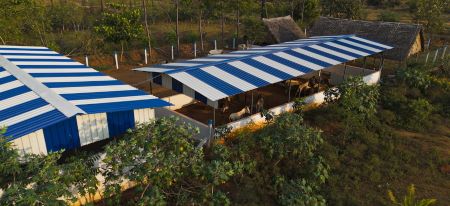
The training was particularly valuable because donkey farming is still an emerging field for organised livestock entrepreneurship. The founders were able to interact with scientists and technical personnel and understand how scientific principles can be translated into practical farm-level management.
The knowledge gained at Bikaner has helped them improve their approach to:
Scientific feeding and nutritional management of donkeys
Hygienic milking and milk handling
Breeding and systematic herd development
Animal health and preventive management
Housing and sanitation
Humane handling and animal welfare
Farm-level record keeping and systematic management
Quality-oriented milk production
Research and evidence-based product development
Most importantly, the training gave the founders confidence to approach donkey farming as a scientific livestock enterprise rather than simply as an alternative animal-rearing activity.
The training also encouraged them to strengthen the link between animal management and product quality. They increasingly recognise that high-quality donkey milk begins with healthy animals, appropriate nutrition, hygienic milking and proper handling at the farm level. This farm-to-product understanding has become one of the important strengths of their enterprise.
Overcoming Challenges with Perseverance
The journey has not been without challenges. Moving from a successful corporate career into farming and entrepreneurship required considerable personal commitment. Establishing infrastructure for organic agriculture, livestock management, milk handling, processing and R&D required investment, planning and continuous learning.
The founders also had to overcome limited awareness about donkey farming, difficulties in finding specialised technical expertise, challenges in developing value-added products, regulatory and certification requirements, and the need to build consumer acceptance for an unconventional dairy product.
Developing products such as freeze-dried donkey milk powder, donkey milk chocolate and skincare products involved repeated trials, formulation, quality assessment and process optimisation. Ensuring microbiological safety, consistency, shelf life, labelling and regulatory compliance has remained an important part of their continuing journey.
Rather than viewing these difficulties as barriers, the founders have treated them as opportunities to learn and improve.
A Model for Future Rural Entrepreneurship
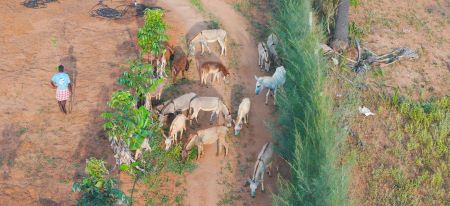
Today, the journey of Dr. S. Jeya Shunmugam and S. Janaki Rani demonstrates how an idea can evolve into a diversified rural enterprise through perseverance, innovation and scientific intervention. Their enterprise now brings together organic farming, indigenous livestock, donkey conservation, scientific animal management, donkey milk production, food processing, skincare product development, R&D and rural employment.
The role of ICAR-NRCE, Bikaner, has been particularly important in strengthening the scientific dimension of this journey. The training provided practical knowledge, technical confidence and a research-oriented perspective that helped the founders refine their approach to donkey farming and milk production.
Their experience demonstrates that the future of donkey farming need not be restricted to traditional animal rearing. With appropriate scientific management, animal welfare, value addition, quality assurance and market development, donkey farming can become a viable niche livestock enterprise and an additional source of rural livelihood.
The story of Jeya Integrated Organic Farm and The Jack & Jenny Donkey Farm is therefore not merely a story of starting a donkey farm. It is a story of transition—from corporate experience to rural entrepreneurship, from traditional livestock knowledge to scientific management, and from raw agricultural resources to innovative value-added products.
With continued R&D, scientific collaboration and responsible entrepreneurship, Dr. Jeya Shunmugam and S. Janaki Rani are working towards establishing a model integrated organic and donkey-based enterprise that can inspire other farmers and entrepreneurs to explore the untapped potential of donkeys and donkey milk.
“The journey was not without challenges, but every challenge became an opportunity to learn, innovate and build a scientifically driven, sustainable and value-added rural enterprise.”
(Source: ICAR–National Research Centre on Equines, Hisar)



फेसबुक पर लाइक करें
यूट्यूब पर सदस्यता लें
X पर फॉलो करना X
इंस्टाग्राम पर लाइक करें