

22 March 2026
Observed annually on (22 March), World Water Day was established by the United Nations to highlight the importance of freshwater and promote sustainable water management.
Water is vital for agriculture, food security, and livelihoods, making its conservation essential amid growing challenges like climate change and rising demand. The World Water Day 2026 theme, “water and gender” emphasizes the role of water in fostering cooperation and sustainable development.
Marking the occasion, institutes of the Indian Council of Agricultural Research (ICAR) across India organized programmes and awareness activities, highlighting efficient water use and conservation in agriculture.
ICAR-Indian Agricultural Research Institute, New Delhi
Dr. S.K. Ambast, Member (NRM), ASRB, highlighted the vital role of women across all sectors of society and emphasized the challenges they face in accessing water, particularly in saline and water-scarce regions. He stressed the need for sustainable water resource management practices, active involvement of women farmers, and urgent measures to address groundwater over-exploitation through enhanced recharge strategies.
A Rapid Brainstorming Session on “Empowering Farm Women through Water Literacy and Governance”, organized in collaboration with Dhan Foundation, Madurai, brought together 17 farmers (including 8 women) from six states, who shared field-level experiences on efficient water use and tank management.
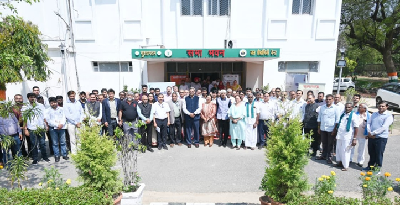
Special Guests, including Dr. Anupama Singh, Dr. C. Viswanathan, and Dr. R.N. Padaria, highlighted the importance of traditional water harvesting systems, automated irrigation, climate-resilient practices, and women-led initiatives such as ‘Jal Sahelis’ in strengthening water governance.
Earlier, Dr. P.S. Brahmanand, Project Director, WTC, ICAR-IARI, set the context on “Water and Gender,” emphasizing the role of women in sustainable water management. Publications of WTC, ICAR-IARI were also released during the programme.
The event witnessed participation from around 140 stakeholders, including farmers, scientists, academicians, and representatives from leading institutions and organizations.
ICAR-Central Research Institute for Dryland Agriculture, Hyderabad
On the occasion of World Water Day, ICAR–CRIDA, Hyderabad in collaboration with Watershed Organisation (WOTR) and Indian Society of Dryland Agriculture (ISDA) and Indian society of Agricultural Engineers (ISAE-Telangana Chapter) organized a Farmers’ Rally to promote awareness on water conservation and efficient water management in agriculture, with active participation of farmers, women farmers, scientists, staff, and students.
Shri M. Kodanda Reddy, Chairman, Telangana Agriculture Farmers Welfare Commission, graced the programme as Chief Guest, while Dr. Arun Tiwari, Retired Scientist, DRDO, attended as Guest of Honour.
Experts deliberated on key aspects of water management, including water-saving technologies, water budgeting, groundwater recharge, and climate-resilient practices. Emphasis was laid on the adoption of farm ponds, micro-irrigation, solar energy, watershed development, and resource mapping to enhance water use efficiency. The role of ICAR–CRIDA in disseminating location-specific technologies and advisories was also acknowledged.
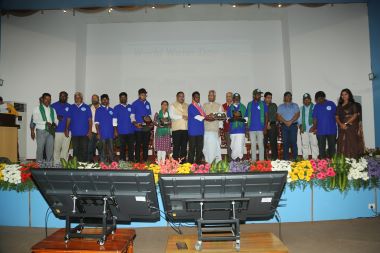
The Chief Guest highlighted the importance of judicious water use in dryland agriculture, appreciated the role of Farmer Producer Organizations (FPOs), and recognized the contributions of women farmers in improving water use efficiency.
As part of the celebrations, awards were distributed to best-performing villages, progressive farmers, and students for their contributions to water conservation and awareness. The programme witnessed participation of around 300 farmers.
ICAR-Central Inland Fisheries Research Institute, Barrackpore, Kolkata
In the keynote address, Dr K.K. Vaas, Chairman, Research Advisory Committee (RAC), emphasized the importance of integrating gender perspectives in water management and called for innovative research, education, and capacity-building to address emerging challenges in agricultural water sustainability.
Dr Pradip Dey, Director, ICAR–CIFRI, highlighted the strong interlinkages between water, fisheries, and women’s empowerment, noting that women constitute nearly 40% of India’s fisheries workforce. He stressed the need to enhance their participation and ensure equitable access to resources to improve livelihoods and support a sustainable Blue Economy aligned with Viksit Bharat @2047.
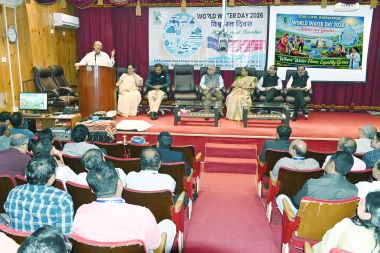
Technical presentations provided insights into sustainable water management and the role of women in inland fisheries, emphasizing their contribution to livelihood security and resource sustainability.
The programme witnessed participation from around 124 stakeholders, reflecting a strong commitment to gender-inclusive and water-smart fisheries development. The event reinforced ICAR–CIFRI’s role in promoting equitable and sustainable fisheries research, aligned with the message, “Where water flows, equality grows.”
ICAR-Indian Institute of Water Management, Bhubaneswar, Odisha
The canal automation system was inaugurated by Smt. Surama Padhy, Speaker of the Odisha Legislative Assembly, who highlighted its role in improving water use efficiency, ensuring uniform distribution, enhancing cropping intensity, and expanding rabi cultivation through judicious water management.
Smt. Madhumita Rath, Collector and District Magistrate, Nayagarh, emphasized the significance of World Water Day, highlighting the theme “Water and Gender” and the slogan “Where water flows, equality grows”, while stressing the adoption of IoT-based irrigation systems.
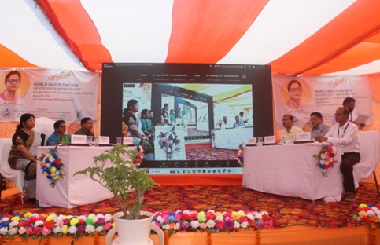
Dr A. Sarangi, Director, ICAR–IIWM, outlined the canal automation project as a successful collaborative effort involving ICAR–IIWM, the Department of Water Resources, Government of Odisha, Water User Associations, and industry partners. He emphasized its potential to ensure demand-based irrigation, improve water productivity, support crop diversification, and enhance farmers’ income. Eight publications were also released during the programme. The event concluded with a vote of thanks and witnessed participation of around 700 stakeholders.
Additionally, World Water Day 2026 was celebrated in climate-resilient villages under the RKVY project in Cuttack district. At Naranpur village, about 180 farm women discussed their role in water management, while over 150 farmers at Haritha-Manpur village shared experiences on efficient water use in vegetable cultivation.
ICAR–Research Complex for Eastern Region, Patna
The programme, chaired by Dr Anup Das, Director, ICAR-RCER, emphasized sustainable water management for climate-resilient agriculture, highlighting micro-irrigation, raised bed cultivation, crop diversification (millets and pulses), and integration of advanced and traditional practices.
Dr Gopal Kumar, International Water Management Institute, stressed community-driven solutions and institutional collaboration for equitable water use.
The experts highlighted efficient water management, integrated farming, sustainable aquaculture, and resource-efficient technologies.
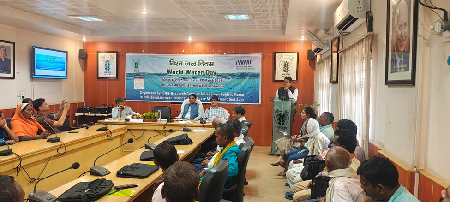
Technical sessions covered solar-driven water management, rice fallow water use, and sensor-based irrigation. A farmer–scientist interaction, distribution of inputs (water pumps, Swarna mixture, milk cans, drought-tolerant varieties), and field exposure to integrated and solar-based systems enriched learning.
The event, supported under SCSP network projects on Buffalo Improvement and Animal Genetic Resources, also witnessed the launch of the Water Innovation Hackathon 2026 flyer by IWMI.
A total of 140 participants, including ~80 farmers from Gaya and Araria, attended, as reported by Umesh Kumar Mishra.
(Source: Respective ICAR Institutes)



फेसबुक पर लाइक करें
यूट्यूब पर सदस्यता लें
X पर फॉलो करना X
इंस्टाग्राम पर लाइक करें